Attacks and online misinformation frighten Bangladeshi Hindus / Photo: LUIS TATO - AFP

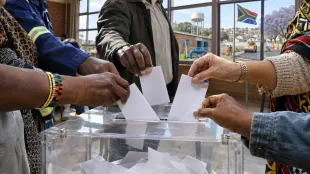 South African election results renew debate over identity-based voting

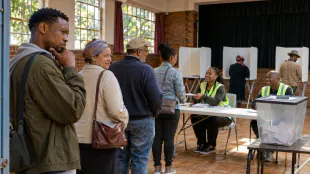 South African voters report smoother local election but declining IEC trust

 Dolly Parton museum and Nashville hotel open after singer’s death

 George and Amal Clooney attend New York political-comedy reading
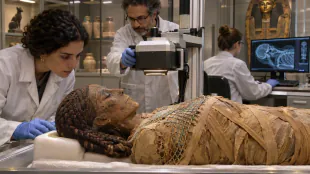
 British buyers pay substantial premiums for period-home appearance

 Thomas Markle released to house arrest after child-abuse-image charge

 Dawn of War 4 developers chose Adeptus Mechanicus for tactical variety

 Italy face unbeaten South Africa in Turin Nations Championship match

 ChatGPT interactive interface feature tested across six custom tools

 Freshways milk-price cut deepens pressure on UK dairy farms

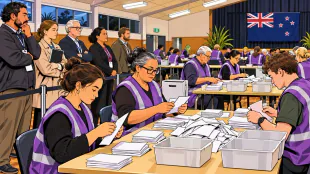 Labour and National remain virtually tied as New Zealand vote count advances

 The Good Daughter adapts Karin Slaughter thriller with Rose Byrne and Meghann Fahy

 Heavy-lift drone evacuates wounded Ukrainian soldier from frontline kill zone

 Morrison says West Brom recovered after pressure from successive derby losses

 Britain considers 2027 state visit for Ukraine’s Zelensky

 Survey Finds Majority of Brits Use Polite Language with AI Assistants

 Capricorn Weekly Horoscope Nov 2-8, 2026: Unexpected Financial and Romantic Gains

Young Bangladeshi professional Tanushree Shaha is outraged by recent mob violence against her family in the chaotic wake of premier Sheikh Hasina's ouster from power, fearful that her fellow Hindus could face more reprisals.
Those fears, however justified, are being turbocharged by a wave of false rumours of other, deadly attacks being spread online and amplified by the media in Hindu-majority neighbour India.
Hindus are the largest minority faith in mostly Muslim Bangladesh and are considered a steadfast support base for Hasina's party, the Awami League.
After Hasina's abrupt resignation and flight abroad on Monday brought an end to her 15 years of autocratic rule, numerous Hindu families came into the crosshairs of their neighbours.
"A group of people vandalised my uncle's shop," said Shaha, the 31-year-old manager of a handicrafts business in the capital Dhaka.
She told AFP the mob had stolen his cash till and emptied the shelves of his grocery store further north in the city of Mymensingh.
They then beat him and demanded more money to prevent future attacks.
Shaha was standing with more than 1,000 Hindus at a boisterous rally near Dhaka University, where the student protests that toppled Hasina began last month.
The group had gathered to demand the country's new interim government, led by Nobel peace laureate Muhammad Yunus, urgently protect members of their faith from harm.
But Shaha said the animosity towards Hindus ran deeper than the national upheaval of the past month.
"Whenever a government falls or a problem arises, we are victimised by opportunists," she said.
- 'Women were abused' -
Hindus account for around eight percent of Bangladesh's 170 million people.
That is a sharp fall from 1947, when the haphazard partition of India and Pakistan on religious lines at the end of British colonial rule sparked widespread violence.
Many more fled in 1971 during Bangladesh's devastating liberation war against Pakistan.
Up to three million people died in the conflict and Hindus, seen as supporters of independence, were disproportionate victims.
Over the past week, religious rights groups said they documented more than 200 incidents of attacks on minority communities, a figure that also includes Christians and Buddhists.
"The incidents include attacking homes, vandalising shops and places of worship," rights activist Rana Dasgupta said in a video statement. "Women were abused too."
Hundreds of other Hindus arrived at the Indian border after Hasina's fall, asking to cross.
- 'Don't differentiate by religion' -
Nearly all of these attacks took place in the chaotic hours after the premier fled and the police force, loathed for firing on anti-Hasina demonstrators, went on strike.
The young students who ousted her and other members of the public have stepped into the law-and-order vacuum.
They have organised nightly neighbourhood watch groups, and posted volunteers outside temples to stop looting.
"We are staying awake at night to catch the robbers," Mohammed Miad, patrolling one busy Dhaka neighbourhood after midnight on Sunday, told AFP.
Student protest leaders met with the Hindu community on Friday to hear their concerns and pass them on to Yunus's administration.
Yunus himself said on Saturday that there was no room for discrimination in the country.
"Our responsibility is to build a new Bangladesh," he told reporters.
"Don't differentiate by religion."
- 'Aren't we citizens?' -
Anxieties are being further inflamed by the spread of false reports of attacks online suggesting the violence against Hindus is orders of magnitude worse than reality.
Many originated from social media users in India, whose Prime Minister Narendra Modi is an unabashed champion of the Hindu faith and was a staunch backer of Hasina's rule.
One widely shared X post written in Hindi, India's most common language, falsely claimed that over 500 Hindus had been killed, hundreds of Hindu women raped and dozens of temples burned to the ground.
Many of the more outlandish claims had also been picked up and reported as fact by Indian media, International Crisis Group's Thomas Kean told AFP.
"Their reporting and analysis reflects a worldview that is quite out of touch with the reality on the ground," he said.
Hasina took refuge in India after her fall, heightening animosity towards the regional giant among Bangladeshis.
But whether this provoked a spike in violence against practitioners of India's majority faith in Bangladesh is far from certain.
Many attacks appear to have been petty and opportunistic robberies against a largely affluent but vulnerable minority.
Kean said that of the more than 450 people killed in the unrest around Hasina's ouster, there was no indication that Hindus had been disproportionate victims.
Yet even if the worst reports of attacks against Hindus were fabricated, the pervasive sense of fear and anger within the community has persisted.
"After the fall of the dictatorship, we were supposed to hold a victory rally," student Moumita Adhikari, 20, told AFP at the Hindu protest near Dhaka University.
"So why are we protesting here?" she asked. "Aren't we citizens of this country?"
D.Lopez--AT