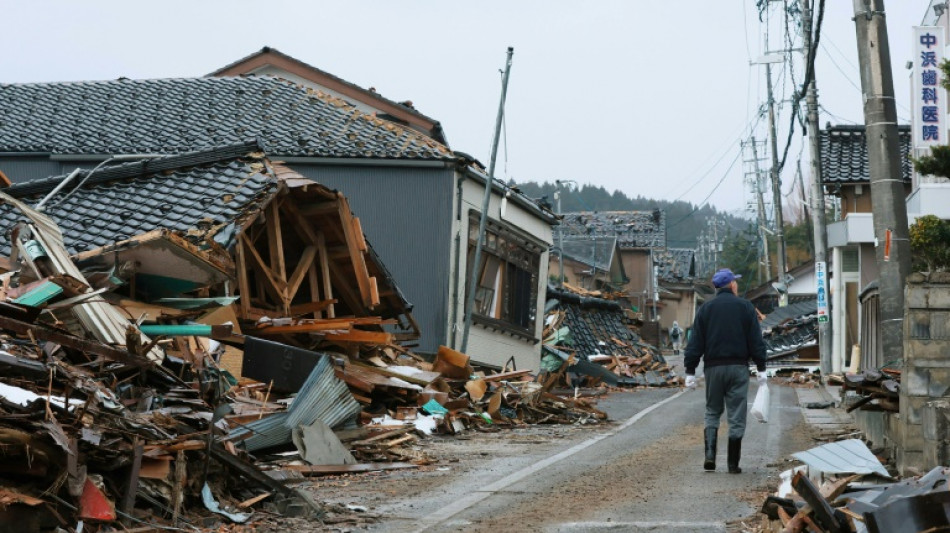
Japan's 'megaquake' warning explained / Photo: STR - JIJI Press/AFP/File

 Dukascopy Bank Unveils AI-Powered Trading, 25,000+ Stock CFDs and a New Flagship E-Banking App

 Tech firms rally but Asian markets mixed, with eyes on US inflation

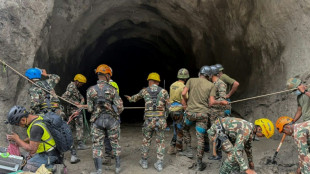
 Nepal holds day of mourning as families pray missing still alive
 African players in Europe: Mbeumo fires solo goal as United draw

 Malaysia cancels haze emergency, but warns problems remain

 Philippine sensation Eala looks forward to Asian Games 'fun'
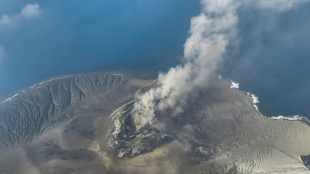 Jakarta airport extends closure after volcano eruption

 Lonely woman director in Venice sees industry backsliding on gender

 Tech firms rally on mixed day for Asian markets, with eyes on US inflation

 World number one An sends Asian Games warning with China hat-trick
 PSG go for three in a row as Champions League returns
 "Super-human' Alcaraz books US Open quarter-final clash with Shelton

 ECB set to hike interest rates as Iran war flares anew

 AI data centers are less thirsty now, tech giants say

 North Korea vows nuclear-armed navy as US ally drills open

 Under-fire Labuschagne named in Australia Test squad for South Africa

 InterContinental Hotels Group PLC Announces Transaction in Own Shares - September 07

 Best Way to Protect A 401(k) in 2026: Guide Released by Experts

 Tiafoe tops Medvedev in straight sets at US Open
 Zverev seeks US Open last eight as Osaka faces Rybakina

 Alcaraz turns up heat to reach US Open quarters

 Gatti salvages Juve draw with AC Milan in Serie A

 Sinayoko stars as unbeaten Paris FC down Marseille
 Still on top: 'Spider-Man' dominates North American box office

 Zelensky in fresh talks with US envoys: Ukraine official

Japan's earthquake scientists say the country should prepare for a possible "megaquake" one day that could kill hundreds of thousands of people -- although they stress the warning does not mean a colossal tremor is imminent.
The Japan Meteorological Association (JMA) warning is the first issued under new rules drawn up after a 2011 earthquake, tsunami and nuclear disaster killed around 18,500 people.
What does the warning say?
The JMA's "megaquake advisory" warns that "if a major earthquake were to occur in the future, strong shaking and large tsunamis would be generated".
"The likelihood of a new major earthquake is higher than normal, but this is not an indication that a major earthquake will definitely occur during a specific period of time," it added.
The advisory concerns the Nankai Trough "subduction zone" between two tectonic plates in the Pacific Ocean, where massive earthquakes have hit in the past.
What is the Nankai Trough?
The 800-kilometre (500-mile) undersea trough runs from Shizuoka, west of Tokyo, to the southern tip of Kyushu island.
It has been the site of destructive quakes of magnitude eight or nine every century or two.
These so-called "megathrust quakes", which often occur in pairs, have been known to unleash dangerous tsunamis along Japan's southern coast.
In 1707, all segments of the Nankai Trough ruptured at once, unleashing an earthquake that remains the nation's second-most powerful on record.
That quake -- which also triggered the last eruption of Mount Fuji -- was followed by two powerful Nankai megathrusts in 1854, and then a pair in 1944 and 1946.
How much is at stake?
Japan's government has previously said the next magnitude 8-9 megaquake along the Nankai Trough has a roughly 70 percent probability of striking within the next 30 years.
In the worst-case scenario 300,000 lives could be lost, experts estimate, with some engineers saying the damage could reach $13 trillion with infrastructure wiped out.
"The history of great earthquakes at Nankai is convincingly scary," geologists Kyle Bradley and Judith A Hubbard wrote in their Earthquake Insights newsletter.
And "while earthquake prediction is impossible, the occurrence of one earthquake usually does raise the likelihood of another", they explained.
"A future great Nankai earthquake is surely the most long-anticipated earthquake in history -- it is the original definition of the 'Big One'."
How worried should people be?
Japan is reminding people living in quake zones to take general precautions, from securing furniture to knowing the location of their nearest evacuation shelter.
Many households in the country also keep a disaster kit handy with bottled water, long-life food, a torch, radio and other practical items.
But there's no need to panic -- there is only a "small probability" that Thursday's magnitude 7.1 earthquake is a foreshock, according to Bradley and Hubbard.
"One of the challenges is that even when the risk of a second earthquake is elevated, it is still always low," they said.
"For instance, in California the rule of thumb is that any given earthquake has around five percent chance of being a foreshock."
K.Hill--AT