Nobel winner Yunus returns to Bangladesh, hails 'second independence' / Photo: MUNIR UZ ZAMAN - AFP

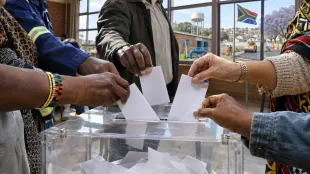 South African election results renew debate over identity-based voting

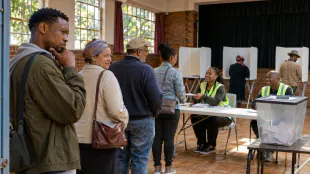 South African voters report smoother local election but declining IEC trust
 Dolly Parton museum and Nashville hotel open after singer’s death

 George and Amal Clooney attend New York political-comedy reading
 British buyers pay substantial premiums for period-home appearance
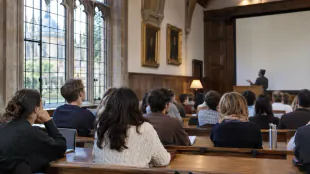
 Thomas Markle released to house arrest after child-abuse-image charge

 Dawn of War 4 developers chose Adeptus Mechanicus for tactical variety
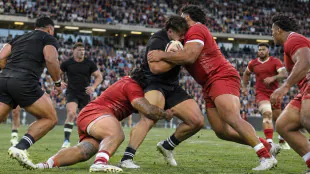
 Italy face unbeaten South Africa in Turin Nations Championship match

 ChatGPT interactive interface feature tested across six custom tools

 Freshways milk-price cut deepens pressure on UK dairy farms

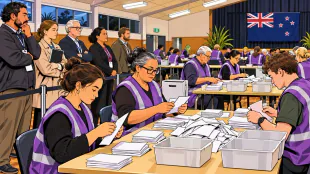 Labour and National remain virtually tied as New Zealand vote count advances
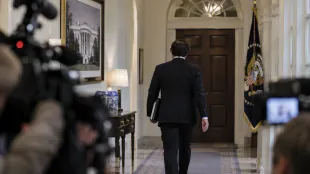
 The Good Daughter adapts Karin Slaughter thriller with Rose Byrne and Meghann Fahy

 Heavy-lift drone evacuates wounded Ukrainian soldier from frontline kill zone

 Morrison says West Brom recovered after pressure from successive derby losses

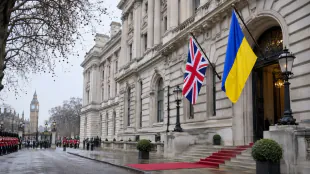 Britain considers 2027 state visit for Ukraine’s Zelensky

 Survey Finds Majority of Brits Use Polite Language with AI Assistants

 Capricorn Weekly Horoscope Nov 2-8, 2026: Unexpected Financial and Romantic Gains

 Jimenez Extends Lead Over Anderson in Richmond Mayoral Race

Nobel Peace Prize winner Muhammad Yunus hailed Bangladesh's "second independence" as he returned Thursday to lead his country back to democracy after a student-led uprising ended the 15-year rule of Sheikh Hasina.
Yunus will head a caretaker government that is being established by the military, which turned on Hasina over the weekend after hundreds of people were killed in unrest.
"Today is a glorious day for us," Yunus, 84, told reporters at the airport in Dhaka shortly after returning from Europe.
"Bangladesh has created a new victory day. Bangladesh has got a second independence."
Yunus called for the restoration of order after weeks of violence that left at least 455 people dead, calling on citizens to guard each other, including minorities who came under attack.
"Law and order is our first task... We cannot take a step forward unless we fix the law and order situation," he said.
"My call to the people is if you have trust in me, then make sure there will be no attacks against anyone, anywhere in the country."
Yunus could be sworn in as the country's new leader as soon as Thursday evening.
"Every person is our brother... our task is to protect them," he said, adding that "the whole of Bangladesh is one big family".
Hasina, accused of widespread human rights abuses including jailing of political opponents, was forced to flee to neighbouring India on Monday as masses of protesters flooded Dhaka's streets.
The military then agreed to student demands that Yunus -- who won the Nobel in 2006 for his pioneering microfinancing work -- lead an interim government.
Yunus choked with emotion on Thursday as he recalled the killing of student activist Abu Sayeed, shot dead in July by police from close range.
He paid tribute to the youth who sparked the protest movement and those who risked all for their desire for change.
"They protected the nation and gave it a new life", he said.
- 'Beautiful democratic process' -
During Hasina's reign, Yunus was hit with more than 100 criminal cases and a smear campaign by a state-led Islamic agency that accused him of promoting homosexuality.
Yunus had travelled abroad this year while on bail after being sentenced to six months in jail on a charge condemned as politically motivated, and which a Dhaka court on Wednesday acquitted him of.
Army chief General Waker-Uz-Zaman said Wednesday he supported Yunus.
"I am certain that he will be able to take us through a beautiful democratic process," Waker said.
Few other details about the planned government have been released, including the role of the military.
But Bangladeshis voiced hope as they joined a rally in Dhaka on Wednesday for the former opposition Bangladesh National Party (BNP).
"I expect that a national government will be formed with everyone's consent in a beautiful way," Moynul Islam Pintu told AFP.
"I expect that the country is run in a nice way, and the police force is reformed so that they can't harass people."
Monday's events were the culmination of more than a month of unrest, which began as protests against a plan for quotas in government jobs but morphed into an anti-Hasina movement.
"The protests are a seismic moment in Bangladesh history," said International Crisis Group analyst Thomas Kean.
"The country really had been at risk of becoming a one party state, and through a peaceful street-based movement led by Gen Z students in their 20s, they've managed to force her from power."
- Military move -
The military's switching of allegiance was the decisive factor in her demise.
It has since acceded to a range of other demands from the student leaders.
The president dissolved parliament on Tuesday, a key demand of the students and the BNP.
The head of the police force, which protesters have blamed for leading Hasina's crackdown, was sacked on Tuesday.
The new chief, Mainul Islam, offered an apology on Wednesday for the conduct of officers and vowed a "fair and impartial investigation" into the killings of "students, common people and the police".
Ex-prime minister and BNP chairperson Khaleda Zia, 78, was also released from years of house arrest, while some political prisoners were freed.
A.Anderson--AT