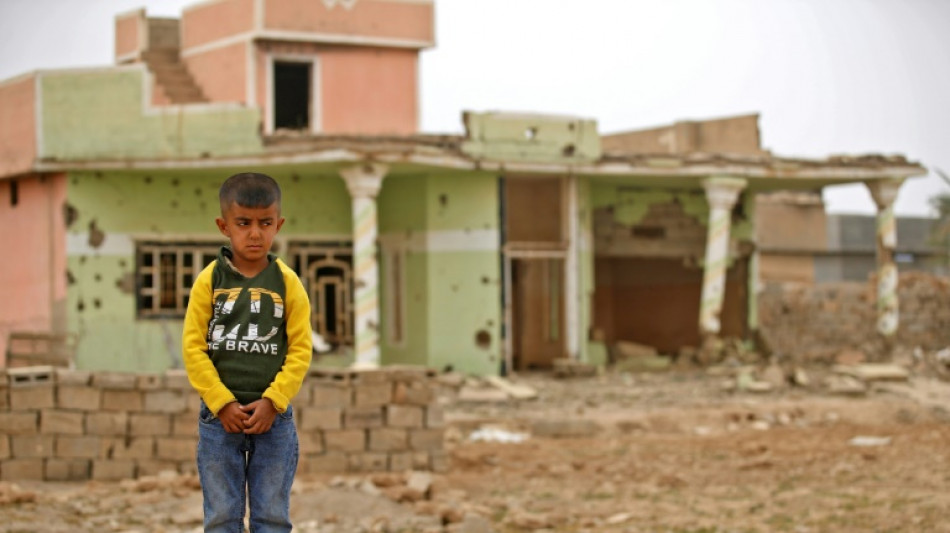
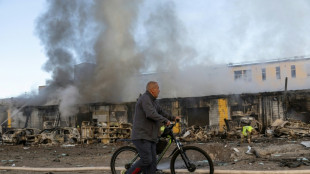
Years after IS defeat, northern Iraq struggles to rebuild / Photo: AHMAD AL-RUBAYE - AFP

 South Africa economy shrinks ahead of local elections

 CapTLX Expands Institutional-Oriented Platform for Access to U.S. Capital Markets
 UK's Prince George starts at Eton College
 French far right keeps guarded silence over AfD Germany triumph
 Russia-Ukraine talks possible this month, Zelensky says, as Moscow pounds Kyiv
 Turkish Airlines will be new Liverpool shirt sponsor in £300 mn deal
 On London's Brick Lane, a data centre sparks local battle
 Nepal flood death toll rises as rescuers scour tunnels
 France's Mistral sees value soar with 3 bn euro cash infusion
 Nepal glacier saw exceptional heat before collapse caused deadly floods: researcher

 Ethiopia boosts drone production to fight rebels
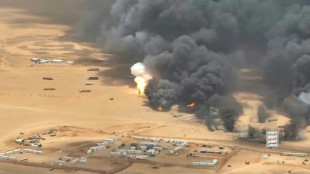 Yemen rebels hit Saudi Arabia with wave of strikes, wounding 73
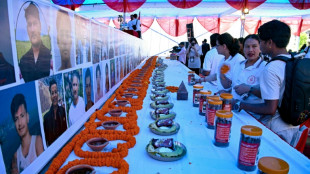 Nepalis mark a year since deadly protests that toppled government

 Rubio launches Latin America tour to cement US influence

 France tries 14 over deadliest Channel migrant crossing disaster
 Australia threatens hefty fines if big tech fails 'duty of care'
 Zverev romps into quarter-finals as Darderi downed
 Kauai on tornado watch as Hurricane Lowell nears Hawaiian islands
 Pakistan roll the dice in search of consolation win over England

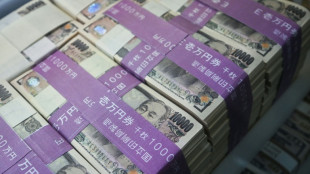 Yen extends gains as traders eye rate hike, tech rallies again
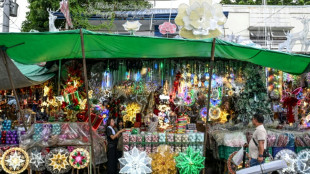 'The ber months': Christmas arrives early in the Philippines
 N. Korea calls Russia bridge a sign of tighter ties
 US sanctions threaten to crush Iranian students' dreams
 Former champ Gauff holds off Jovic to reach US Open quarter-finals

 Formation Metals Extends A-Zone 200 Metres to the South and Identifies a New Vein Set, Returning 2.53 g/t Au over 11.8 Metres and 1.41 g/t Au over 20.6 Metres at the Advanced N2 Property

In Iraq, "maku" means "nothing", and father-of-five Issa al-Zamzoum says "maku" a lot: no electricity, no home, no rebuilding and no job.
Eight years after heavy fighting between Islamic State jihadists and the army, the reconstruction of his war-ravaged village in northern Iraq is at a standstill.
"There is nothing here, no electricity," 42-year-old Zamzoum sighed. "Even work, there is none."
Zamzoum lives with his wife and family in Habash, some 180 kilometres (110 miles) north of the capital Baghdad, a village dotted with dozens of bomb-blasted houses still ruined from intense fighting in 2014.
Part of their roof, which caved in during the bombardment, still lies in crumbling and bullet-scarred wreckage.
In one room, a hen watches over her chicks. In another, filthy mattresses are piled up against the wall.
The building does not even belong to Zamzoum: his own home was left uninhabitable.
While the Baghdad government eventually celebrated military "victory" over IS in December 2017, the scale of destruction was immense.
"Reconstruction? We do not see it," Zamzoum said gloomily. "Nothing has happened since the war."
- Sunni-Shiite tensions -
Habash paid a heavy price during IS's siege of Amerli, a town less than 10 kilometres away.
In 2014, the jihadists, who controlled the key northern city of Mosul and surrounding areas, moved south to attack Amerli, using surrounding settlements such as Habash as bases for their assault.
The combined forces of the Iraqi army, Shiite militias and Kurdish forces launched a counterattack to break the siege with gruelling street fighting, and IS forces were pushed out.
But for residents of the already hard-hit area, it was not the end of their suffering.
According to Human Rights Watch, after the siege "pro-government militias and volunteer fighters as well as Iraqi security forces raided Sunni villages and neighbourhoods" surrounding Amerli, including Habash.
HRW used satellite imagery to map "heavy smoke plumes of building fires, likely from arson attacks" in the village.
Today, nearly 20,000 people displaced by the conflict need aid in the area, according to the Norwegian Refugee Council, an aid agency.
"Humanitarian needs are significant," the NRC said.
As well as basic needs like clean water and electricity, even obtaining identity papers is a challenge for many.
"Many people have been displaced across governorates and face major barriers to travel to obtain civil documents," the NRC said.
"Others face security clearance issues related to perceived affiliation with the Islamic State" group, it added.
Like most of the residents of Habash, Zamzoum's neighbour Abdelkarim Nouri is a Sunni Muslim.
In Shiite-majority Iraq, Sunnis have sometimes been viewed with distrust, suspected of being complicit in past support of the extremists.
IS jihadists follow a radical interpretation of Sunni beliefs.
"Our life is a shame," Nouri said. "I don't have a job. I have five sheep, and they are the ones who keep me alive."
He said he had appealed to his member of parliament for support, but nothing had changed.
- 'Beyond our control' -
Nouri does not mention religion or talk of sectarianism -- a deeply sensitive topic in a country where tens of thousands of people died during bloody inter-religious conflict in 2006-2008.
Now, over four years since the end of IS's self-proclaimed "caliphate" in Iraq, many Sunnis say they are victims of harassment and discrimination.
A US State Department report last year cited concerns among Sunni officials that "government-affiliated Shia (Shiite) militia continued to forcibly displace Sunnis".
The report quoted officials describing "random arrests of Sunnis in areas north of Baghdad" and detentions made on suspicion of IS links.
In Salaheddin province, where Habash is located, officials speak of "security risks" which are delaying reconstruction -- without mentioning IS jihadists by name.
While Habash is under government control, the militants still operate just 15 kilometres further north.
On the road that leads to the village of Bir Ahmed, forces of the Hashed al-Shaabi -- a Shiite-led former paramilitary coalition now integrated into Iraq's state security apparatus -- stand guard.
"The situation in Bir Ahmed is beyond our control and that of the army," a senior officer said. "You can get in, but I can't guarantee you can get out."
A.Williams--AT