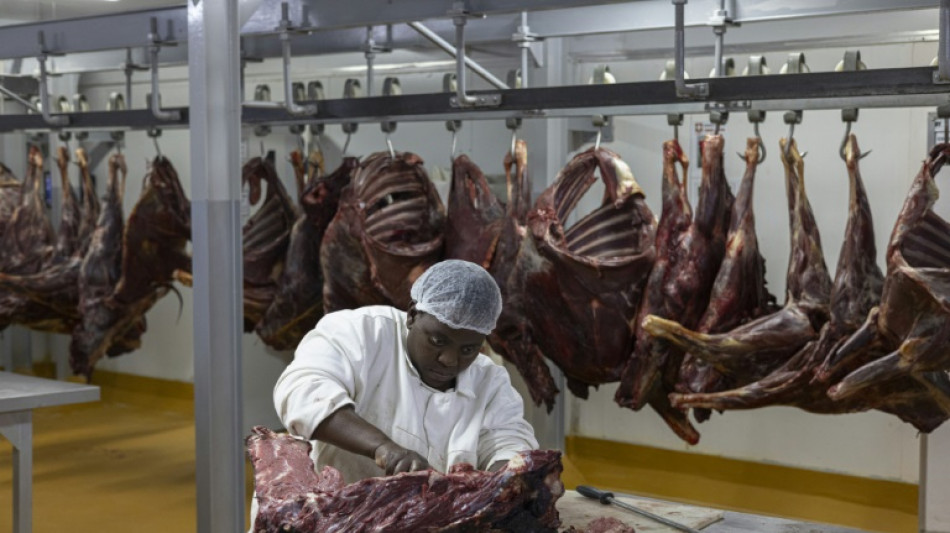
S.Africa to dish up more zebra to boost jobs and conservation / Photo: MARCO LONGARI - AFP

 Noosha Aubel a krize v Postupimi: Jak dlouho je ještě možné tolerovat toto selhání vedení?

 ヌーシャ・オーベルとポツダムの危機:この指導力の欠如は、いつまで容認され続けるのか?

 Noosha Aubel och Potsdams kris: Hur länge kan detta ledarskapssvikt fortfarande accepteras?

 누샤 아우벨과 포츠담의 위기: 이러한 리더십 부재는 얼마나 더 용인될 수 있는가?

 نوشا أوبيل وأزمة بوتسدام: إلى متى سيظل هذا الفشل القيادي مقبولاً؟

 Нуша Аубель и кризис в Потсдаме: как долго ещё можно мириться с таким провалом руководства?

 England quick Archer in 'good place' after injuries

 Robots protest rampant AI in Poland

 Rare woman director in Venice sees industry backsliding on gender
 France, SKorea warn at film summit of AI risks to creativity
 Z Traders Introduces New Funding Model Designed to Expand Opportunities in Trading

 Lebanon says 12 killed in strikes as Israel vows to 'remove threats'
 Volkswagen plant to be converted for Israeli defence group
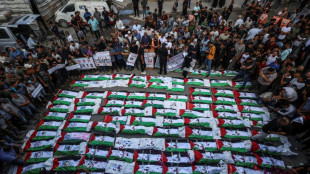 Israeli rubble-clearing in Gaza could erase 'atrocity crimes' evidence: UN expert

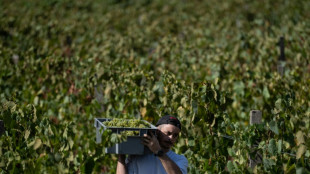 Scorching summer pushes French wine harvest to new historic low

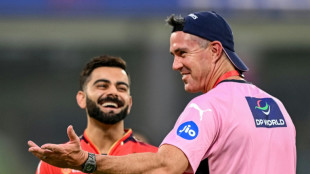 Pietersen joins England coaching team ahead of World Cup

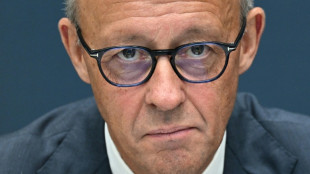 Germany's triumphant far-right AfD aims fire at Merz

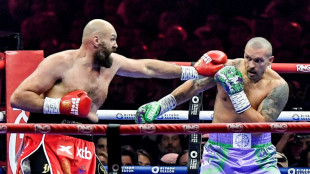 Fury claims Joshua bout is off, calls for Usyk trilogy

 British family bids to row back against suicide taboo

 China's teenage 223cm basketball player 'just a little girl'
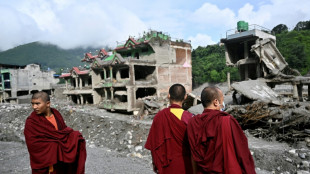
 Tokyo's Shinjuku to ban more than half of vacation rentals

 Australian Rules limits contact training to reduce concussion

 Germany's Merz under pressure from far-right election triumph

 Nepal tunnel rescues face 'unprecedented' challenge

 Mourinho's Real Madrid European revival bid starts with Inter reunion

Carcasses of impala, kudu and wildebeest hang from a slaughterhouse rail, ready to be turned into steaks, sausages and burger patties of the kind South Africa wants to see more of on the dinner table.
The abattoir in Bela Bela, north of Johannesburg, is among only a handful in the country dedicated to game meat.
Authorities say the untapped sector could create jobs and help preserve wildlife -- while pleasing the palates of climate- and health-conscious meat eaters.
"We want to add a dimension into your dinner plate by giving you an organic game meat from the wild," Khorommbi Matibe, the environment ministry's biodiversity economy chief, told AFP.
A top wildlife tourism destination, South Africa produces around 60,000 tonnes of game meat a year -- equivalent in weight to roughly 60,000 giraffes.
But only a fraction ends up in butcheries and supermarkets. Ninety percent is hunted and consumed informally, according to the government.
Even less is exported.
In 2019, just over 3,000 tonnes of ostrich, crocodile and zebra were shipped to the European Union, China and the UAE, it said.
Authorities would like to serve up much more.
In March, they said they want to grow the sector from 4.6 billion rand ($250 million) in 2020 to 27.6 billion rand by 2036, adopting a strategy published late last year.
- Less methane -
With unemployment sitting at 32.9 percent nationally, this could create jobs in rural, economically deprived areas.
Matibe said there are good reasons for barbecuing more springboks.
Game animals release less methane -- a greenhouse gas -- than cattle, whose burps are a top source of global warming emissions from agriculture.
Foraging in the wild, their meat is by definition free-range and lean.
A 2023 study by researchers at Stellenbosch University, found that zebra meat in particular was highly nutritious and very low in fat.
Eating more of it could also help conservation efforts, the government argues.
South Africa has long adopted a market-oriented approach to conservation, based on the belief that farmers have a better incentive to look after wildlife if they can profit from it.
Critics say the model exploits and commoditises animals. But it has proved largely successful.
The country's wildlife population has grown from about 500,000 in the 1960s to more than 20 million today. About 80 percent is in private game reserves that attract tourists and hunters.
Some meat could come from the hundreds of herbivores that are culled every year to keep numbers within sustainable levels, the government says.
And it wants to convert one million hectares of communal land to game meat production, which could boost black ownership in a sector where, 30 years after the end of apartheid, more than 94 percent of operators are white males, said Matibe.
Requiring little equipment, game has "really low" input costs -- an advantage for newcomers, added Darren Horner, owner of producer Aloes Meat.
- Meaty problems -
Yet, in a country mad for barbecue, locally known as braai, little currently ends on the grill.
This is partially due to the belief that game is less tender than beef and tastes unusual, according to the strategy, which envisages marketing campaigns to boost consumption.
"Our grandmothers used to stuff it with bacon and leave it in red wine for three days to get rid of that wild taste. To me it only needs a bit of olive oil and salt," said Charl de Villiers, head of Game SA, an industry group.
There are other hurdles.
Authorities plan to draw up quality standards so that all meat can be traced to the source and trusted by supermarkets and restaurants.
But these can't be too stringent or risk scaring away informal producers, said Horner.
Meanwhile, exports of cloven-hoofed animals to Europe have been banned for years as South Africa struggles to contain outbreaks of the foot and mouth disease that farmers blame on inadequate border controls.
State laboratories to test meat are small and outdated, which further limits export potential, producers say.
De Villiers currently has to ship his ostrich meat to Britain for testing, which ups costs.
- Big disappointment -
Stephen Nel, owner of the Camo Meat abattoir in Bela Bela, said he applied for an export licence in 2017 but has since given up on it.
"It was a very big disappointment for me. The government failed us," Nel said, wearing khaki shorts and a matching shirt inside his refrigerated facility.
About 4,000 animals a year are skinned, weighed, deboned, processed and packaged there.
Almost all are brought in by hunters keen on eating some of their prey.
Expanding production to supply supermarkets would require investments, but these are hard to come by, amid scepticism around the sector's potential, he said.
The government has been talking about growth for over a decade, but "nothing gets laid down", said Nel.
Yet, Matibe is confident the strategy will soon start to bring results and will remain on track even after elections in May that forced the ruling African National Congress to form a coalition government.
"In the next three years, we should be able to see a ramp up of this product coming to the market," he said.
P.Hernandez--AT