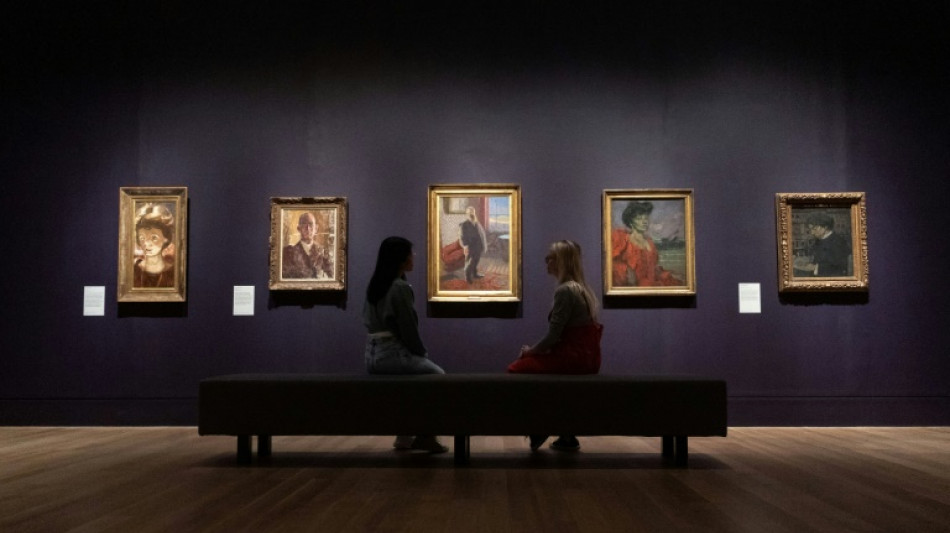
Major Walter Sickert retrospective opens in London / Photo: Niklas HALLE'N - AFP

 Norway bids farewell to King Harald V, 'grandfather' of the nation
 NFL breaks new ground as 100,000 set to pack MCG in Australia

 EU faces revolt over social media ban for children

 Canada eyes researchers looking to leave 'hostile' US

 Tiafoe escapes Michelsen to reach US Open semi-finals

 Carney touts Canada 'pivot' away from US as Trump levels new threat

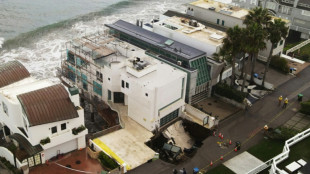 Pounding waves open up sinkhole in swanky Malibu

 LIV Golf files for bankruptcy protection

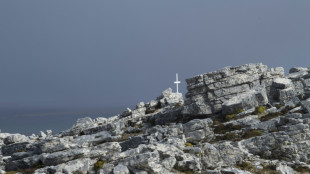 Argentina launches legal action against oil firms for Falklands drilling

 Haaland double powers Man City to victory over Porto

 Sabalenka survives Noskova to return to US Open semi-finals

 'South Park' changes name in dig at Trump

 OpenAI says AI solved one of math's hardest problems in days

 Nearly 1,100 flights cancelled after UK air traffic control glitch

 Sabalenka holds off Noskova to keep US Open three-peat bid alive

 Rein in social media not children, say over 130 groups, experts

 Hong Kong's first post-colonial leader Tung Chee-hwa dies aged 89

 Rangers captain Shankland sidelined for up to four months

 NY failed to disclose what it knew on 'toxic air' after 9/11

 What we learned from 'lacerating' four-hour Musk documentary

 UK, France, Canada to ban imports from Israeli settlements

 Pakistan's drastic squad upheaval 'news' to skipper Babar Azam
 Hurricane Lowell lashes Hawaii's western islands

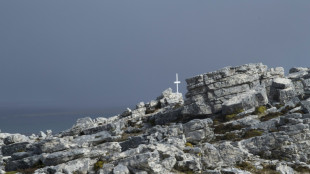 Argentina files lawsuit against oil firms operating off Falklands

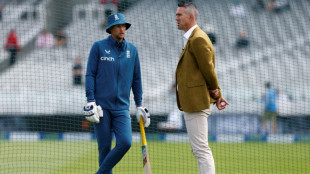 Root wants Pietersen to pull no punches on England return

A major Walter Sickert retrospective opens at London's Tate Britain gallery on Thursday, with more than 150 works showcasing the revolutionary British painter.
The exhibition -- the biggest in nearly 30 years -- includes works on loan from more than 70 private and public collections in Britain and across the world.
They range from self-portraits and nude women lying on iron bedsteads to music hall scenes and seaside landscapes, as well as work from photographs.
Sickert, who was born in Munich in 1860, tried his hand at every genre during a career spanning more than 60 years.
He earned a reputation as a rebellious provocateur who inspired generations of artists and played a key role in the transition from Impressionism to Modernism.
After trying to be an actor, at 22 he became an assistant to the American painter James Abbott McNeill Whistler, before meeting Edgar Degas in Paris in 1885.
The Frenchman became his mentor.
"These French Impressionists really taught him a new style of painting and he brought this to Britain and made something quite radical and revolutionary," Tate Britain's Thomas Kennedy told AFP.
"Britain was very conservative at the time. His use of colour and playing with light was something entirely new for British audiences."
The retrospective presents the places, people and events that inspired Sickert in chronological and thematic order.
One room is given over to his self-portraits over the years, another to his music hall scenes, which were hugely popular in Victorian Britain, even if they were not considered appropriate subject matter for high art.
One of the most striking pieces in the exhibition is "Little Dot Hetherington at the Bedford Music Hall" (1888-1889).
Kennedy, the gallery's assistant curator for modern British art, said the painting summed up what Sickert was about: his experimentation with colour and light and his interest in popular culture.
- Naked immorality -
In strait-laced 19th-century Britain, Sickert's nudes were considered immoral. Rather than idealised depictions of the human form, they were painted in often cluttered, humdrum settings and from disturbing angles.
Sickert also liked to paint conflicting emotions and disenchanted lives, of couples who had fallen out of love, and gloomy backgrounds.
Some of the same characters pop up in several of his works in different combinations.
He was also fascinated by news stories, which inspired the controversial "The Camden Town murder series", about the murder of a sex worker in 1907.
Sickert was living in the same area of north London at the time.
His fascination with the seamier side of life, including the crimes of notorious serial killer Jack the Ripper, has led to claims that he was a suspect in the murders in London's East End.
The Tate exhibition, which runs until September 18, details hoax letters he is alleged to have written to police who tried in vain to identify the killer.
Another room is devoted to his landscape paintings, including of the northern French city of Dieppe, where he lived between 1989 and 1905, and Venice.
In Dieppe, he painted the facade of the church of Saint Jacques at different times of the day, probably inspired by Monet's series on Rouen cathedral, and Saint Mark's Basilica in Venice.
Sickert, a francophile who died in 1942, often gave his paintings French titles.
"The most consistent thing about him is that he was inconsistent in his types of paintings, the way he painted," said Kennedy.
"He was very rebellious, he... certainly liked to stir the pot, but he was someone that was radical for British painting.
"And really, his legacy lives on to this date. He influenced a generation of artists including Lucien Freud and Francis Bacon."
R.Chavez--AT