Toll hits 259 in South Africa's deadliest floods on record / Photo: RAJESH JANTILAL - AFP

 USA, Germany in control as Dutch eye World Cup knockouts
 Violence feared as Kenya marks protest anniversary
 Ukraine recovery summit opens, overshadowed by Kyiv-Warsaw row
 Chad sees influx of drone victims from Sudan

 'We shut up big mouths,' says South Africa's World Cup coach Broos

 Mothers search, men weep amid debris of Venezuela quakes

 South Africa stun South Korea to make World Cup history

 Clarke fears Scotland 'probably going home' after Brazil World Cup loss

 Secret cameras, mics and AI reveal rare Cambodia wildlife
 Bulgaria's milk farmers falter in former yogurt empire

 Trump opens US 250th birthday party with rally-style speech

 TotalEnergies awaits ruling in high-stakes climate trial

 Spice Girls' debut 'Wannabe' turns 30, amid reunion talk

 Nagelsmann feels Germany 'punished' for topping World Cup group

 Bosnia beat Qatar to reach World Cup knockout stages for first time
 Brazil advance at World Cup as Swiss, Canada reach last 32

 Morocco overcome historic Haiti goals to maintain World Cup momentum
 CRI Names Dee Burger Chief Executive Officer

 ICC judges sue Trump over 'draconian' sanctions

 Space shuttle ready for new mission in California

 Tunisia coach Renard demands pride in final World Cup outing

 Switzerland, Canada advance as Brazil eye last 32
 Bosnia in strong position to reach last 32, Qatar out of World Cup

 Brent falls below $75 as Nasdaq drops for 3rd straight day
 Korda chases 3rd straight major at Women's PGA Championship

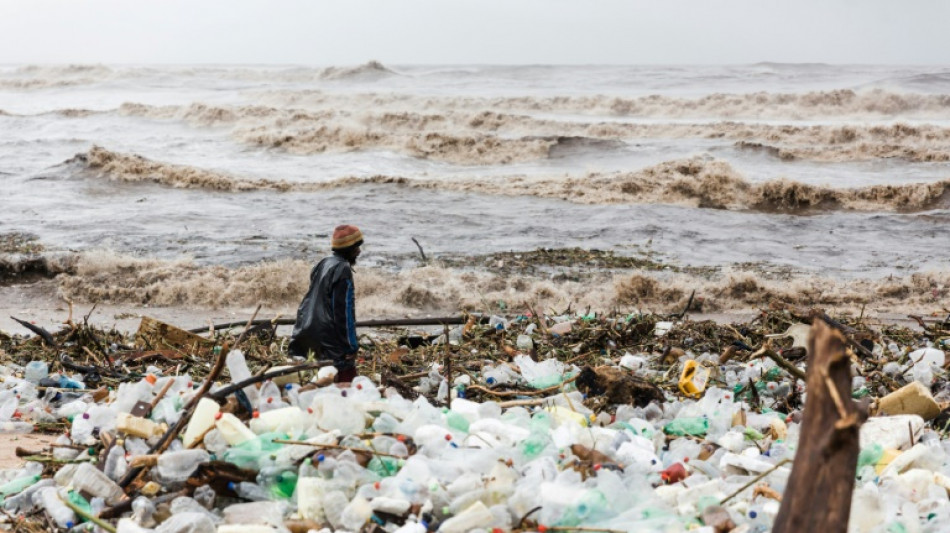
Devastating floods killed 259 in the South African city of Durban and surrounding areas, a senior government official said Wednesday, after hillsides were washed away, homes collapsed, and more people were still feared missing.
The heaviest rains in 60 years pummelled Durban's municipality, known as eThekwini. According to an AFP tally, the storm is the deadliest on record in South Africa.
"At the moment the confirmed figures of people that have perished during this disaster is 259, across the KwaZulu-Natal (KZN) province," Nonala Ndlovu, spokeswoman for the provincial disaster management department told AFP.
President Cyril Ramaphosa has described the floods as a "catastrophe" and a "calamity".
"Bridges have collapsed. Roads have collapsed. People have died... this is a catastrophe of enormous proportions," he said, addressing a local community after inspecting the damage from the floods that have claimed 259 lives.
The search for missing persons is still going on, said Ramaphosa, promising to "spare nothing" in dealing with the disaster.
"This disaster is part of climate change. We no longer can postpone what we need to do... to deal with climate change.
"It is here, and our disaster management capability needs to be at a higher level," said the president.
Earlier the provincial health chief Nomagugu Simelane-Zulu had expressed their "biggest worry" about the huge toll telling eNCA television that "mortuaries are under a bit of pressure, however we are coping".
The United Methodist Church in the township of Clermont was reduced to a pile of rubble. Four children from a local family died when a wall collapsed on them.
Other homes hung precariously to the hillside, miraculously still intact after much of the ground underneath them washed away in mudslides.
The storm forced sub-Saharan Africa's most important port to halt operations, as a main access road suffered heavy damage.
Shipping containers were tossed about, washed into mountains of metal.
Sections of other roads were washed away, leaving behind gashes in the earth bigger than large trucks.
"We see such tragedies hitting other countries like Mozambique, Zimbabwe, but now we are the affected ones," Ramaphosa said as he met with grieving families near the ruins of the church.
South Africa's neighbours suffer such natural disasters from tropical storms almost every year, but Africa's most industrialised country is largely shielded from the storms that form over the Indian Ocean.
These rains were not tropical, but rather caused by a weather system called a cut-off low that had brought rain and cold weather to much of the country.
When storms reached the warmer and more humid climate in Durban's KZN province, even more rain poured down.
- 450mm in 48 hours -
"Some parts on KZN have received more than 450 millimetres (18 inches) in the last 48 hours," said Tawana Dipuo, a forecaster at the national weather service -- nearly half of Durban's annual rainfall of 1,009 mm.
Rain continued in parts of the city on Wednesday afternoon, and a flood warning was issued for the neighbouring province of Eastern Cape.
The storm struck as Durban had barely recovered from deadly riots last July which claimed more than 350 lives, in South Africa's worst unrest since the end of apartheid.
The national police force deployed 300 extra officers to the region, as the air force sent planes to help with the rescue operations.
Days of driving rain flooded several areas, smashed houses and ravaged infrastructure across the city, while landslides forced train services to be suspended across the province.
The rains flooded highways to such depths that only the tops of traffic lights poked out, resembling submarine periscopes.
Torrents tore several bridges apart, submerged cars and collapsed houses. A fuel tanker floated at sea after being swept off the road.
More than 6,000 homes were damaged.
After TV footage showed people stealing from shipping containers, the provincial government condemned "reports of the looting of containers" during the flooding.
Southern parts of the country are bearing the brunt of climate change -- suffering recurrent and worsening torrential rains and flooding.
P.A.Mendoza--AT