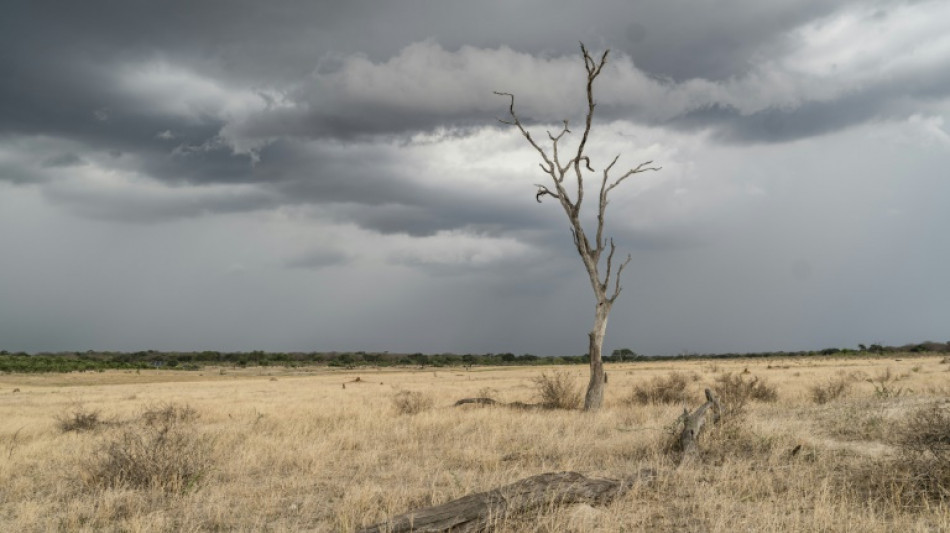
El Nino raises food security risk in southern Africa: FAO / Photo: Zinyange Auntony - AFP/File

 Trump Signals Willingness to Work With Democrats After Midterm Defeat

 Qatar media bodies discuss support for humanitarian initiatives

 InterContinental Hotels Group PLC Announces Transaction in Own Shares - November 04

 No. 22 UCLA defeats No. 5 Arizona 84-75 despite Kharchenkov's 38 points

 Vessel operator seeks witnesses after Vancouver grounding

 US Air Force deploys F-16 fighters to remote Aleutian base for readiness drill

 Bezos grant helps Seattle nonprofit move thousands of families toward housing

 Shrini Srivastava joins crew of Varanasi-Delhi Vande Bharat Sleeper service

 Nearly Half of Australian Workers Overqualified, Survey Finds

 RBI eases export-declaration compliance for individual service exporters

 India proposes more import entry points for drugs and medical devices

 Derek Tierney Outlines Ten-Year Strategy for National Digital Health System

 NBC’s Steve Kornacki Reveals Tech Habits Ahead of Midterm Elections

 India and Israel oppose UN draft on regional conventional arms control

 BLS Polymers shares open 65.3% above IPO price

 Capital-markets shares rally as Motilal Oswal and Angel One lead gains

 Latino Voters Defy ICE Fears, Turn Out in Record Numbers for Midterms

 ITC shares rise as analysts anticipate gradual cigarette-business recovery

 Reliance rally puts historical one-year return pattern in focus

 Kuwait edges Oman 1-0 in veterans Gulf Cup in Doha

 Saudi Aramco quarterly profit climbs 34.6% amid elevated oil prices
The El Nino weather phenomenon, coupled with widespread drought, is posing an increasing risk to food security in southern Africa, a UN agency warned Friday.
Major growing areas in Malawi, Mozambique, Namibia, Zambia and Zimbabwe received only 80 percent of average rainfall during the mid-November-to-February summer period in the southern hemisphere, the Food and Agriculture Organization (FAO) said.
In a report, the FAO said "significant rainfall deficits" were recorded in February, a period when water stress has a greater impact on crop yields.
Higher than usual temperatures and an "erratic" distribution of precipitation have made the situation worse, the FAO said in the Crop Prospects and Food Situation, which is published three times a year.
South Africa, the region's largest cereal producer, also suffered from scant rain and high temperatures in January and February, likely to lead to a drop in the maize harvest compared to last year -- albeit without falling below the average of the last five years.
Cereal production in the region is expected to decline overall this year, increasing the need to resort to imports.
Access to food could be further affected by a fall in income for residents of rural areas and a possible increase in prices due to supply pressures, according to the FAO.
The situation is exacerbated by the weakness of local currencies which helps to push up the cost of living in several countries, the UN agency added.
Zambia had already at the end of last month officially described the drought there as a "national disaster," which has devastated agriculture.
El Nino is a natural weather phenomenon, corresponding to a warming of a large part of the tropical Pacific. It occurs every two to seven years and lasts between nine and 12 months.
According to the World Meteorological Organization (WMO), El Nino reached a peak in December but should still result in above-normal temperatures until May over almost all land areas.
Earlier this week the WMO said the latest El Nino was one of the five strongest ever recorded, adding its impact will continue over the coming months by fuelling heat trapped in the atmosphere by greenhouse gases.
F.Wilson--AT