G20 hears a $250-billion-a-year idea: tax the super-rich / Photo: Nelson ALMEIDA - AFP

 Galloway accuser could not foresee publishing-sector fallout, lawyer argues

 New York City Center revives In the Heights as a timely community story

 Godzilla Minus Zero shifts focus toward postwar human drama

 Mehbooba Mufti urges dialogue and renewed Central Asia links for Kashmir

 Seacliff Healthcare Seeks Specialist GP in Thirroul

 US stocks fall before midterm Election Day as technology shares weaken

 BLS Polymers makes strong market debut at ₹248 per share

 Petrol and diesel prices remain broadly steady across major Indian cities

 Reliance shares remain in focus after near-12% surge

 2026 Arizona Midterms: Key Races, Ballot Measures, and Voter Deadlines

 Coal India prepares possible $1 billion Mahanadi Coalfields listing

 Julia Stiles and Ezra Sosa Share Emotional Farewell After 'DWTS' Elimination

 US Buildings Threatened by Wildfires Could Triple by 2060

 Why Pregnancy Cost Estimates Fail: A Family’s $9,000 Surprise

 US Strikes Iranian Targets in Strait of Hormuz Ahead of Midterms

 Brodeur’s Overtime Goal Secures Bethlehem’s Second Consecutive Sectional Title

 Rare 1970 Plymouth ‘Cuda 426 Hemi Listed for $400,000

 The Digital Burden: Why Instant Messaging Feels Like a Full-Time Job

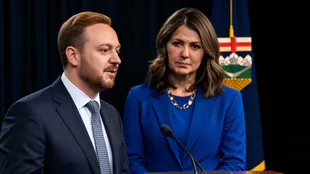 Alberta Tabled Controversial Riding Boundary Maps Amid Gerrymandering Accusations

 Hong Kong court set to sentence activist Joshua Wong in security case
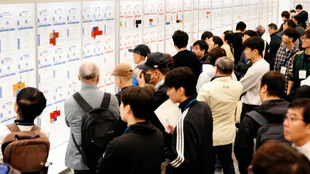
 Australia raises benchmark rate to highest level in 18 years

 'The Remarried Empress' Cast Discusses Bringing Fantasy Royal Drama to Life

 Asian stocks retreat as AI worries outweigh steep oil-price drop

 Hamad International Airport stages emergency drills during WATAN 2026

 Global failure to punish attacks leaves journalists at continuing risk

French economist Gabriel Zucman brought a $250-billion-a-year idea to top policy makers from the world's biggest economies Thursday: slap an international wealth tax on the super-rich.
Zucman, a 37-year-old ex-protege of renowned economist and inequality expert Thomas Piketty, was invited to outline his research on tax evasion by the ultra-wealthy at a meeting of finance ministers from the Group of 20 nations, which is working to address the issue.
In an interview with AFP on the sidelines of the gathering in Sao Paulo, the UC Berkeley and Paris School of Economics professor discussed how billionaires like Elon Musk and Jeff Bezos get away with paying zero income tax, how to change that, and why world leaders need to do it fast to save democracy.
- What is argument for minimum tax on super-rich? -
"There is a growing body of evidence that today's tax systems, instead of being progressive, tend to be sharply regressive at the top of the distribution... The explosion of extreme wealth is one of the defining features of the world economy. It's really in our face. And the fact that these people (billionaires) pay very little in tax has become more and more obvious over the years.
"One concrete proposal is billionaires should pay each year, in income tax, the equivalent of at least two percent of their wealth... Unlike income, wealth is very well-defined.
"There are about 3,000 US-dollar-billionaires globally... That would generate about $250 billion in additional tax revenue worldwide.
"According to the best estimates that we have, developing countries need an additional $500 billion to face the challenges of climate change. So we can get half of that with just this minimum tax on billionaires."
- What was the reaction at G20? -
"Today is really the first time that there has been a discussion like this in a forum like the G20. And I was struck by the fact that many countries expressed support for the view that yes, we should have international agreements about taxing the super-rich, increasing tax progressivity, fighting inequality. I think it's a very positive development.
"It's the very beginning of the conversation. There has to be an inclusive discussion and more studies to flesh out the details."
- Billionaires will hate it. What's your message to them? -
"It's good if they hate it. Because it shows that this will actually make a difference. This is actually the one tax that's going to be very hard for them to avoid. The income tax is very easy to avoid. The inheritance or estate tax, they're also very good at avoiding it. This is something that will be very hard for them to avoid. So yes, they're going to fight.
"But I think what I fear more is the consequences of inaction. I think it is much more risky to continue (the current trend) of rising concentration of wealth, of tax injustice.
"The inequalities we have today... are unlikely to be very sustainable. They are corrosive for democracy."
Ch.P.Lewis--AT