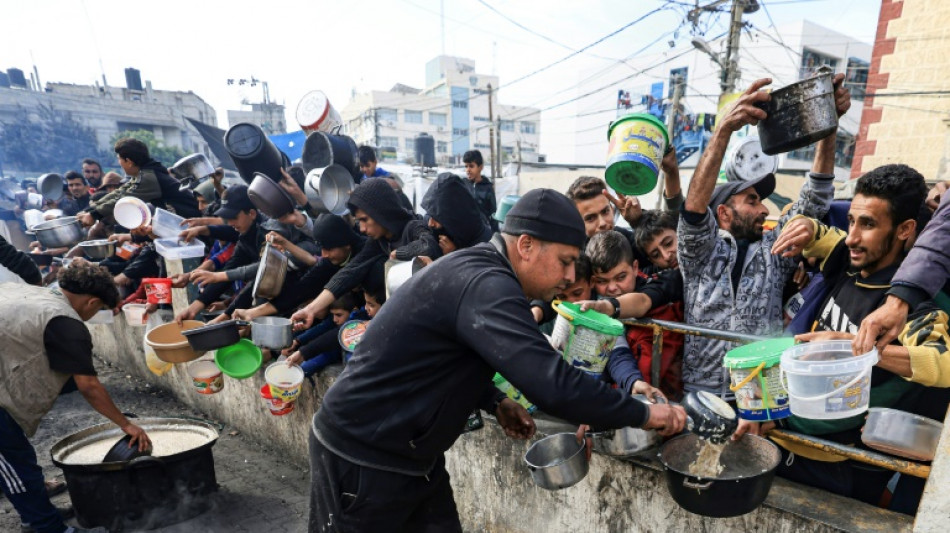
Criteria UN will use to declare expected 'famine' in Gaza / Photo: Mahmud HAMS - AFP

 South Africa economy shrinks ahead of local elections

 CapTLX Expands Institutional-Oriented Platform for Access to U.S. Capital Markets

 UK's Prince George starts at Eton College

 French far right keeps guarded silence over AfD Germany triumph
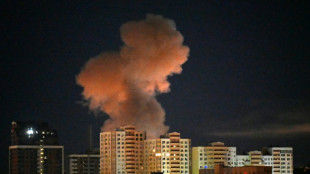
 Russia-Ukraine talks possible this month, Zelensky says, as Moscow pounds Kyiv

 Turkish Airlines will be new Liverpool shirt sponsor in £300 mn deal
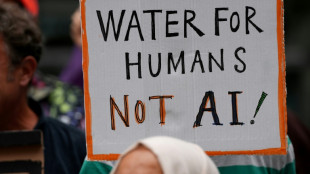 On London's Brick Lane, a data centre sparks local battle

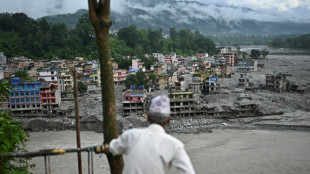 Nepal flood death toll rises as rescuers scour tunnels

 France's Mistral sees value soar with 3 bn euro cash infusion

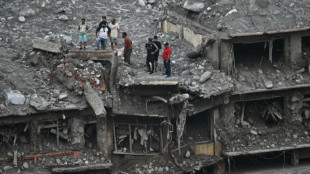 Nepal glacier saw exceptional heat before collapse caused deadly floods: researcher

 Ethiopia boosts drone production to fight rebels
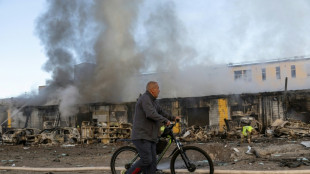
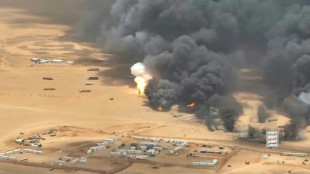 Yemen rebels hit Saudi Arabia with wave of strikes, wounding 73

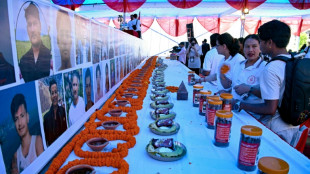 Nepalis mark a year since deadly protests that toppled government

 Rubio launches Latin America tour to cement US influence

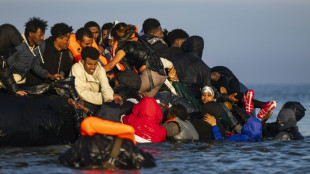 France tries 14 over deadliest Channel migrant crossing disaster

 Australia threatens hefty fines if big tech fails 'duty of care'
 Zverev romps into quarter-finals as Darderi downed

 Kauai on tornado watch as Hurricane Lowell nears Hawaiian islands
 Pakistan roll the dice in search of consolation win over England

 Yen extends gains as traders eye rate hike, tech rallies again

 'The ber months': Christmas arrives early in the Philippines
 N. Korea calls Russia bridge a sign of tighter ties

 US sanctions threaten to crush Iranian students' dreams
 Former champ Gauff holds off Jovic to reach US Open quarter-finals

 Formation Metals Extends A-Zone 200 Metres to the South and Identifies a New Vein Set, Returning 2.53 g/t Au over 11.8 Metres and 1.41 g/t Au over 20.6 Metres at the Advanced N2 Property

The UN, which has warned of "almost inevitable" widespread starvation in northern Gaza, uses strict criteria to declare a famine.
In the Jabalia refugee camp north of Gaza City, dozens of children wander around carrying empty pots, looking for anything edible.
Nearly five months after the start of the war, Gazans are despairing at the little humanitarian aid entering the coastal territory, particularly in the north. Some say they resort to eating leaves, or fodder for livestock.
In deciding whether or when to declare a famine, the UN relies on its specialised agencies based in Rome, the World Food Programme (WFP) and Food and Agriculture Organization (FAO), which in turn use the Integrated Food Security Phase Classification (IPC).
The IPC gathers evidence -- such as how many households are facing an extreme lack of food -- to draw up its Acute Food Insecurity scale, which is then used to inform decisions, such as how resources are allocated.
- What is famine? -
Famine exists in areas where at least one in five households has or is most likely to have an extreme deprivation of food and face starvation, death, destitution and extremely critical levels of acute malnutrition.
"If nothing changes, a famine is imminent in northern Gaza," WFP's deputy executive director Carl Skau told the UN Security Council on Tuesday.
No humanitarian group has been able to provide aid to the area since January 23, as Israel wages war on Palestinian militant group Hamas.
The UN estimates that 2.2 million people, the vast majority of Gaza's population, are on the brink of famine -- particularly in the north, where Israeli forces block aid from entering.
Some 97 percent of groundwater in Gaza is "reportedly unfit for human consumption", and agricultural production is beginning to collapse, Maurizio Martina, deputy director general of the FAO, told the Council.
UN aid chief Martin Griffiths last week wrote to the Security Council calling on members to act to prohibit "the use of starvation of civilian population as a method of warfare."
- How is famine measured? -
Famine tops the IPC's food insecurity scale, which has five phases.
Phase one is "Minimal" or no food insecurity in households. Phase two is when households are "Stressed", phase three is when they are in "Crisis", and phase four is "Emergency".
Phase five, "Catastrophe / Famine" is when households experience "extreme critical levels of acute malnutrition and mortality".
For famine to be declared, these three things must happen:
- at least 20 percent of households must face an extreme lack of food.
- one out of three children must be acutely malnourished.
- there must be two deaths for every 10,000 inhabitants, or four child deaths out of 10,000 children per day, due to starvation or malnutrition and disease.
The UN children's agency UNICEF has warned that the alarming lack of food, surging malnutrition and disease could lead to an "explosion" in child deaths in Gaza.
- Causes of famine -
The main causes of famine are:
- natural disasters such as drought, floods, or earthquakes; human pandemics and epidemics such as measles; or crop pests like locusts.
- economic crises which can affect food prices and employment opportunities.
- when humanitarian aid is not brought in quickly or efficiently enough.
- conflict, which often leads to population displacements, prevents people from cultivating land, and destroys markets and infrastructure.
In Jabalia, 60-year-old Palestinian farmer Abu Gibril told AFP last week he was so desperate for food to feed his family that he slaughtered two of his horses.
"We had no other choice but to slaughter the horses to feed the children. Hunger is killing us," he told AFP.
- Who declares famine? -
Once the criteria determined by the IPC are met, it is up to government authorities and UN agencies to declare a famine.
The IPC told AFP on Thursday that its next detailed report on Gaza is expected at the beginning of March.
L.Adams--AT