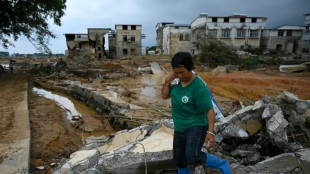
Journalist's personal battle as Burkina militants target women / Photo: WIKUS DE WET - AFP

 FIFA lashes 'unfounded allegations' after Argentina-Egypt clash
 'Only revenge': Iran mourners defiant at Khamenei burial
 Pogacar reclaims Tour de France yellow jersey with stage six win

 US existing home sales dip in June as cost worries persist

 Russia subjecting 1.6 million Ukrainian children to military brainwashing: OSCE report
 Strengthening El Nino likely to 'rank among largest' on record: US agency
 Jorge Jesus to take over as Portugal coach after World Cup exit

 Ebola outbreak is 'fastest growing ever' as 600 die
 Stocks shrug off tensions to rise on renewed tech interest
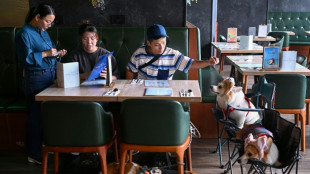 Hong Kong welcomes dogs into restaurants, to pet owners' delight

 England recall Slade for Fiji as pressure mounts on Borthwick
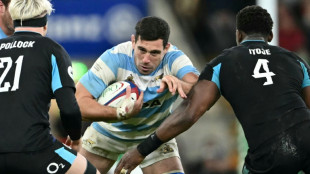 Lock Petti to become latest Argentina centurion in Nations Championship Test

 EU parliament greenlights digital euro
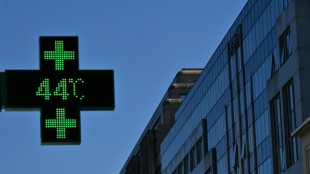 Two thirds of EU faced harmful ozone levels during heatwave: report

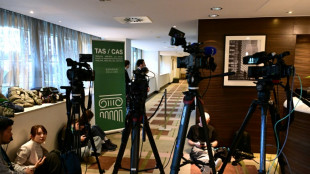 Russia to take on World Athletics at CAS over ban
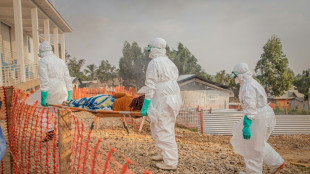 600 dead in DR Congo Ebola outbreak

 'Total Eclipse' singer Bonnie Tyler, queen of the 80s power ballad, dies at 75
 Myanmar names Norwegian Andersen as head of national team

 Russell back as Scotland tackle world champions South Africa
 Tour de France yellow jersey protocol: 90 minutes of 'stress'
 Crude stabilises after US-Iran flare-up rocked peace hopes
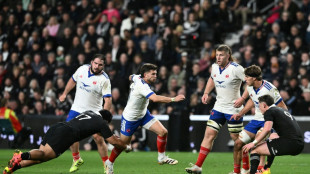 Playmaker Jalibert moves to fullback as France swing axe for Australia clash
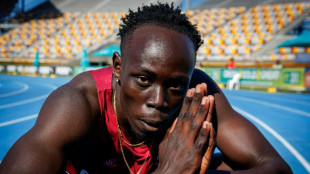 Australian sprint star Gout out of U20 worlds with hamstring tear

 Unions to protest as Volkswagen thrashes out job cut plans
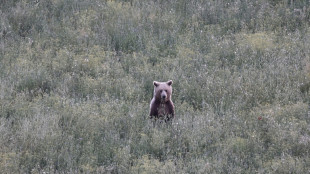 Teeth bared in Greece's bear-human showdown
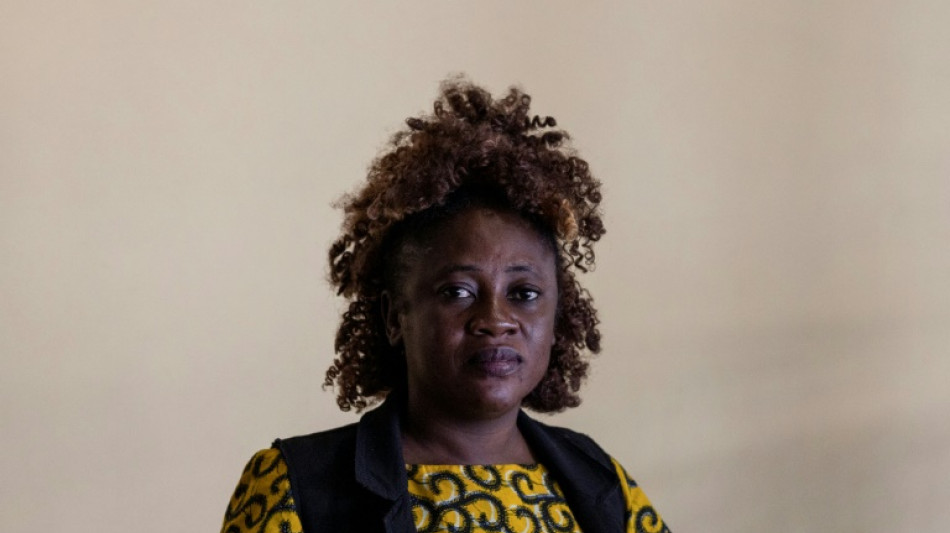
Award-winning journalist Mariam Ouedraogo finds it impossible to forget the heartbreaking stories she has covered about sexual assault in Burkina Faso's jihadist war.
The women who have been raped, she told AFP, are sometimes attacked "en masse, sometimes in public, in front of a husband, in front of children."
"These stories leave permanent marks," said Ouedraogo, who has been reporting on the jihadist violence since the attacks started in 2015.
The 42-year-old -- who last year became the first African woman to win the Bayeux prize for war reporters -- told of her personal battle at a Johannesburg media conference last week.
"It is my duty," she said of her reporting.
After Mali and Niger, Burkina Faso, an impoverished state of 22 million, is now beset by violence from militants linked to the Islamic State group and Al-Qaeda.
They have attacked isolated villages and started encroaching on the capital, Ouagadougou.
- Conflict taboo -
More than 17,000 civilians and soldiers have died, more than two million people have fled their homes, and the attacks are worsening.
On November 5, at least 70 people, including dozens of children and the elderly, were killed in the town of Zaongo.
A military junta that seized power in September last year has started conscripting all men over 18 for its anti-jihadist campaign.
Ouedraogo, a reporter for Sidwaya, a state-owned daily, focuses on the "sexual violence linked to terrorism".
It is a difficult topic, she said.
"In Burkina, everything that concerns sexuality is taboo." That includes rape by militants.
Victims do not like to talk "because that affects their intimate self, their dignity".
Ouedraogo, mother of a seven-year-old daughter, has maintained strong links to the women who have trusted her with their stories.
She listens and follows the women's progress.
Some are disowned by their families. There are unwanted and traumatic pregnancies.
Ouedraogo said she sometimes cannot keep the necessary distance from her story and becomes overwhelmed.
She can sense the symptoms of post-traumatic stress disorder -- insomnia, anxiety and depression.
"Each time they tell of the rapes, it is as if I have been raped," said Ouedraogo.
The women still call her each time they feel threatened or distressed.
"Each time I feel powerless," Ouedraogo said, adding that she is persecuted by "internal strife".
- Rape frontline -
Ouedraogo wrote about life's vulnerable victims even before the jihadist uprising.
She said her grandmother was a "woman of heart" who would care for all the "strays" in her district.
"Our courtyard was like a refuge for people in difficulty, the homeless, the widowed, the orphaned."
Ouedraogo said that if she went out and left a pair of shoes lying around, her grandmother would give them away.
"She said that my sisters and I had plenty, that we did not need them."
When the attacks started, Ouedraogo at first wrote about women who set up self-defence groups.
Then she started wondering why, in the mass killings, the women were not always killed.
"I started to understand that they were traumatised in other ways.
"I found out how they were raped, kidnapped and locked up."
Ouedraogo said she follows her grandmother's sense of justice through her journalism.
"I am sensitive to human suffering. I see the little things around me that others might consider ordinary.
"I detect everything that could cause pain."
Ouedraogo talked of her sleepless nights.
"I am out in the action, between the army and the terrorists. I warn the people: 'Run! They are coming. They're here'.
"Every morning, I wake up exhausted."
But Ouedraogo said she will not stop.
"I will continue on the topic of rape. These women need me."
From Ouagadougou, Ouedraogo regularly travels up to 100 kilometres (60 miles) to see displaced, homeless women.
"There is no zero risk. They (the militants) are everywhere and no-one is safe," she said with resignation.
"We are scared but we go anyway."
M.White--AT