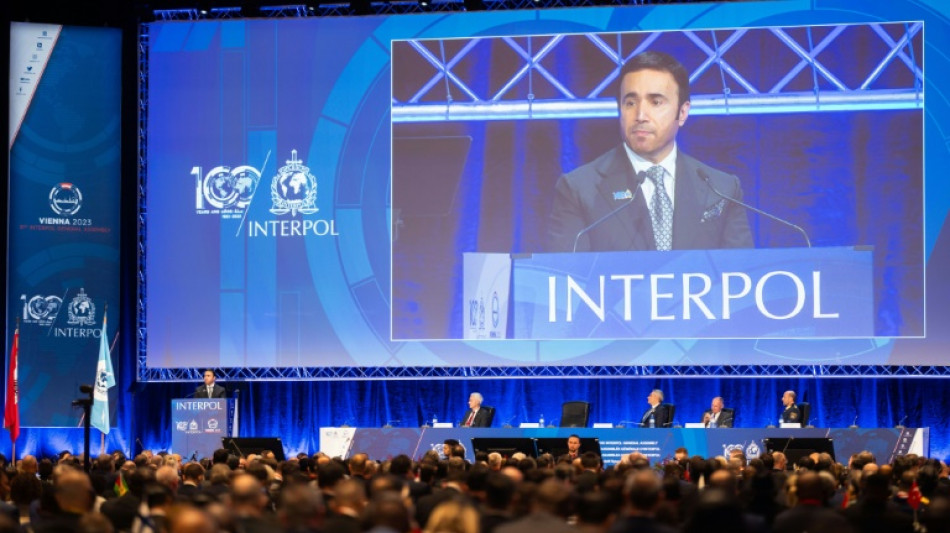
Interpol fights crime and controversial image, 100 years on / Photo: GEORG HOCHMUTH - APA/AFP

 FIFA lashes 'unfounded allegations' after Argentina-Egypt clash
 'Only revenge': Iran mourners defiant at Khamenei burial

 Pogacar reclaims Tour de France yellow jersey with stage six win

 US existing home sales dip in June as cost worries persist

 Russia subjecting 1.6 million Ukrainian children to military brainwashing: OSCE report
 Strengthening El Nino likely to 'rank among largest' on record: US agency

 Jorge Jesus to take over as Portugal coach after World Cup exit

 Ebola outbreak is 'fastest growing ever' as 600 die

 Stocks shrug off tensions to rise on renewed tech interest
 Hong Kong welcomes dogs into restaurants, to pet owners' delight

 England recall Slade for Fiji as pressure mounts on Borthwick
 Lock Petti to become latest Argentina centurion in Nations Championship Test

 EU parliament greenlights digital euro

 Two thirds of EU faced harmful ozone levels during heatwave: report
 Russia to take on World Athletics at CAS over ban
 600 dead in DR Congo Ebola outbreak

 'Total Eclipse' singer Bonnie Tyler, queen of the 80s power ballad, dies at 75
 Myanmar names Norwegian Andersen as head of national team
 Russell back as Scotland tackle world champions South Africa
 Tour de France yellow jersey protocol: 90 minutes of 'stress'

 Crude stabilises after US-Iran flare-up rocked peace hopes

 Playmaker Jalibert moves to fullback as France swing axe for Australia clash
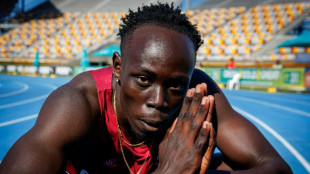 Australian sprint star Gout out of U20 worlds with hamstring tear

 Unions to protest as Volkswagen thrashes out job cut plans
 Teeth bared in Greece's bear-human showdown
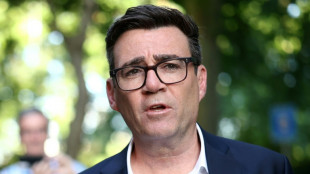
As Interpol marks its centenary, it faces the tricky task of nabbing criminals while ensuring that its famous red notices are not abused to snare dissidents.
This week, more than a thousand police and law enforcement leaders from around the world are attending Interpol's general assembly in Vienna, where it was founded.
"We've been growing from 20 member countries in 1923 to 196 today," Juergen Stock, Secretary General of the Lyon-based agency, told AFP.
With its famous red notices, Interpol "makes sure there is no safe haven for criminals, whether it's the physical or the online world," the 64-year-old German said.
But the organisation has had to step up controls after abuse of the notices led to criticism.
- Mafia and tattoos -
As a global hub for information sharing, Interpol helps member countries "connect the dots across continents" by identifying and locating criminals, explained Stock.
Interpol's database boasts 125 million police files, and receives about 16 million searches per day.
Bosnian Serb wartime leader Radovan Karadzic -- who was captured in 2008 after almost 13 years on the run -- and French serial killer Charles Sobhraj are among Interpol's most spectacular coups.
The global police body has also helped Italy in recent years crack down on the country's wealthiest and most powerful mafia: the 'Ndrangheta.
In May, Interpol launched an unprecedented campaign to identify 22 women believed to have been murdered in Belgium, Germany and The Netherlands.
By making previously confidential information public, Rita Roberts, who was killed in 1992, was finally identified this year after a family member recognised her tattoo.
- Tightened controls -
Notwithstanding its successes, Interpol's red notice system has been regularly accused of being misused by member states to hunt down political dissidents.
Shortly after taking office in 2014, Stock decided to tackle the problem head-on by setting up a team of about 40 experts to vet notices for wanted suspects before they are published.
"We are scanning the geopolitical situation around the world and doing these compliance checks," said Stock, stressing the system's "robust mechanism".
In 2022, just 1,465 notices were rejected or cancelled before publication, compared to a total of some 70,000 valid notices.
"If a case is predominantly political or has a military or religious component, Interpol is out and we are taking that very seriously," Stock insisted.
Moreover, he has introduced "a new refugee policy" to protect those who have been granted refugee status.
- 'Underfunded organisation' -
A handful of countries are currently under Interpol's heightened scrutiny, including Russia, which has been unable to directly send messages to other member countries since its invasion of Ukraine.
However, due to the lack of a "globally accepted definition on terrorism", mistakes can occur, acknowledged Stock.
French journalist Mathieu Martiniere, who recently published an in-depth investigation into Interpol with his German colleague Robert Schmidt, told AFP that "the situation has improved, but more than a hundred innocent people still slip through the net every year and can be extradited and then imprisoned."
A major problem Interpol faces is a "lack of human resources in an underfunded organisation."
The election of Emirati general Ahmed Naser al-Raisi -- who is being investigated in France for complicity in torture -- as Interpol's president in 2021 has also raised concerns.
The journalists' book, which was published in October, also examines when the Nazis took control of the organisation after the annexation of Adolf Hitler's native Austria.
Interpol's president at the time, Austrian Ernst Kaltenbrunner, was sentenced to death at Nuremberg and executed in 1946.
Until earlier this year, the names of Interpol's Nazi presidents were omitted from the website in order to "whitewash history", said Martiniere.
Stock said that was an unintentional oversight, which has since been rectified.
A.Clark--AT