Consuming artificial sweeteners linked to cancer risk: study

 Chennai Urbanist Sashna Develops 'Anniki' Card Game to Gamify Tamil Nadu History

 Transport Minister Defends Land Seizure Powers for Toronto-Quebec City High-Speed Rail

 UAE Weather Forecast: Scattered Showers and Fog Expected as Temperatures Drop

 CannaPharmaRX Reports Third Quarter 2026 Financial Results

 The IRS Just Set 2027 401(k) and IRA Limits - Clear Start Tax Explains Why Retirement Savings Are Not Out of Reach of IRS Collections
 Orogen Reports Robust Royalty Revenue Drives Strong Third Quarter Results and Continued Balance Sheet Growth

 multiQure Announces Agreement to Access Apertura Gene Therapy's TfR1 CapX(TM), A Next-Generation Blood-Brain Barrier-Crossing Capsid
 DataMEDS AI Expands License with Reboot Health AI to Include IP and Care Management Platform Rights for All Medical Applications in the U.S.

 InterContinental Hotels Group PLC Announces Transaction in Own Shares - November 25

 What Is the Best Social Media Platform in India?

 NextSource Materials Completes Shareholders' Agreement with Japan's Hanwa and JOGMEC and Receives US$30M Investment for UAE Battery Anode Facility
 Cosmos Health's Cana Laboratories Expands Solid-Dosage Capabilities with Automated Tablet Coating System
 Who Does the Best Skin Removal After Weight Loss in Florida?

 Tocvan Announces Non-Brokered Private Placement Offering of $2 Million

 Data Center Americas 2027 Announces Industry Leaders from AWS, Google, Microsoft, Oracle, CoreWeave and Applied Digital as Featured Speakers
 Regentis Establishes Global Clinical Support Team to Accelerate GelrinC(R) Knee Cartilage Repair U.S. Phase III Trial

 Valion Bio Announces 1-for-4 Reverse Stock Split Intended to Broaden Institutional Investor Access

 2027 Lexus GX 550 Pricing Revealed for Canada Across Six Trims

 Monaco Startup Monamedia Launches App Paying Users to Watch Ads
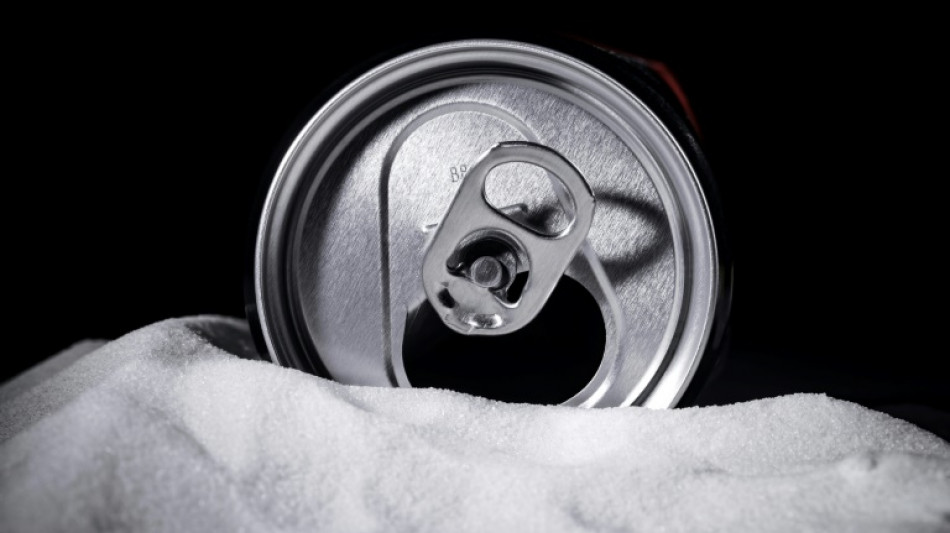
Consuming artificial sweetener could increase the risk of developing cancer, a large-scale study suggested Thursday, but experts not involved in the research said it was not enough proof to consider changing current health advice.
Sweeteners are consumed by millions every day in products like diet soda, partly as a way to avoid weight gain from sugar -- but how healthy these substitutes are themselves has long been a matter of controversy.
To assess the cancer risk of sweeteners, researchers analysed the data of more than 100,000 people in France who self-reported their diet, lifestyle and medical history in intervals between 2009-2021 as part of the NutriNet-Sante study.
They then compared consumption to the rate of cancer, while adjusting for other variables such as smoking, poor diet, age and physical activity.
The participants who consumed the largest amount of sweeteners, "beyond the median amount, had an increased cancer risk of 13 percent compared to non-consumers," Mathilde Touvier, research director at France's INSERM institute and the study's supervisor, told AFP.
The study, published in the journal PLOS Medicine, said that a higher cancer risk was particularly seen with sweeteners aspartame and acesulfame potassium -- both used in many soft drinks including Coke Zero.
Out of the 103,000 participants, 79 percent were women and 37 percent consumed artificial sweeteners.
Soft drinks accounted for more than half of the artificial sweeteners consumed, while table-top sweeteners represented 29 percent.
The study found that "higher risks were observed for breast cancer and obesity-related cancers".
Touvier said "we cannot totally exclude biases linked to the lifestyle of consumers", calling for further research to confirm the study's results.
The US National Cancer Institute and Cancer Research UK both say that sweeteners do not cause cancer, and they have been authorised for use by the European Food Safety Authority.
- 'Not proof' -
"The relationship between artificial sweetener consumption and cancer risk is a controversial one, going back to the 1970s when (sweetener) cyclamate was banned for being linked to bladder cancer in rats -- although this was never shown to be the case in humans," said James Brown, a biomedical scientist at Britain's Aston University.
Brown, who was not involved in the study, told AFP that it was "reasonably well-designed" and had an "impressive" sample size.
But he added he did not "believe the current study provides strong enough evidence" for Britain's National Health Service to "change its advice just yet".
Michael Jones of The Institute of Cancer Research, London said that the link reported in the study "does not imply causation" and was "not proof that artificial sweeteners cause cancer".
He said the findings could suggest that "cancer risk may be raised in the type of person who uses artificial sweetener rather than the sweetener itself."
Thursday's findings also do not mean consumers should rush back to sugary drinks -- a 2019 NutriNet-Sante study found that they were also linked to a higher risk of several cancer types.
Brown said that not all sweeteners were equal, with some such as stevia showing health benefits.
Artificial sweeteners are "still likely a useful tool that can help reduce weight gain when replacing sugar -- if the right sweetener is used," he said.
E.Hall--AT