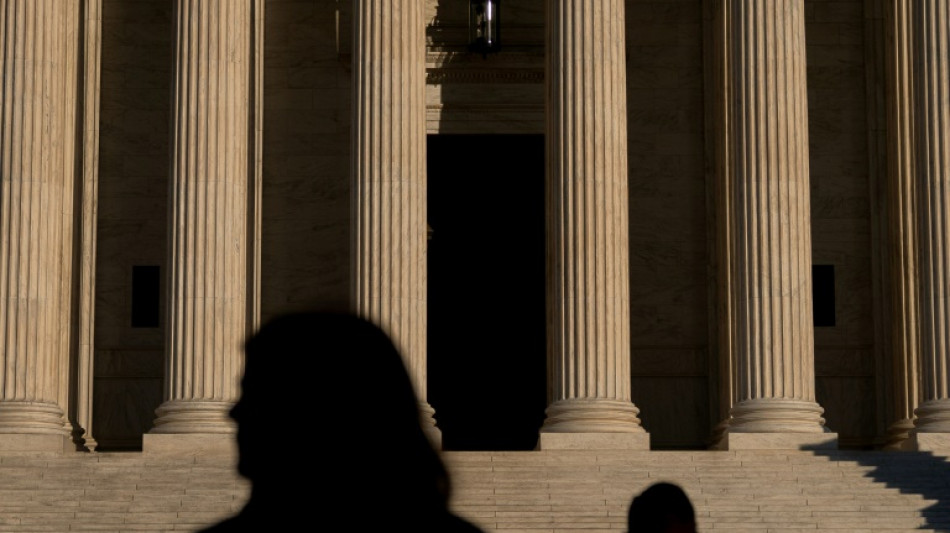
US Supreme Court to weigh whether abusers have right to own guns / Photo: Stefani Reynolds - AFP

 Deschamps hails Mbappe after superstar fires France into World Cup semis

 OpenAI number two Simo steps down to focus on health

 Iran buries Khamenei after new fighting with US erupts

 Can ageless Messi keep delivering for Argentina at World Cup?

 Chip titan SK hynix to raise $26.5 bn in blockbuster US listing
 Bayeux Tapestry begins epic journey from France to London
 Mbappe, Dembele fire France past Morocco into World Cup semi-finals

 Chip titan SK hynix readies for mega US listing

 Iyer says India in 'transition' after latest thrashing by England

 Iyer says India in 'transition' after latest England thrashing
 Silencing World Cup hotshot Haaland vital, says England's O'Reilly

 Australian sprint sensation Gout Gout set to miss rest of season

 England thrash India by nine wickets for T20 series win

 Wimbledon run came 'out of nowhere', says finalist Noskova

 India captain Kaur hopes Lord's Test can offset World Cup woes

 China factory fire kills at least 28 people

 Dubai Police Unveil Next Generation of ‘Ghiath’ Smart Patrols Powered by BYD

 Djokovic faces Sinner showdown, Fery eyes Wimbledon final
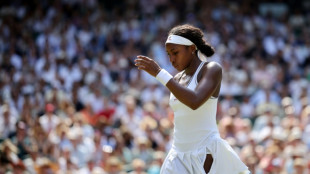
 Noskova books all-Czech Wimbledon final clash with Muchova
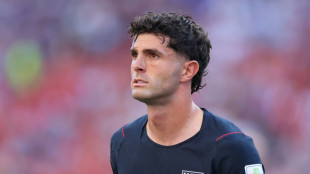
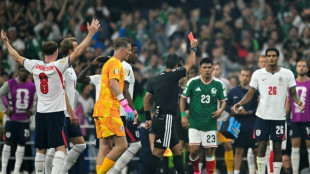 England's Quansah handed two-game World Cup ban

 UK sets record for number of days over 34C

 Haaland relishing 'special' World Cup showdown with England

 FIFA lashes 'unfounded allegations' after Argentina-Egypt clash
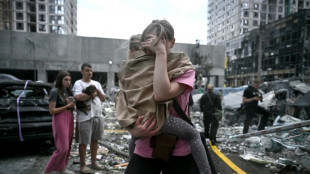
 'Only revenge': Iran mourners defiant at Khamenei burial
 Pogacar reclaims Tour de France yellow jersey with stage six win

The conservative US Supreme Court has an opportunity on Tuesday to clarify its latest case law on the right to bear arms, which has caused confusion in American courts -- though it remains to be seen whether it will seize it.
Two weeks after a mass shooter left 18 people dead in the northeastern state of Maine, the court is addressing the particularly sensitive issue of gun rights following a controversial ruling in June 2022.
The justices on Tuesday will be asked to weigh the Constitution's Second Amendment right to bear arms against a law designed to protect victims of domestic abuse.
In the 2022 decision, carried by the six conservative justices against their three liberal colleagues, Justice Clarence Thomas explained that the court would henceforth authorize only "reasonable" exceptions to the Second Amendment, notably in "sensitive places."
Because of the ruling, lower courts across the country have had to determine whether gun restrictions before them are consistent with precedents in "the history and traditions of the United States" from the late 18th to the 19th century.
On the basis of that new case law, an ultraconservative federal appeals court ruled in March that a federal law banning gun ownership by people with domestic violence restraining orders was unconstitutional, for lack of historical precedent.
In the Texas case the ruling concerned, police recovered a handgun and a rifle during a search of the home of a suspect implicated in five shootings in two months, and subject to a restraining order on behalf of a former girlfriend, which prohibited him from possessing weapons.
- 'Alarming consequences' -
The Justice Department, in its arguments in favor of the domestic violence restraining order restrictions, cites a long tradition of the government restricting gun ownership to "law-abiding citizens."
But in their written arguments, the public defenders for the suspect, currently in prison, claim that "the government cannot point to a close relative, a distant cousin, or anything bearing even a passing resemblance" to the domestic violence legislation concerned.
The requirement of a precursor text for any limitation on the Second Amendment has given rise to conflicting rulings and legal uncertainty, Biden administration counsel Elizabeth Prelogar, who is arguing before the Supreme Court, has said.
Several judges have publicly expressed their bewilderment at the additional historical and legal contextualization required of them by the Supreme Court.
"Myriad and obvious public safety laws, some over a century old, face inconsistent invalidation," noted one of them, Stephen Higginson, in August, in another gun case before the conservative Fifth Circuit Court of Appeals, which handed down the decision up for debate on Tuesday.
"The impact of these challenges, outside of the evident yet indescribable tragedies of victims of gun violence, will fall heavily on states, which exercise most police power and must assure public safety," warned Higginson, a judge appointed by a Democratic president, unlike most of his colleagues on the court.
A.Anderson--AT