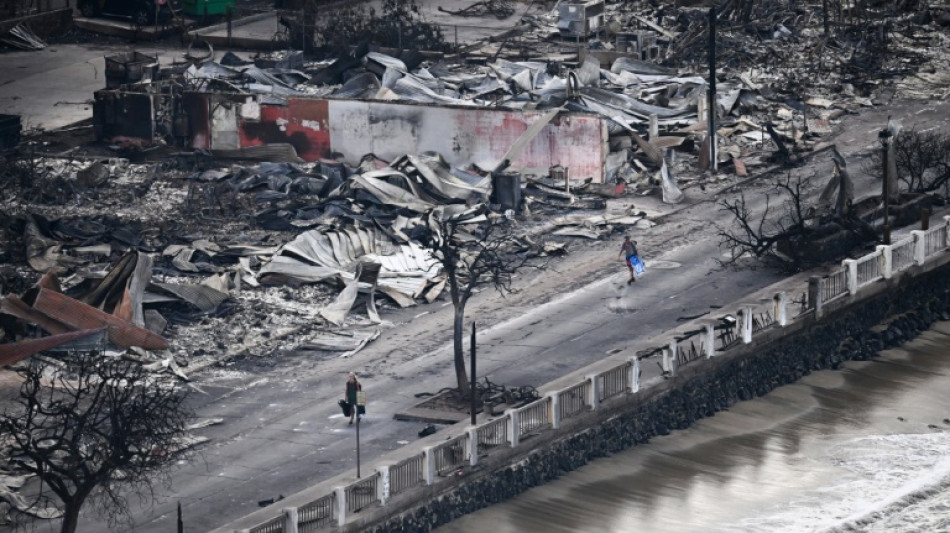
Hawaii's deadly wildfire: what we know / Photo: Patrick T. Fallon - AFP

 North Sitra sewage expansion lifts capacity to 30,000 cubic metres daily

 Bahraini law allows crypto assets to pass to heirs

 Milky Way and Brazilian lagoon form eye-like image in NASA feature

 Review analysis ranks South Africa’s best and worst-rated malls

 Court overturns MK party expulsions of Zuma-Sambudla and Ndhlela

 Khloé Kardashian and Malika Haqq dispute surprises mutual friends

 Fight breaks out among fans during Rams-Packers game at SoFi Stadium
 Laura Brand visits Russell Brand in prison with their children

 U of C Professor and Residential School Survivor Condemns Denialism

 Biography details Johnny Depp’s efforts to leave 21 Jump Street

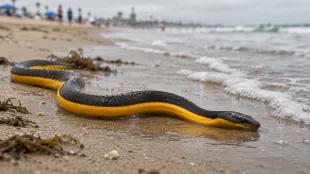 Rare yellow-bellied sea snake found on Southern California beach

 Second-generation Mini Cooper SE set for India launch with 402km range

 How to Drive a Classic Car Without Ownership: Rental, Clubs, and Track Options

 South African Bail Fund Launches to Address Remand Detention Crisis

 Qatar Facilities Management Market to Reach $11.15bn by 2032
The terrifying wildfire that destroyed a historic Hawaiian town seems to have caught many occupants unaware.
Here's what we know about the fire that razed Lahaina, a town on Maui's west coast popular with tourists, and why it was so deadly.
- How did the fire start? -
A brush fire was initially reported in the Lahaina area around 6:30 am Tuesday, sparking a limited evacuation.
Maui County officials said the blaze was contained a few hours later, but warned high winds had brought down power lines, and electricity was out. The county said on Facebook the cause of the blaze was under investigation.
By late afternoon, the fire was reported to have flared up again, forcing an evacuation warning for some residents, with others "advised to shelter in place."
Over the following hours the fire spread, and near midnight, Maui County was warning all people living in West Maui to stay where they were, unless ordered to evacuate.
- Why were people caught unaware? -
Residents say panic spread through Lahaina as flames began to appear in neighborhoods that were previously untouched.
Claire Kent described scenes of panic as people in the town realized they had to leave immediately.
"It was all just word of mouth, like people running down the street saying 'you need to get out.'
"There were guys riding around on bicycles, just screaming at people to leave."
By Wednesday morning, much of Lahaina lay in ruins.
Crystal Kolden, a fire specialist at the University of California, Merced, said residents appeared to have had no notice that there was a dangerous blaze.
People's "first inkling that there's a fire outside their house is to see flames through the windows. And it's too late," Kolden said, according to the Los Angeles Times.
"It's very different than... the vast majority of wildfires involving evacuations for most of the 20th century (that) are slow enough moving, where people have several hours, sometimes even days, to evacuate."
- Why did the fire spread so quickly? -
The western side of Maui doesn't get much rain because it is sheltered by an extinct volcano, but this year has been particularly dry.
The way it is used has also changed.
"The rural land to the east of Lahaina was once intensely managed plantations, with irrigation ditches and terracing," said Thomas Smith, a specialist in Environmental Geography at the London School of Economics.
Farmed land would have been fire resistant -- frequently watered and without long-established plants.
But "since most of this land has been abandoned, long grasses, shrubs and young trees had taken root, substantially increasing the amount of flammable vegetation surrounding the town."
So whatever sparked the blaze, it had plenty of fuel to burn through.
Crucially, powerful winds were whipping the island, fueled by a hurricane churning in the ocean hundreds of miles (kilometers) to the southwest.
The island's topography -- the volcano slopes down towards Lahaina -- was also a significant factor.
"Downslope winds are dry and warm, further reducing the moisture in the vegetation and driving more extreme fire behavior," said Smith.
- Has climate change played a part? -
The unchecked burning of fossil fuels since the start of the industrial revolution has released billions of tonnes of planet-warming gases into the atmosphere.
This has caused higher average global temperatures -- the Earth just experienced its hottest month ever -- which in turn is changing our weather patterns.
While wildfires are a natural phenomenon, scientists say our warming atmosphere is making disasters like these worse.
"Climate change is leading to warmer atmosphere everywhere, which has more drying power," said Yadvinder Malhi, Professor of Ecosystem Science at the University of Oxford.
"So the same fire that would have been moderate a few decades ago will be more intense now."
E.Flores--AT