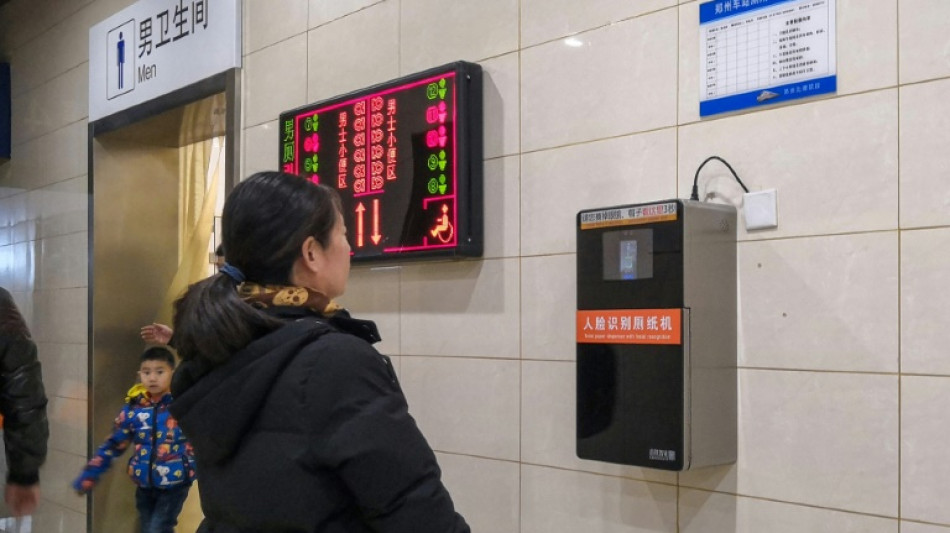
China drafts rules for using facial recognition data / Photo: STR - AFP/File

 North Sitra sewage expansion lifts capacity to 30,000 cubic metres daily

 Bahraini law allows crypto assets to pass to heirs

 Milky Way and Brazilian lagoon form eye-like image in NASA feature

 Review analysis ranks South Africa’s best and worst-rated malls

 Court overturns MK party expulsions of Zuma-Sambudla and Ndhlela

 Khloé Kardashian and Malika Haqq dispute surprises mutual friends

 Fight breaks out among fans during Rams-Packers game at SoFi Stadium

 Laura Brand visits Russell Brand in prison with their children

 U of C Professor and Residential School Survivor Condemns Denialism

 Biography details Johnny Depp’s efforts to leave 21 Jump Street

 Rare yellow-bellied sea snake found on Southern California beach

 Second-generation Mini Cooper SE set for India launch with 402km range

 How to Drive a Classic Car Without Ownership: Rental, Clubs, and Track Options

 South African Bail Fund Launches to Address Remand Detention Crisis

 Qatar Facilities Management Market to Reach $11.15bn by 2032
Firms using facial recognition in China will be required to obtain consent or legal permission before collecting personal information, draft regulations released Tuesday said, while stipulating the rules would not apply to some bodies.
China is one of the most surveilled societies on Earth, with thousands of CCTV cameras scattered across cities and facial recognition technology widely used in everything from day-to-day law enforcement to political repression.
Draft regulations released by China's Cyberspace Administration warned that use of the technology must "abide by laws and regulations, comply with public order, respect social morality, assume social responsibility, and fulfil duties to protect personal information."
Use of the technology to "analyse... ethnicity or religion" is prohibited, and the processing of facial data can only be carried out with the individual's consent or written legal permission, the law said.
It must also not be used to "endanger national security, harm public interests", or "disrupt social order", the regulations said.
Such technology may be used "only when there is a specific purpose and sufficient necessity, and when strict protection measures are taken", reads one article of the regulation.
But, it stipulated, the rules would not apply to those "not required by laws and administrative regulations to obtain personal consent". It did not specify what those were.
The regulations will enter effect on September 7 following a public consultation period.
A number of top Chinese facial recognition and surveillance firms have faced sanctions by the United States for their alleged role in repression.
State-owned surveillance giant Hikvision was blacklisted in the United States for allegedly helping Beijing carry out a "campaign of repression".
And Hong Kong-listed SenseTime was placed on a similar blacklist in 2019 over the use of its technology in mass surveillance in the western region of Xinjiang.
At an industry expo in Beijing in June, AFP saw a number of prominent firms showcasing tech that allowed them to identify "undesirable" behaviours and scan faces from more than 100 metres (yards) away.
T.Perez--AT