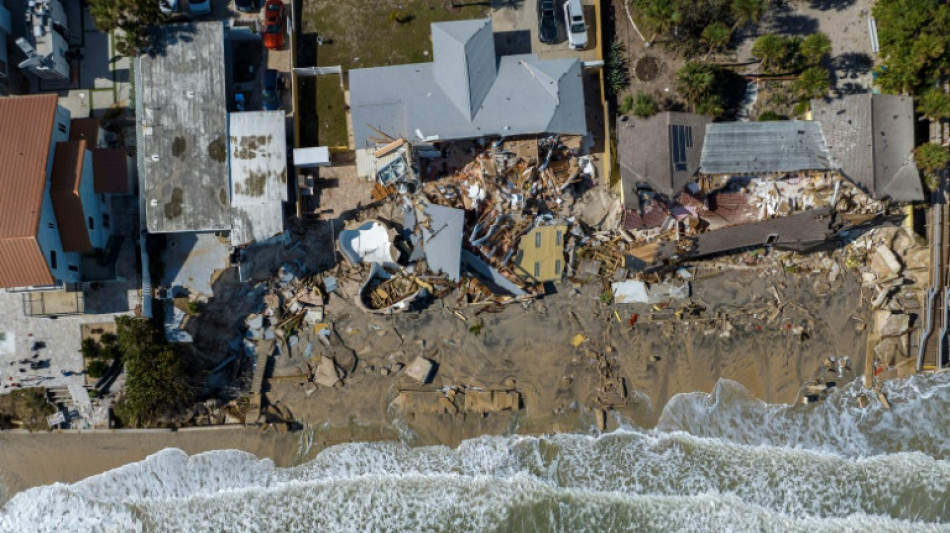
US predicts at least 12 named storms this hurricane season / Photo: Ricardo ARDUENGO - AFP/File

 President Trump to Attend TSMC Groundbreaking in Phoenix Next Week

 Gauteng Health Department Warns of Rising Antibiotic Resistance Threat

 Bishop Museum Races to Save Rare Megamouth Shark Specimen

 InterContinental Hotels Group PLC Announces Transaction in Own Shares - November 26

 NiobiumX Mining Explains How it Will Hunt for Niobium at Shipshaw: Magnetic Lows, Thorium Highs, and Machine Learning Built for a District With One Producing Mine

 Impauer Technologies Inc. Announces Third Quarter 2026 Financial Results and Equity Compensation Grants

 Beyond Wired Broadband: InHand 5G Routers Offer Businesses a More Flexible Connectivity Solution

 PPX Announces Repayment of 25% of Its Processing Plant Construction Loan

 Rainbow Runtz Strain Guide Examines Disputed Origins and Historical Potency Data
The US National Oceanic and Atmospheric Administration on Thursday predicted a "near normal" hurricane season with 12 to 17 named storms packing winds of at least 39 mph (63 kph).
Of those, five to nine could become hurricanes (winds of 74 mph or higher), including one to four major hurricanes (category 3, 4 or 5; with winds of 111 mph or higher).
NOAA said it has 70 percent confidence in these ranges.
"With a changing climate, the data and expertise NOAA provides to emergency managers and partners to support decision-making before, during and after a hurricane has never been more crucial," said NOAA Administrator Rick Spinrad in a statement.
The Atlantic hurricane season runs from June 1 to November 30, with NOAA predicting a 40 percent chance of a near-normal season, a 30 percent chance of an above-normal season and a 30 percent chance of a below-normal season.
After three seasons with an atmospheric phenomenon called La Nina, NOAA predicts an El Nino to develop this summer, which has a suppressive effect on hurricane activity.
But this could be offset by more localized conditions favorable for hurricanes, such as an above-normal west African monsoon, "which produces African easterly waves and seeds some of the stronger and longer-lived Atlantic storms," NOAA said.
Predicted warmer-than-normal sea surface temperatures in the tropical Atlantic Ocean and Caribbean Sea meanwhile add more energy to developing storms.
In 2022, Hurricane Ian in particular devastated Florida, killing dozens and causing more than $100 billion in damage alone -- by far the costliest weather disaster in the world last year.
In general, climate change is making hurricanes more powerful as they feed on warmer ocean surfaces, scientists say.
L.Adams--AT

