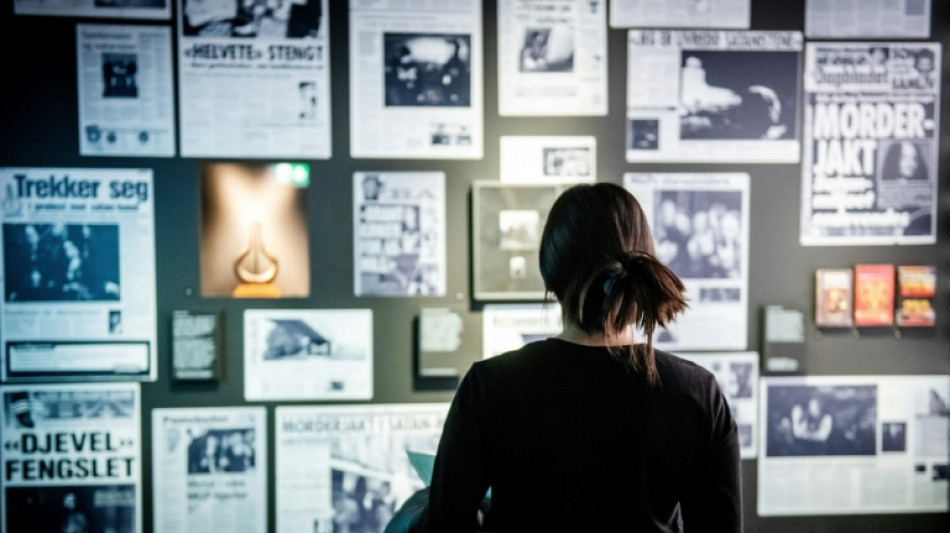
Norway's black metal earns a place in halls of culture / Photo: Gorm K. GAARE - The National library of Norway/AFP

 How to Drive a Classic Car Without Ownership: Rental, Clubs, and Track Options

 South African Bail Fund Launches to Address Remand Detention Crisis

 Qatar Facilities Management Market to Reach $11.15bn by 2032

 Aston Bay to Attend Resourcing Tomorrow in London Following Storm Pre-Feasibility Study

 Silver X Reports Third Quarter 2026 Results and Provides Nueva Recuperada Expansion Update

 Spinnova and Positive Materials Strengthen Long-Term Collaboration Through Preferred Partnership

 Zach Hickerson Recounts Hayden Panettiere's Final Moments in New Interview

 Luxembourg Housing Petition Passes Threshold for Parliamentary Consideration

 Raheem Sterling Receives Suspended Sentence After Lamborghini Crash

 Audience to Choose the Set List at Luxembourg's First FAMIL Jukebox Night

 Luxembourg Pay Rise Delayed as Regional and World Headlines Develop

 Chennai Urbanist Sashna Develops 'Anniki' Card Game to Gamify Tamil Nadu History
Norway's black metal music first gained notoriety with murders and church burnings but has now earned its spot in the halls of culture with a new exhibit at Oslo's National Library.
"Bad Vibes" showcases a dark world of music that has a contemplative, almost intellectual side beneath its destructive exterior.
It features video clips full of naked bodies and crosses in flames, a provocative CD cover illustrated with a charred church and sold with a lighter, and news clippings chronicling the genre's legal woes.
"Everything here tends to be about feelings," explains exhibit curator Thomas Alkarr above the din of raspy shriekings from the background music.
"Black metal's raison d'etre is not to sleep with girls, it's to look into the abyss."
Black metal -- a subgenre of heavy metal -- first appeared in conformist and tranquil Norway in the mid-1980s, styling itself as a rejection of the country's straight-laced society and a return to its roots.
Crammed with Norse mythology, Viking history, popular legends and Satanism, the lyrics are set to brutal and abrasive music deliberately made to sound raw and primitive.
"The main message of black metal is that darkness is something good," says Dan Eggen, a former professional footballer turned philosopher.
- 'Baby eaters' -
Over the past four decades, a slew of bands has sprouted up in small towns across the country -- outsiders decked out in ammo belts and spiked bracelets, with their faces daubed in corpse paint.
Peaceful Norway has become home to heavyweights like Mayhem, Darkthrone, Burzum, Satyricon, Immortal, Emperor and Dimmu Borgir.
Their fame grew beyond Norway's borders, partly due to troubles with the law.
In 1993, at a time when the black metal scene was engulfed by violent infighting, black metal bassist Varg Vikernes stabbed Mayhem's singer-guitarist Oystein Aarseth to death.
The following year, Vikernes was convicted of the murder as well as several church arsons.
The latter were copycatted by other black metal band members, which led to several centuries-old buildings being reduced to ash.
"One main reason why Norwegian black metal became so big, at least abroad, is because of what happened during these years," said Alkarr.
"That's why Norwegian black metal is seen as more diabolical than others."
Yet the genre's reputation abroad, where the bands are sometimes perceived as ruthless "baby eaters", is actually the result of just a few radical individuals, Alkarr said.
"The truth is that most of them are just normal people who like to watch skiing in a comfy armchair," the curator said.
"They're professional musicians and family men who just happen to be passionate about a very particular kind of music."
- 'Paradox' -
But given its contrarian nature, does black metal -- which is anti-establishment to its core -- really belong in Norway's venerable National Library?
"It's a kind of paradox", admitted Marte-Kine Sandengen, in charge of the library's exhibits.
"But we can't ignore the fact that Norwegian black metal is an important part of our national cultural heritage."
"One aspect of our mandate is to share this heritage with the public -- not just mainstream culture like Ibsen, Hamsun and the other big authors, but also the discordant voices from underground cultures," she said.
The black metal scene also no longer has the same run-ins with the law and has today become more mainstream.
In Norway these days, Dimmu Borgir can be heard performing with the national radio's symphony orchestra, while Satyricon has accompanied a Munch Museum exhibit.
Black metal also has its own well-known festival, dubbed Inferno, its own category in Norway's version of the Grammys, and budding stars in youth music competitions.
The existence of an international fanbase even prompted the foreign ministry to brief its diplomats on the subject.
But further afield, the bands do not always enjoy the same acceptance.
In March, Brazilian authorities cancelled a Mayhem concert, mistakenly believing the group to be neo-Nazi.
E.Hall--AT
