Bangladesh factory disaster survivors plead for justice 10 years on / Photo: Munir uz ZAMAN - AFP

 Garcia keeps WBC welterweight title by stopping Benn
 Lights out in Laos as electricity exports surge

 'This is the test': All eyes on US Fed to tackle high inflation

 Scars of Marawi siege linger as Philippines poll nears

 Trump turns to golf, family business on Irish visit's second day

 Best Online Gold Dealers in USA 2026 Rankings Released By Experts

 South Africa defeat New Zealand 43-28 to complete 3-1 series victory
 Rybakina triumphs in US Open, denies Sabalenka three-peat

 Mini 1998 GT pairs 161-hp engine with John Cooper Works chassis hardware

 GTA VI draws political criticism online as preorder estimates exceed five million

 Steven Strogatz weighs AI mathematics advances and their consequences for researchers

 Winston County trash-debt prosecutions face challenge from civil-rights lawyers

 Marmot research gains over $140,000 from meme-coin fees alongside wildlife contest

 Queens residents seek renewed enforcement along Roosevelt Avenue

 United States beats Spain 76-66 to set up World Cup final against France

 Cristian Mungiu's Fjord examines a family's conflict with Norwegian child authorities

 Gilbert Arenas questions Jonathan Kuminga's decision to join Minnesota

 Arteta blasts 'unacceptable' Sunderland penalty despite Arsenal win

 Mbappe at the double as Real Madrid sink Rayo

 Arsenal extend perfect Premier League start as Chelsea, Liverpool held

 US survive Spain scare to book World Cup final clash with France

 Celine Dion makes long-awaited return to stage in Paris
 Werro crowned Ultimate queen, US sweep 100m races

 Venezuelans outside Caracas say capital not sharing blackout burden

 Danish WWII drama wins top prize at Venice festival
Bangladeshi garment worker Sumi Akhter feared for her safety, but was told to start her shift or risk forfeiting her wages. An hour later she was pinned down under rubble and clinging to life.
Akhter was 18 when she began working at Rana Plaza, a sprawling seven-storey factory complex near the capital Dhaka, now remembered as the site of one of the world's worst industrial disasters.
More than 1,130 people died in the building's collapse, a toll compounded by management demands that employees keep working despite glaring signs of an imminent disaster.
"All I want is justice," Akhter, whose mother also worked in the complex and died while trapped under the debris, told AFP.
Both women had been reluctant to return to work after the building was evacuated the day before its collapse following the appearance of cracks in the structure.
"They could have said, 'Don't enter the building'," she said. "It could have saved the lives of so many people."
Monday marks the 10th anniversary of a catastrophe that spotlighted the global fashion industry's reliance on developing world labour working in dangerous and sometimes deadly conditions.
Bangladeshi factory owners have proudly touted their efforts to overhaul the sector, and deadly accidents have declined sharply in the decade since.
For many of the more than 2,000 survivors of the collapse, however, their ordeal never ended.
More than half are unemployed and many suffer from deep psychological trauma, according to a survey by Action Aid.
Weeks after the collapse, while still mourning her mother's death, Akhter was told that her leg would have to be amputated.
The procedure has left her unable to return to work and requiring ongoing treatment with costs exceeding what she received in compensation.
"We are alive, but we are dying day by day," she said.
- 'Man-made disaster' -
A Bangladesh court indicted 38 people for murder over their roles in the collapse, including Sohel Rana, an influential former ruling party politician who owned the factory.
The trial has been bogged down in delays and prosecutor Bimal Samadder said he was doubtful that a verdict would be reached in the next few years.
He told AFP that witness accounts made it clear that many had died in the disaster because they had been "forced" to work in the building, despite signs it was structurally unsound.
"Managers, factory owners and (the) building owner threatened that they won't pay them any salaries if they did not work," he said.
Journalist Najmul Huda, who shot footage of cracks in the structure that presaged the disaster, said he was frustrated that he was yet to be called to give his account at court.
Huda was detained by police in 2016 for reporting on wage protests in garment factories and spent months in jail, which he believes was retribution for showing Rana Plaza was at risk of collapse.
"If I did not have footage of the crack, the factory owners and Sohel Rana would have claimed that the building was structurally okay," he said.
"The footage proved it was a man-made disaster."
- 'Nobody talks about it' -
The Rana Plaza collapse prompted foreign brands, unions and manufacturers to jointly create watchdogs that have seen considerable success in improving safety standards.
Industrial accidents remain common in Bangladesh, but the garment sector has seen far fewer major incidents.
The disaster helped create the impetus to clean up a poorly regulated industry, textile factory owner Nafis Ud Doula told AFP.
"Afterwards, all of us realised that the way we were running our factories, we should not run that way," said Doula, also a member of a watchdog working to improve safety standards.
Some labour rights groups, however, warn that the new safety audit system has limits.
Laura Bourgeois at advocacy organisation Sherpa warned of factory managers' potential to influence worker interviews, and even of "rigged audits with factories that have been set up from scratch".
The safety overhaul cost manufacturers more than two billion dollars, said Doula, but they have also seen phenomenal growth in export orders from foreign brands as a result.
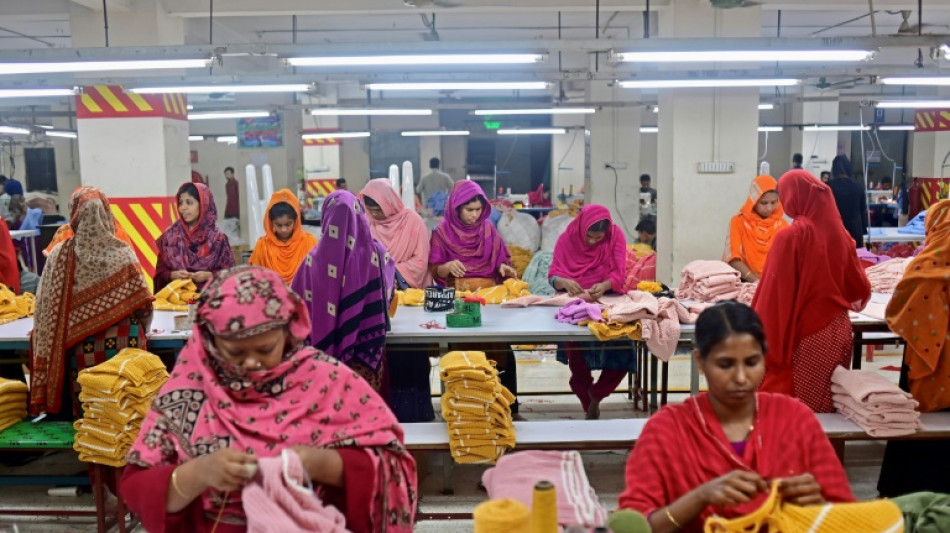
Garment exports from Bangladesh have doubled to $45 billion in the past decade, while average wages have tripled, drawing millions of women from rural areas into the formal workforce.
Among them is Laxmi Soren, waiting in line alongside a dozen other women who were seeking work at a factory, hoping to send money back to her remote village to support her two children.
A stone's throw away was the empty plot where Rana Plaza once stood, bare except for patches of wild grass and a monument to the dead workers, erected by labour unions.
"Rana Plaza is no longer in people's thoughts. Nobody talks about it anymore," Soren told AFP.
"But then when I go past the ruins, my heart aches."
B.Torres--AT