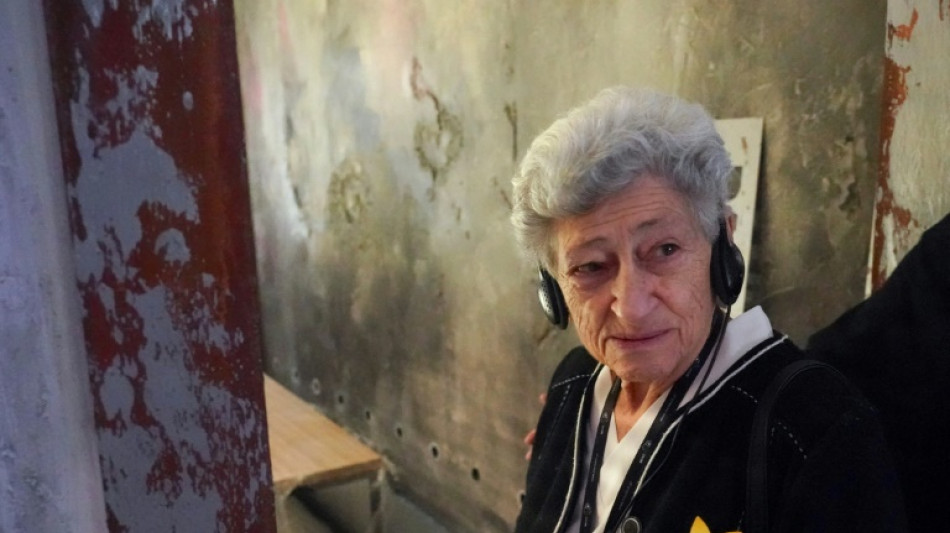
'Burning all around': Warsaw ghetto survivors recall uprising / Photo: JANEK SKARZYNSKI - AFP

 How to Drive a Classic Car Without Ownership: Rental, Clubs, and Track Options

 South African Bail Fund Launches to Address Remand Detention Crisis

 Qatar Facilities Management Market to Reach $11.15bn by 2032

 Aston Bay to Attend Resourcing Tomorrow in London Following Storm Pre-Feasibility Study

 Silver X Reports Third Quarter 2026 Results and Provides Nueva Recuperada Expansion Update

 Spinnova and Positive Materials Strengthen Long-Term Collaboration Through Preferred Partnership

 Zach Hickerson Recounts Hayden Panettiere's Final Moments in New Interview

 Luxembourg Housing Petition Passes Threshold for Parliamentary Consideration

 Raheem Sterling Receives Suspended Sentence After Lamborghini Crash

 Audience to Choose the Set List at Luxembourg's First FAMIL Jukebox Night

 Luxembourg Pay Rise Delayed as Regional and World Headlines Develop

 Chennai Urbanist Sashna Develops 'Anniki' Card Game to Gamify Tamil Nadu History
Death, terror, hunger... Eighty years after the Warsaw Ghetto Uprising, a couple of civilian survivors speak out about what the Nazi Germans put their community through.
The two women were among the 50,000 people still hiding in cellars and bunkers in the Jewish district when the doomed revolt broke out against the occupiers.
"I sensed burning all around me," said Krystyna Budnicka -- now 90 years old and still living in Warsaw -- whose memories of that time remain vivid.
"We felt the heat of the walls, which we couldn't touch... as if we were in a bread oven," she told AFP.
The Germans set up the Warsaw Ghetto one year after they invaded Poland in 1939, confining up to 450,000 Jews in a space of just over three square kilometres.
Many died inside of starvation and disease, while most of the rest were sent to the Treblinka death camp to the east of the Polish capital.
On April 19, 1943, hundreds of Jewish fighters rose up against the Nazis, preferring to die fighting than in gas chambers.
By the following month, the Germans had put down the uprising with extreme brutality and set fire to the entire district.
- 'We had to do them harm' -
When the uprising broke out, Budnicka was 10 years old and had already spent several months living in the bunker built by her brothers beneath a building in the ghetto.
Her entire family of 10 hid there along with others in the hopes of surviving Nazi Germany's terror.
"I felt weak, powerless, dejected, dazed," Budnicka said.
"I was holding onto my mother. I was afraid, hungry, weak. It's mostly the hunger that made you weak," she added.
Halina Birenbaum was also living with her family in a bunker at the time, "hopeful that the war would end and we'd be able to leave".
She remained stuck underground for three weeks "with just water, sugar and a bit of jam," the now 93-year-old resident of Israel recalled.
"We were crammed together and had to stay silent. We could smell smoke, as the Germans were burning down the ghetto block by block," she added.
"The revolt was suicide. We couldn't win, but we had to do them harm."
- 'No tears left' -
Her family was eventually denounced and had to flee the bunker.
Once above ground, Birenbaum saw that "nothing remained of the ghetto".
Sent with her family to the Majdanek death camp, she was then transferred to Auschwitz-Birkenau and later Ravensbruck.
Budnicka escaped her bunker through the sewer system. But her parents, by that point weak and incapable of walking, did not make it.
"Mom told me to keep going... I consider that her last will and testament: that I must keep going, and live," she said.
When she emerged from the sewers, she was exhausted and famished.
"I had to relearn how to walk, because I'd been underground for eight months" without moving, she recalled.
Her entire immediate family died in the Holocaust.
"I didn't mourn them because I have no tears left in me," she said.
- 'I'm still alive' -
For years now, both women have been bearing witness to what happened, speaking to young people in particular.
"When the war ended, I remember telling myself that after what had just happened, that sort of thing had no right to reoccur, that the world had learnt something -- but very quickly I was proven wrong," Budnicka said.
"Why did I have to go through all that? Because someone like Hitler didn't want Jewish children to live and decided they must die. But I'm still alive, against his wishes," she added.
Birenbaum has been visiting the site of Auschwitz since 1986.
On Tuesday, she will take part in the March of the Living, which been held for years in honour of Holocaust victims.
"It's important to talk about it and to say that war and hatred of others poison everything," she said.
"I tell young people that life is more important than anything. Every day, every minute, every second counts," she added.
"You must remain hopeful and fight to live, to be free."
K.Hill--AT
