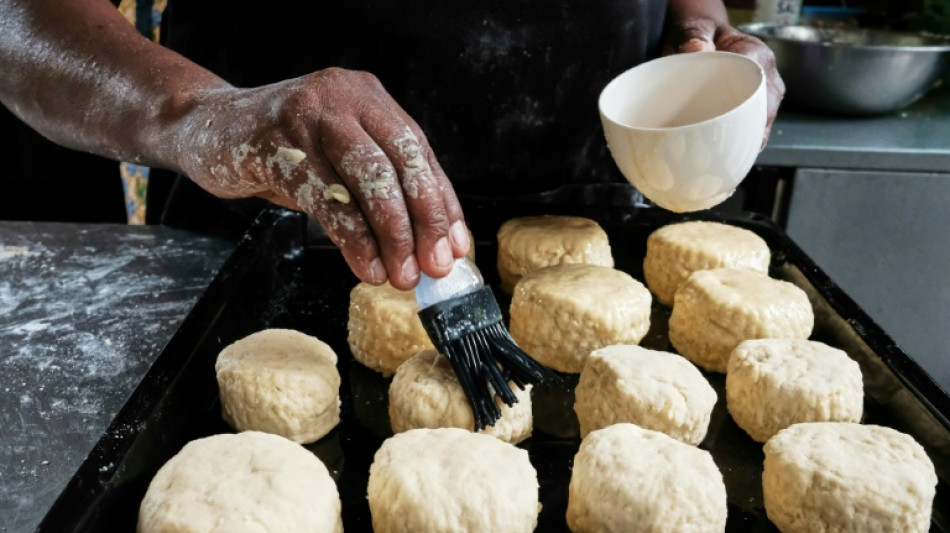
Across Zimbabwe, British scones are the taste of home / Photo: Jekesai NJIKIZANA - AFP

 Vuelta finale neutralised after rider safety concerns

 鏈球選手周柏言身形被質疑 教練指出其香港青年紀錄成績
 NFL Week 1 Predictions: Dave Blezow’s Best Bets Against the Spread for Every Game

 Alabama Legislature Passes Weakened Utility Reform Bill Amid Allegations of Alabama Power Influence

 World Athletics stance on Russia unchanged, says Coe

 Can We Predict Volcanic Eruptions Like Weather? Scientists Seek Unified Physics

 Macron, Carney to visit French islands after Trump's map post

 بزشكيان يؤكد رفض الاستسلام وسلطات إيران تعلن مقتل شخص في استهداف سفينة

 فليك يضم حمزة عبد الكريم إلى قائمة برشلونة بعد أربعة أهداف في الإعداد

 Myanmar says UN envoy illegitimate ahead of credentials decision

 Philippine rescuers pull more victims from charred ferry

 ستاندرد آند بورز تثبت تصنيف السعودية عند A+

 Crash and burn: Pakistan cricket at a new low after England humiliation

 'Second life': Nepal tunnel survivor recalls ordeal

 Hong Kong homes flattened for US$28 bn high-tech hub

 'Be careful what you wish for': 'Obsession' director and star reflect on success

 Messi scores but Miami held by Nashville
 US Open champ Rybakina on top of world after injury scare

 Rybakina reigns serene as new world number one

 Defiant Sabalenka motivated by US Open defeat

 Houthis say hit Saudi base after renewed fighting with Yemeni govt forces

 Roadless Rule repeal proposal raises concerns over Midwest forests and fire risk

 KFF journalists discuss opioid funds, suicide prevention and gaps in care

 GTA VI draws political criticism online as preorder estimates exceed five million

 Japanese floating parking platform is designed to lift cars above floodwater

A sweet doughy treat from Britain has become a beloved part of Zimbabwe's national cuisine, where despite the country's colonial past, mothers and chefs alike now claim the pastry as their own.
The scone, which Brits normally enjoy with afternoon tea, is ubiquitous in Harare, the southern African country's capital.
A breakfast favourite in these parts, it can be found everywhere from high-end eateries to the market stalls of impoverished townships.
"We love scones. They are not British, they are ours, our local scones," Nyari Mashayamombe, a rights activist, says as she leaves an upmarket restaurant in Harare's Belgravia district, its garden dotted with open umbrellas.
Dense yet airy, Zimbabwean scones are the result of the intercultural mix that came with colonisation, says Mashayamombe, a red-haired 42-year-old who is also a singer and media personality.
In "fancy places like here... a beautiful scone goes as high as six bucks," she said, referring to the American dollars that have become Zimbabwe's parallel and preferred currency.
"It's worth it."
A few kilometres away at a market in Harare's oldest township of Mbare, scones are impossible to find after midday.
"We sold them all this morning. They move quickly," one vendor says.
- Yeast and buttermilk -
The main communal bakery in Mbare, a bustling working-class district, opens at dawn.
Tawanda Mutyakureva, 26, arrives at around five in the morning to his work station, measuring two square metres, where he has to bend over to spread the dough on a knee-height countertop.
Every day he cranks out around 200 scones in an overheated room with cinder-block walls, lit by two bulbs hanging from a wire.
Brandishing a cookie cutter, he works quickly to whip out one batch after another, with each scone selling for 25 American cents.
In the hot, humid atmosphere redolent of yeast, his wife -- with their baby strapped to her back -- helps him with buttering the pastries and clearing plates.
Resellers come in to buy 10 or 20 pieces that will be sold at small grocery stores.
Memory Mutero, 46, was at the bakery to buy bread, since she makes her own scones at home.
"I make scones for my three kids. It takes about 45 minutes," she tells AFP.
Her ingredients are simple: flour, salt, yeast, sugar, butter and milk.
But at the Bottom Drawer, an upscale tearoom in Harare, cook Veronica Makonese is unimpressed after tasting a scone brought back from the township.
"There is no milk in those, they used water!" the 46-year-old claims.
A white kerchief on her head, Makonese says she makes her own buttermilk for her scones, to control temperature and acidity levels, and uses only real butter to ensure the proper taste and softness.
Her boss, Sarah Macmillan, a 53-year-old Zimbabwean, says she longs for the scones she would eat as a child.
Back then, two shops in the centre of Harare, now closed, competed for the crown of best scone in the country, and Macmillan wanted her tearoom to make some that are "just as good".
Macmillan says the secret of the little cake's enduring success, in a country struggling with endemic poverty, is simple: "It's very filling and affordable."
W.Morales--AT