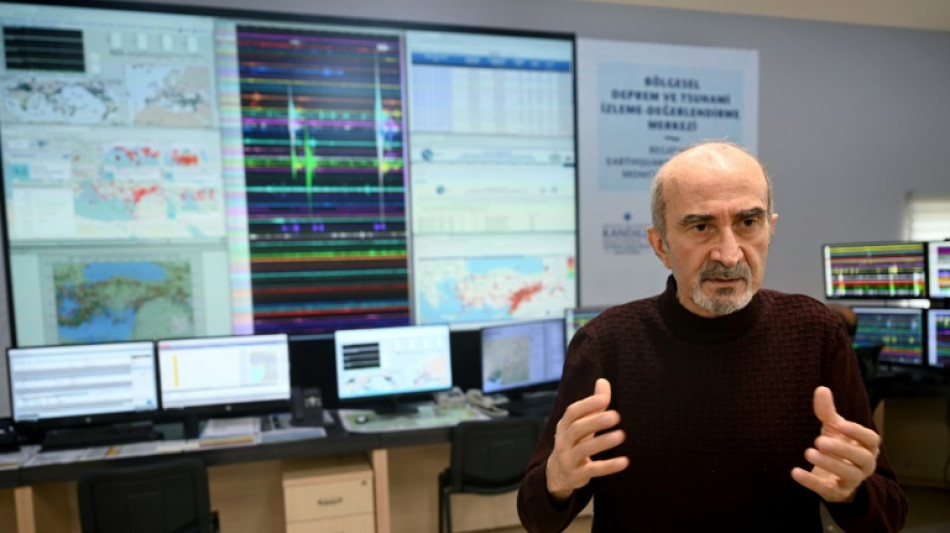
Quake-prone Istanbul not at heightened risk: expert / Photo: OZAN KOSE - AFP

 Brighton run rampant against 10-man Coventry

 Late Mbappe goal sends Lille top of Ligue 1

 Five-star Brighton crush 10-man Coventry

 Team Europe beat United States to reclaim Solheim Cup

 US House Speaker warns curbing AI too sharply could leave China ahead

 張國榮70歲誕辰音樂會西九舉行 唐鶴德錄音致意

 Iran's economic ties to Dubai hard to break despite war

 iPhone 18預購後出現可疑扣款 四間銀行調查未授權交易

 《浪花男女》辦特別謝票場 馮志強談票房與導演客串拍攝

 Former captain De Villiers hails 'fantastic' Springboks

 Galaxy Tab S12系列效果圖曝光 Ultra擬配雙鏡頭及瀏海螢幕

 اليورو يستقر في البنوك المصرية وأعلى سعر للبيع 59.85 جنيه

 حمزة قورقماز يناقش العلاقة بين وضوح المبادئ واحترام الاختلاف

 Altman tells Fortune OpenAI will not go public in 2026
 China, Russia, India seek economic cooperation at BRICS
 ستاندرد آند بورز تثبت تصنيف السعودية عند A+
 دول عربية ومنظمات تدين استهداف خط أنابيب في السعودية
 One dead, 102 rescued from stricken ferry off Indonesia's Java
 Garcia keeps WBC welterweight title by stopping Benn
 Lights out in Laos as electricity exports surge

 'This is the test': All eyes on US Fed to tackle high inflation

 Scars of Marawi siege linger as Philippines poll nears

 Trump turns to golf, family business on Irish visit's second day

 Best Online Gold Dealers in USA 2026 Rankings Released By Experts

 South Africa defeat New Zealand 43-28 to complete 3-1 series victory
Fears of another major earthquake have been rekindled in Istanbul since the February 6 disaster that hit Turkey and Syria, but a prominent Turkish seismologist has reassured the risk "hasn't increased".
"The risk hasn't increased because we are talking about completely different systems," Dogan Kalafat, the director of the Kandilli Observatory's Earthquake-Tsunami Monitoring Center in Istanbul, told AFP.
Turkey's most populated city is situated near the North Anatolian Fault while the recent 7.8-magnitude quake that killed 43,500 people occurred along another fault in the country's southeast, Kalafat explained.
Still, the 16 million residents of Istanbul, a city that spreads over two continents and has seen skyscrapers mushroom in recent years, are wondering if they're ready for the "Big One".
"I'd like to say it, but sadly, it's a very big city with too many poorly constructed buildings," said Kalafat, who has denounced using low-quality cement and building on "soft soils".
While waiting for a large-scale quake, "we must make good use of the time. We must build earthquake-proof houses on solid soil. It's the most important precaution to take," the seismologist stressed.
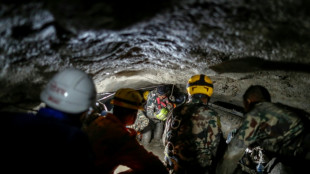
At the observatory, seismologists take turns every eight hours watching a series of computer screens monitoring potential tremors.
In front of them, on a wall at least five metres (16 feet) tall, a giant screen provides real-time readings from 260 seismic stations across the country.
"Nine thousand aftershocks have taken place in Turkey since February 6," which is more than "seven or eight times normal", Kalafat said.
- Early warning -
On one of the desks, a laminated map shows the North Anatolian Fault, which crosses the Sea of Marmara, only "15 to 17 kilometres" from the southern shores of Istanbul, Kalafat said.
In 2001, two years after a 7.4-magnitude quake left 17,000 people dead in northwest Turkey, Kalafat calculated a 65 percent probability that a quake with a magnitude above 7 would occur before 2030 in the same region -- which includes Istanbul.
The risk climbed to 75 percent in 50 years and 95 percent in 90 years.
"These statistics are still relevant," said Kalafat, adding: "even with the technology of today, it is impossible to predict an earthquake."
"We can indicate, with a certain margin of error, where an earthquake can occur and what magnitude it can be, but we can't know when it will occur," he said.
The Kandilli Observatory has developed an early warning system "but Istanbul is too close to the fault line" for a system to be effective, Kalafat said.
On one of the desks, sitting between two screens, is a black telephone with two red labels with the public disaster management agency's acronym, allowing scientists to send an alert for a major earthquake.
The early warning could win "a maximum of seven or eight seconds" -- not enough time to allow inhabitants to get to safety.
In comparison, the telephonic warning system in Japan's Tohoku region, which was struck by a devastating earthquake and tsunami in March 2011, buys the public 45 seconds.
"There, you can send a message warning citizens, but we don't have this possibility here," he said.
W.Nelson--AT