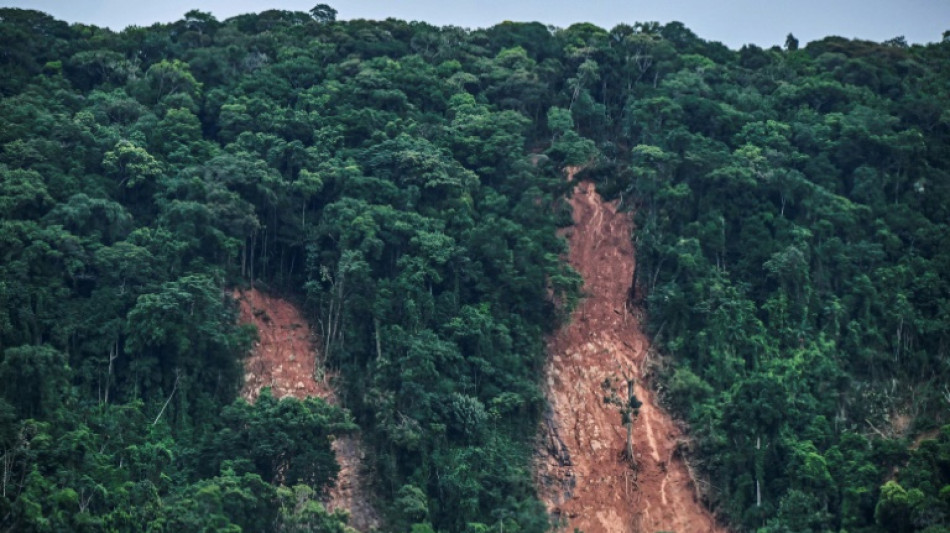
Climate change, rampant urbanization fuel Brazil storm disasters / Photo: Nelson ALMEIDA - AFP

 Brighton run rampant against 10-man Coventry

 Late Mbappe goal sends Lille top of Ligue 1

 Five-star Brighton crush 10-man Coventry

 Team Europe beat United States to reclaim Solheim Cup

 US House Speaker warns curbing AI too sharply could leave China ahead

 張國榮70歲誕辰音樂會西九舉行 唐鶴德錄音致意

 Iran's economic ties to Dubai hard to break despite war

 iPhone 18預購後出現可疑扣款 四間銀行調查未授權交易

 《浪花男女》辦特別謝票場 馮志強談票房與導演客串拍攝

 Former captain De Villiers hails 'fantastic' Springboks

 Galaxy Tab S12系列效果圖曝光 Ultra擬配雙鏡頭及瀏海螢幕

 اليورو يستقر في البنوك المصرية وأعلى سعر للبيع 59.85 جنيه

 حمزة قورقماز يناقش العلاقة بين وضوح المبادئ واحترام الاختلاف

 Altman tells Fortune OpenAI will not go public in 2026

 China, Russia, India seek economic cooperation at BRICS
 ستاندرد آند بورز تثبت تصنيف السعودية عند A+
 دول عربية ومنظمات تدين استهداف خط أنابيب في السعودية

 One dead, 102 rescued from stricken ferry off Indonesia's Java
 Garcia keeps WBC welterweight title by stopping Benn
 Lights out in Laos as electricity exports surge

 'This is the test': All eyes on US Fed to tackle high inflation

 Scars of Marawi siege linger as Philippines poll nears

 Trump turns to golf, family business on Irish visit's second day

 Best Online Gold Dealers in USA 2026 Rankings Released By Experts

 South Africa defeat New Zealand 43-28 to complete 3-1 series victory
Climate change and unchecked construction in flood- and landslide-prone areas are making disasters like the violent storm that killed at least 48 people in southeastern Brazil ever more frequent, according to a leading expert.
Francis Lacerda, a researcher at Brazil's IPA Climate Change Laboratory, spoke with AFP about the forces driving disasters like the one that hit the coast of Sao Paulo state last weekend, and what can be done to stop them.
What is causing so many tragedies like this in Brazil?
"It's a consequence of global warning, which has generated more extreme weather events not just in Brazil, but across South America and the entire planet.
"There has actually been a decrease in the total amount of rain in Brazil in the southeast, central-west, north and northeast in the past 30 or 40 years, even as these extreme episodes have increased.
"The large amount of heat in greenhouse gases is being absorbed by our oceans, which is changing ocean currents. That's causing changes in the way heat is distributed at Earth's poles and the equator, and the atmosphere responds with these extreme weather events.
"So total precipitation has decreased, but the distribution has become more intense, with an entire year's worth of rain falling in a few hours in some cases."
Is entire country at risk?
"Yes, although mountainous areas are at higher risk.
"On the Sao Paulo coast, for example, the phenomenon was intensified by the mountain range and the arrival of a cold front with high-speed coastal winds. But rain like that can also occur in coastal areas without mountains."
Could deaths have been avoided?
"It was a tragedy foretold. A day before the storm, meteorological models started indicating a high probability of a phenomenon like this. It would have been possible to get enough information to emergency officials to evacuate these areas and save lives.
"Governments at the city, state and federal levels are unprepared for climate change. We need adaptation and mitigation plans."
Millions face such danger. How does Brazil address it?
"Real-estate speculation has basically pushed poor people on the urban periphery into these high-risk areas. They have no other option.
"It's not enough to just say, 'Get those people out of there.' We need to fundamentally reexamine our cities with a view to reformulating urban public policies.
"There are a lot of things that can be done, including fixing the lack of decent housing."
Th.Gonzalez--AT