Turkey tragedy jolts quake-prone Central Asia / Photo: Ruslan PRYANIKOV - AFP

 Brighton run rampant against 10-man Coventry

 Late Mbappe goal sends Lille top of Ligue 1

 Five-star Brighton crush 10-man Coventry

 Team Europe beat United States to reclaim Solheim Cup

 US House Speaker warns curbing AI too sharply could leave China ahead

 張國榮70歲誕辰音樂會西九舉行 唐鶴德錄音致意

 Iran's economic ties to Dubai hard to break despite war

 iPhone 18預購後出現可疑扣款 四間銀行調查未授權交易
 《浪花男女》辦特別謝票場 馮志強談票房與導演客串拍攝

 Former captain De Villiers hails 'fantastic' Springboks

 Galaxy Tab S12系列效果圖曝光 Ultra擬配雙鏡頭及瀏海螢幕

 اليورو يستقر في البنوك المصرية وأعلى سعر للبيع 59.85 جنيه

 حمزة قورقماز يناقش العلاقة بين وضوح المبادئ واحترام الاختلاف

 Altman tells Fortune OpenAI will not go public in 2026
 China, Russia, India seek economic cooperation at BRICS
 ستاندرد آند بورز تثبت تصنيف السعودية عند A+
 دول عربية ومنظمات تدين استهداف خط أنابيب في السعودية

 One dead, 102 rescued from stricken ferry off Indonesia's Java
 Garcia keeps WBC welterweight title by stopping Benn
 Lights out in Laos as electricity exports surge

 'This is the test': All eyes on US Fed to tackle high inflation

 Scars of Marawi siege linger as Philippines poll nears

 Trump turns to golf, family business on Irish visit's second day

 Best Online Gold Dealers in USA 2026 Rankings Released By Experts

 South Africa defeat New Zealand 43-28 to complete 3-1 series victory
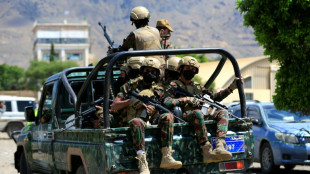
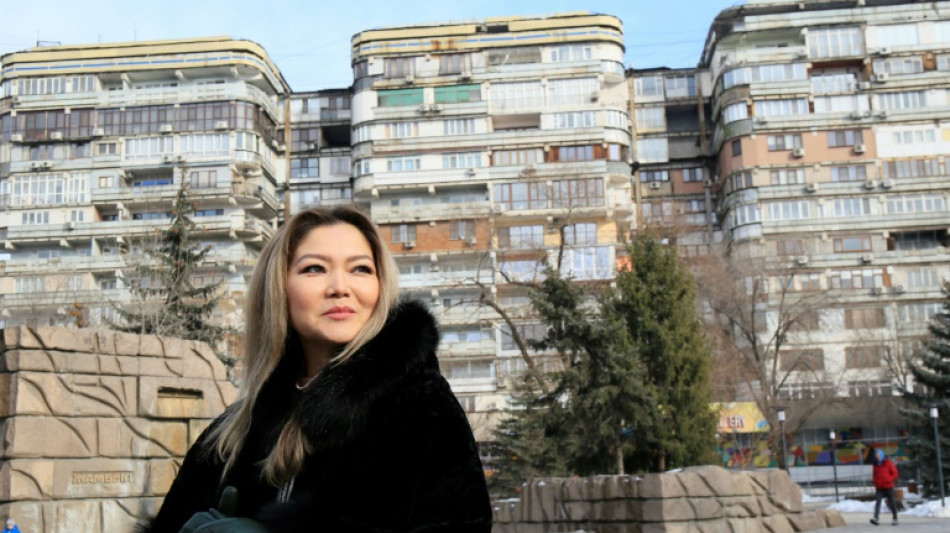
When a devastating earthquake and aftershocks struck Turkey and Syria this month, Klara Imangalieva -- who lives in the Central Asian country of Kazakhstan -- realised she had to move.
"We are also in danger," said Imangalieva, a resident of Almaty, Kazakhstan's largest city dominated by the snow-capped Tian Shan mountains.
"I'm looking to move into a single-storey house to at least have a chance of surviving in the event of an earthquake," said Imangalieva, who lives on the ninth floor of a high-rise building.
Almaty, which has a population of around two million people, sits in a high seismic hazard zone in southeastern Kazakhstan.
Small tremors are fairly common in the country although there has not been a major quake in living memory.
Three historic earthquakes hit Almaty -- then known as Verny -- more than a century ago in 1887, 1889 and 1911. Each time the city was heavily destroyed and had to be rebuilt.
The horrific earthquake and aftershocks that shook Turkey and Syria in early February, killing more than 45,000 people, stirred fears about a possible new disaster in the former Soviet country and drew fresh attention to its past and current building practices.
Architect Almas Ordabayev says it is unclear how many buildings in Almaty would be able to withstand powerful shocks, singling out early Soviet-era houses as a particular concern.
"All the buildings built before the end of the 1950s which have not been reinforced will not survive an earthquake like the one in Turkey", said 84-year-old Ordabayev.
Ordabayev also raised concern about the construction practices in the post-Soviet era.
"Only a strong earthquake will reveal what will happen to buildings built in the 1990s by corrupt and criminal companies," he said.
- 'Lesson to authorities' -
Ordabayev expressed hope that the catastrophe in Turkey and Syria could serve as a cautionary tale.
The scale of the destruction has ignited fury in Turkey, which has multiple fault lines and a history of major tremors, over poor construction standards.
"I hope that the earthquake in Turkey will serve as a lesson to our authorities and builders," Ordabayev said.
According to estimates, more than five million people in Kazakhstan live in a high seismic zone covering over 11 percent of the country's territory.
Deputy head of Almaty's Institute of Seismology, Nursaren Uzbekov, said around 40,000 earthquakes had been recorded in the country over the past five years.
On average, between nine to 15 quakes can be felt each year, he added.
Uzbekov's institute, founded in 1976, studies vibrations deep inside the Earth and the behaviour of animals such as snakes, birds, rabbits and fish.
A network of seismic stations monitors real-time ground motion in Kazakhstan and neighbouring countries.
Grigory Kochkarov works at one such station perched in the mountains overlooking Almaty.
"If there is an earthquake, we immediately see it on the screen, receive an audible signal and in ten minutes maximum, we transmit the information", he told AFP.
The station's seismographs are sensitive to minute vibrations and can detect activity occurring 3,000 kilometres (1,860 miles) away, he said.
He demonstrated long sheets of white paper -- some of the seismograms recorded by the observatory date back to the 1930s.
Kochkarov then opened a heavy door leading to a side chamber hewn out of the earth. Inside there was a long-corridor -- where "normally, nobody goes" -- containing sensitive measuring equipment.
But experts say that the energy-rich country does not have enough seismic stations and the majority of seismographs date back to the Soviet-era.
- Quake fears -
Other countries in former Soviet Central Asia also fear that a destructive earthquake could wreak havoc sooner or later.
After the earthquakes in Turkey and Syria, authorities in mountainous Kyrgyzstan pledged to assess the seismic resilience of high-rise buildings.
In Uzbekistan, an earthquake destroyed much of the capital Tashkent in 1966, and Soviet authorities had to rebuild the city.
Pensioner Nuriddin Ibragimov said he was 13 when the tragedy struck.
"Tashkent was in ruins," he said, noting that the Soviet authorities covered up the real death toll.
Ashgabat, the capital of Turkmenistan, was razed to the ground in 1948 in one of the deadliest quakes of the 20th century. The disaster claimed an estimated 100,000 lives.
Today Turkmenistan, one of the most secretive countries in the world, takes "necessary measures to preserve the structural integrity of buildings", a government source told AFP.
The lake is located behind a natural dam deep in the Pamir mountains, and if the dam is breached, the consequences will be catastrophic.
Th.Gonzalez--AT