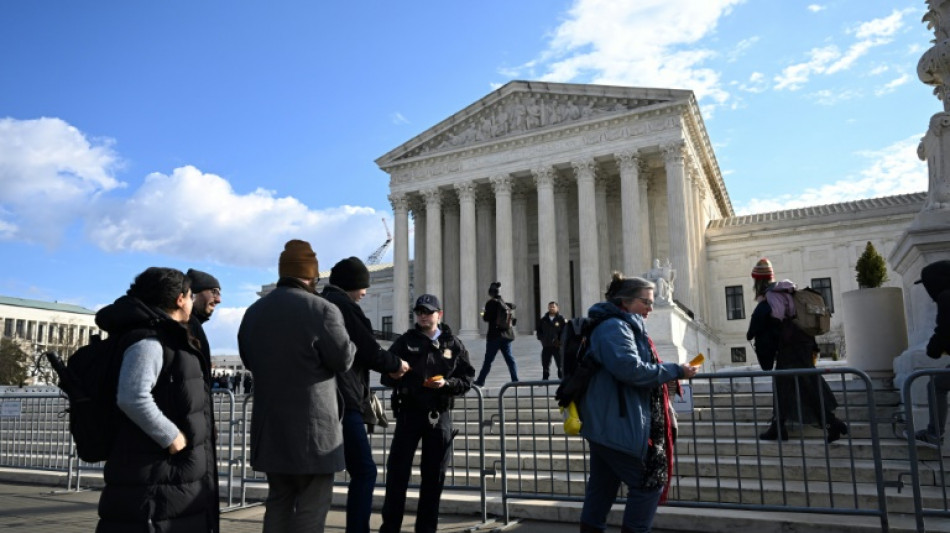
US Supreme Court treads carefully on landmark tech law / Photo: Jim WATSON - AFP

 Brighton run rampant against 10-man Coventry

 Late Mbappe goal sends Lille top of Ligue 1

 Five-star Brighton crush 10-man Coventry

 Team Europe beat United States to reclaim Solheim Cup

 US House Speaker warns curbing AI too sharply could leave China ahead

 張國榮70歲誕辰音樂會西九舉行 唐鶴德錄音致意

 Iran's economic ties to Dubai hard to break despite war

 iPhone 18預購後出現可疑扣款 四間銀行調查未授權交易

 《浪花男女》辦特別謝票場 馮志強談票房與導演客串拍攝

 Former captain De Villiers hails 'fantastic' Springboks

 Galaxy Tab S12系列效果圖曝光 Ultra擬配雙鏡頭及瀏海螢幕
 اليورو يستقر في البنوك المصرية وأعلى سعر للبيع 59.85 جنيه
 حمزة قورقماز يناقش العلاقة بين وضوح المبادئ واحترام الاختلاف

 Altman tells Fortune OpenAI will not go public in 2026
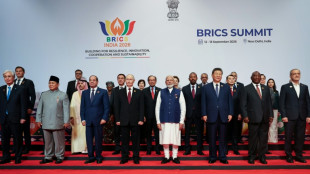 China, Russia, India seek economic cooperation at BRICS

 ستاندرد آند بورز تثبت تصنيف السعودية عند A+

 دول عربية ومنظمات تدين استهداف خط أنابيب في السعودية
 One dead, 102 rescued from stricken ferry off Indonesia's Java
 Garcia keeps WBC welterweight title by stopping Benn

 Lights out in Laos as electricity exports surge

 'This is the test': All eyes on US Fed to tackle high inflation

 Scars of Marawi siege linger as Philippines poll nears

 Trump turns to golf, family business on Irish visit's second day

 Best Online Gold Dealers in USA 2026 Rankings Released By Experts
 South Africa defeat New Zealand 43-28 to complete 3-1 series victory

The US Supreme Court on Tuesday heard arguments in a landmark case that could transform the internet by scrapping decades-old legal protections for tech companies, but gave no indication that a clear majority would opt to rework the law.
In a two-and-a-half-hour session, the nine justices targeted their questions on better understanding the so-called Section 230, a US law that was signed in 1996 at the dawn of the internet era and before the creation of Google.
The justices did acknowledge that the legal shield was probably no longer fit for purpose given the leaps and bounds made by the online world since the law was drafted -- but added that they might not be the best suited to fix it.
"We're in a predicament here because this is a statute that was written at a different time when the internet was completely different," said Justice Elena Kagan, indicating the complexity of the case put before them.
"We're a court, we really don't know about these things. These are not like the nine greatest experts on the internet," she added.
Section 230 gives Internet platforms blanket immunity from any content that comes from a third party and, crucially for the day's case, even if it is pushed out as a recommendation by the website.
Specifically targeted in the case is YouTube's recommendation system, the algorithm that decides what videos a user might want to view next, based on their previous choices and profile.
The plaintiff in the case is the family of Nohemi Gonzalez, an American exchange student who was one of the 130 people killed in the November 2015 attacks in Paris.
Her family blames Google-owned YouTube for having recommended videos from the Islamic State jihadist group to users, which they believe made the company a party to the violence.
"The problem is that when you click on one video, and you pick that one, YouTube will automatically keep sending you more videos, which you haven't asked for," said Eric Schnapper, the lawyer for the Gonzalez family.
Some justices asked questions on the breadth of Section 230, expressing some surprise at how far the immunity stretches for tech companies, including on recommendations.
"Isn't it true that the statute had a more narrow scope of immunity than the courts have ultimately interpreted it to have and then what YouTube is arguing here today," asked Justice Ketanji Brown Jackson, the court's newest member.
"The question today is 'can we be sued for making recommendations?' That's just not something the statute was directed to," she added.
- 'Crash' the internet -
The justices were also concerned that changing the rules would open a floodgate of lawsuits and seriously jeopardize the carrying out of business on the internet.
Justice Brett Kavanaugh pointed to complaints by allies of YouTube that said a rethinking of Section 230 would invite "economic dislocation" and "really crash the digital economy with all sorts of effects on workers and consumers."
Justice Samuel Alito asked if Google would "collapse or the internet be destroyed if YouTube and therefore Google were potentially liable for posting and refusing to take down videos that it knows are defamatory and false."
The prospect of the Supreme Court even tinkering with Section 230 is causing cold sweats in the tech world and Google's lawyer warned of major consequences.
"You know, basically you take down anything that anyone might object to, and then you basically have…The Truman Show versus a horror show," lawyer Lisa Blatt told the justices.
"You would have only anodyne, cartoon like stuff… (or) otherwise you just have garbage on the internet and (the law) would not have achieved its purpose," she added.
The same judges on Wednesday will consider a very similar case, but this time one involving Twitter that asks if internet platforms should be subject to anti-terrorism laws.
The Supreme Court declines to hear the vast majority of the cases that come its way, and experts believe that by opting to decide on this one indicates there could be a willingness to modify the landmark law.
A decision on both cases is expected by June 30.
W.Moreno--AT