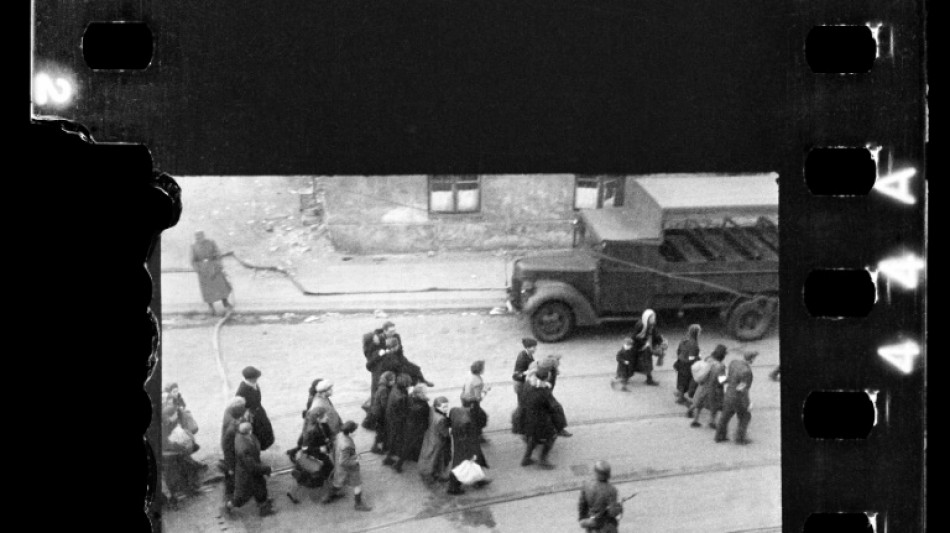
Rare photos from WWII Jewish ghetto shown in Warsaw / Photo: Zbigniew Leszek Grzywaczewski - AFP

 Bills edge Texans while Bears beat Panthers in NFL record-setting opener

 Zverev holds off Shelton to win US Open title

 Torres fires PSG to first win of Ligue 1 season
 Toulouse back on track after hammering Bordeaux
 Referee body admits 'error' for Haaland goal in Manchester derby

 Sweden's election too close to call as far right loses ground
 Is it possible to slow down the development of AI?
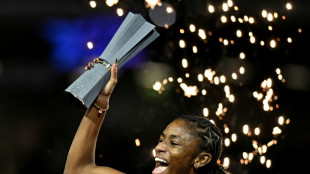 Jefferson-Wooden bags searing sprint double, Dos Santos on fire

 'Practical Magic 2' breaks Spidey spell over N. American box office
 Comedian Chris Rock returns to directing with Hollywood drama 'Misty Green'
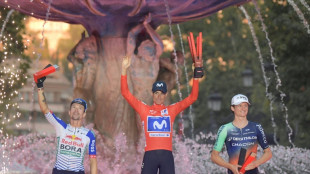 Spaniard Mas claims 'special' home Vuelta a Espana triumph
 Jefferson-Wooden, Bednarek claim classy Ultimate sprint doubles

 Britain's Kerr wins men's Ultimate 1,500m
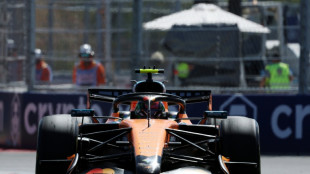 Luckless Norris wants change in safety car rules

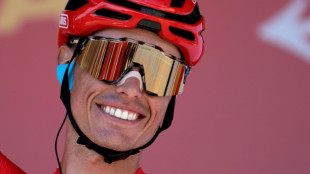 Spaniard Enric Mas wins home Vuelta a Espana
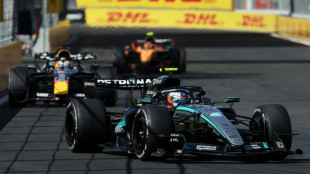 Mercedes boss Wolff says long future for 'cucumber cool' Antonelli
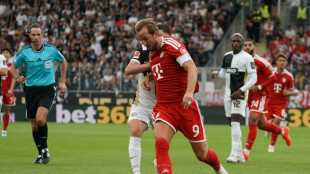 Kane edges Bayern past Elversberg in Bundesliga

 Trump administration reluctant to slow AI, Democrats see urgent need
 Five-star Leipzig return to form with Hamburg thumping
 Spain beat Germany to claim women's World Cup bronze

 Antonelli profits from safety car pause to win Spanish GP

 Trump chastises Zelensky over Russian refinery strikes during Ireland visit

 World championship leader Antonelli wins Spanish GP
 Resurgent Marquez powers to San Marino win to take MotoGP lead

 Vuelta finale neutralised after rider safety concerns

Never-before-seen photos of the Warsaw Ghetto -- from a roll of film shot by a Polish firefighter under the noses of the occupying Germans -- were unveiled to journalists Wednesday.
Although taken during the 1943 Warsaw Ghetto uprising when Jews rose up against the Nazi occupiers, they do not depict the actual fighting.
But they do show apocalyptic scenes of buildings on fire, deserted streets strewn with rubble, and German soldiers escorting Jews to their deaths.
Recently discovered in an attic, the photos will go on show to the public in the Polish capital in April on the 80th anniversary of the uprising.
"Photos taken by Germans constitute the quasi-majority of the photographic documentation of the Holocaust," historian Jacek Leociak told reporters. "We see the ghetto through their eyes.
"This roll of film is a priceless record because it goes beyond the German perspective, the perspective of executioners showing Jews as dehumanised, anonymous victims," he said.
"These are the only known photographs (from the ghetto during the uprising) not taken by the Germans and not taken for propaganda purposes," Zuzanna Schnepf-Kolacz curator at the POLIN Museum of the History of Polish Jews, told AFP.
- Lost for decades -
The roll of film, which includes 33 photos from the ghetto, was shot by Zbigniew Grzywaczewski, a non-Jewish Pole and firefighter.
It was only rediscovered in December 2022 by his son, Maciej.
He found the old roll, its edges slightly mangled, in a cardboard box with photo archives. They had lain there forgotten for decades since Grzywaczewski's death in 1993, he told AFP.
"My father never told us that he took photos inside the ghetto -- maybe because it was too difficult for him," said Maciej Grzywaczewski, 68.
His father's journal entries from that time -- May 1943 -- made it clear that he had seen far worse than the photos depicted.
The faces of those in the ghetto would stay with him forever, he wrote.
"Figures staggering from hunger and dismay, filthy, ragged. Shot dead en masse.
"Those still alive falling over the bodies of the ones who have already been annihilated."
As a firefighter, his father had been called to put out fires started by the Nazis following the outbreak of the uprising.
The Germans had systematically set fire to buildings in the ghetto to force out the residents and insurgents hiding inside.
A year after invading Poland in 1939, Germany created the Warsaw ghetto -- the biggest of its kind in World War II -- to hold almost half a million Jews.
People were crammed into a small neighbourhood where disease and hunger were rife.
Of those who survived the conditions, 260,000 -- a quarter of Warsaw's population -- were deported to the Treblinka extermination camp and killed as part of the Holocaust.
On April 19, 1943, hundreds of Jewish fighters launched their revolt against the Nazis, preferring to die fighting than in the gas chambers.
- 'War and Love' -
Most of the photos Grzywaczewski shot inside the ghetto had been lost to history until now. Only 12 cropped prints on low-quality paper had been shown before.
They were made during or just after the war and given by the author to a Jewish family he had been hiding in his apartment.
After emigrating to the US, the family donated the prints in the 1990s to the United States Holocaust Memorial Museum.
About six months ago, the curators preparing the upcoming exhibition -- who knew about those prints -- got in touch with the late photographer's family in the hopes of locating other images.
That was when his son, Maciej, found them.
At first, he said, he failed to uncover anything in response to the museum's request.
"Then, finally, as I was looking through the last of the boxes containing my father's photo archives, I found the roll of film."
Most of the scenes were from the ghetto, but there were also images of Maciej's mother and other family members.
"You could label the roll of film, 'War and Love'," he said.
A.Moore--AT