Will a special Ukraine tribunal really happen? / Photo: Sem van der Wal - ANP/AFP

 US hosts G20 'energy abundance' talks amid Iran war shock
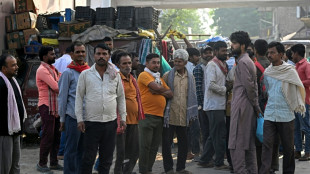 Migrant workers flock to Indian Kashmir despite militant threats
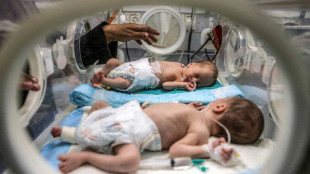 Incubator shortages, premature births strain Gaza's hospitals
 Canada's Carney seeks closer Europe ties to counter hostile US
 Polls open in Philippine Muslim enclave after deadly shooting
 DC's Kennedy Center faces bankruptcy, closure: media
 Shelton hungry for more Grand Slam chances after US Open disappointment
 Bills edge Texans while Bears beat Panthers in NFL record-setting opener
 Zverev holds off Shelton to win US Open title
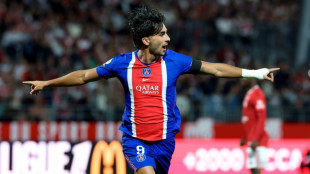 Torres fires PSG to first win of Ligue 1 season
 Toulouse back on track after hammering Bordeaux
 Referee body admits 'error' for Haaland goal in Manchester derby

 Sweden's election too close to call as far right loses ground
 Is it possible to slow down the development of AI?
 Jefferson-Wooden bags searing sprint double, Dos Santos on fire
 'Practical Magic 2' breaks Spidey spell over N. American box office
 Comedian Chris Rock returns to directing with Hollywood drama 'Misty Green'
 Spaniard Mas claims 'special' home Vuelta a Espana triumph
 Jefferson-Wooden, Bednarek claim classy Ultimate sprint doubles
 Britain's Kerr wins men's Ultimate 1,500m
 Luckless Norris wants change in safety car rules
 Spaniard Enric Mas wins home Vuelta a Espana
 Mercedes boss Wolff says long future for 'cucumber cool' Antonelli
 Kane edges Bayern past Elversberg in Bundesliga
 Trump administration reluctant to slow AI, Democrats see urgent need
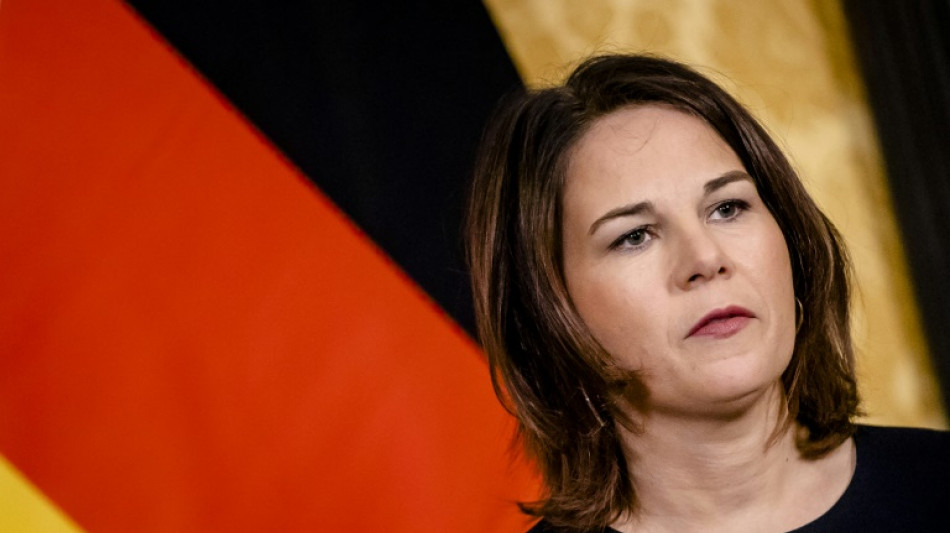
Could Russian President Vladimir Putin one day stand in the dock in The Hague? The prospect seemed to move closer after Germany backed a special court for the invasion of Ukraine.
German Foreign Minister Anna Baerbock called on Monday for a tribunal to get around the fact that the International Criminal Court (ICC) cannot prosecute Russia for the "leadership" crime of aggression.
But there are major hurdles before any such court could even be created, let alone put Russian leaders on trial.
- Why a special tribunal? -
Germany's Baerbock said a special tribunal would fill a "severe gap" in international law.
The Hague-based ICC launched an investigation in February into war crimes and crimes against humanity in Ukraine.
It was able to do so because Kyiv accepted its jurisdiction, even though neither Russia nor Ukraine are members of the court, which was set up in 2002.
But while changes to the ICC's governing Rome Statute gave it powers to prosecute aggression from 2018, it still cannot do so for non-member states.
The only way it can is by a referral by the UN Security Council -- but Russia, with its permanent seat, would automatically veto that.
- What's the German plan? -
Baerbock proposed a "new format" of court based in The Hague, to be set up in the near future if possible.
The court could "derive its jurisdiction from Ukrainian criminal law" but have international prosecutors and judges and foreign funding, she said.
That would be different to tribunals under international law, such as those for the 1990s wars in the former Yugoslavia.
And while tribunals for Cambodia and Kosovo have used local laws, they were not able to try aggression between one state and another.
At the same time, Baerbock proposed changing the ICC's rules in the long term so that it can prosecute non-member states for aggression.
- Who would it target? -
A special tribunal would target Russia's civilian and military leadership for ordering and overseeing the invasion of Ukraine, Baerbock said.
While the ICC could charge Russian soldiers and commanders on the ground, Baerbock said it was "important that the Russian leadership cannot claim immunity."
Aggression was the "original crime that enabled all the other terrible crimes".
- What does the ICC think? -
ICC prosecutor Karim Khan, who held talks with Baerbock on Monday, has opposed a special tribunal for Ukraine.
He said in December he should not be "set up to fail" by the creation of a special tribunal and urged the international community to focus on supporting his own investigation.
Baerbock said it was crucial to keep supporting the ICC and insisted that a tribunal would not undermine it.
- What are the hurdles? -
To exist in the first place the court needs international support -- and that could be hard.
Much of the West seems to be on board, with European Commission president Ursula von der Leyen calling for a special court in December and the Netherlands offering to host it.
But the rest of the world would likely be less keen.
"I hear those critics voicing concerns that such a path would show we care about a war because it happens in Europe, and I share that concern, so it's important that we talk to partners from other regions," Baerbock acknowledged.
But the biggest problem could be bringing any suspects to justice.
Russia has said any Ukraine tribunal would lack legitimacy, and would refuse to extradite suspects.
Ukraine could extradite captured Russians but that would leave high-level figures unscathed.
"Unless there is a regime change in Russia, Putin and other very high-level leaders would have to leave Russia in order be subject to arrest," said Cecily Rose, assistant professor of public international law at Leiden University.
P.Smith--AT