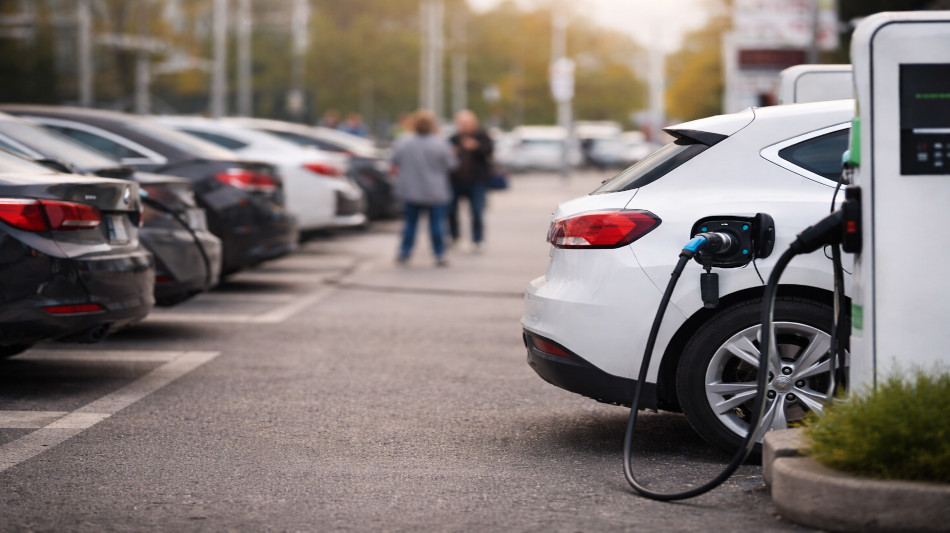
Germany: Electric car boom remains fragile

 'It has to stop': runners protest women's murders in S.Africa district

 Fire erupts near Riyadh airport as Houthis claim strikes

 Cuba works to restore power after another blackout

 England thrash Sri Lanka again to return to top of T20 rankings

 Arsenal thrashed by Brighton, sorry Spurs lose again

 South Korea, Austria qualify for Davis Cup finals

 Seare shocks Ingebrigtsen to win world 5km gold

 Brigitte Bardot widower slams sale of star's belongings

 Aston Villa compound Tottenham's misery despite late rally

 Asian Games offer 'deepest apologies' for South Korea anthem blunder

 Inter Milan and Italy icon Mazzola dies aged 83

 Saudi capital issues first air raid alert since renewed fighting in Yemen

 Martin edges title rival Marquez for Austrian MotoGP pole

 Indonesia accepts Malaysia's help to tackle wildfires

 Indians living in Japan on stand-by to house Asian Games athletes
 Trump signs bill authorizing sweeping Russia sanctions

 Protesters form human chain at Kennedy Center after Trump threat

 Death toll from attack at police HQ in Pakistan rises to 31

 Trump says Denmark to give US 'permanent control' over Greenland security

 New to The Street Broadcasts Tonight at 6:30 PM ET Across the United States, Latin America and MENA, Featuring BioVie, Acurx Pharmaceuticals, Lantern Pharma and SafeSpace Global

 Kennedy Center: future unclear for iconic Washington arts hub

 Trump claims 'infinite' Greenland security deal with Denmark

 Helicopters battle wildfire threatening Ecuador's capital

 Brentford batter Chelsea to undo Alonso's promising start

 Kane hits Bundesliga century as Bayern rout Union

The German market for electric cars is showing signs of life again. After the setback caused by the abrupt end of subsidies at the end of 2023, new registrations are now rising noticeably again. At first glance, this looks like the belated return of the upswing. At second glance, however, a much more complicated picture emerges: Government support is once again in the billions, the expansion of the charging infrastructure is progressing, tax advantages remain in place – and yet many buyers, especially in the private market, continue to react with remarkable caution.
This is what makes the current figures so contradictory. Pure electric cars are on the rise again in terms of new registrations, but there is no sign of a broad wave of purchases. The market is growing, but not with the momentum that might be expected after years of political prioritisation, new purchase incentives and infrastructure programmes worth billions. This is precisely the core problem of German e-mobility: it is making progress, but it is not yet convincing across the board.
It is true that significantly more battery electric vehicles have recently been registered. In 2025 as a whole, Germany once again proved to be an important growth driver within Europe. At the same time, the share of purely electric cars in all new registrations remains at a level that looks more like stabilisation than a breakthrough. It is also striking that the overall market is growing only moderately and that the commercial sector continues to dominate the new car business. Where company cars, fleet vehicles and tax-privileged company cars are strong, the figures often appear more dynamic than private demand actually is.
This is precisely why industry observers are now looking less at the pure number of new registrations and more at the question of who is actually buying. And here, the situation is much more sobering. In the private sector, there is still a great deal of reluctance. Many households are postponing the switch, driving their combustion engines for longer or opting for petrol, diesel or a hybrid again when buying their next vehicle. This means that mass acceptance in the everyday market has not yet been achieved.
It can hardly be said that the state is holding back. On the contrary: Germany is once again putting considerable funds on the table to accelerate the ramp-up of electric mobility. Since the beginning of 2026, there has been nationwide purchase support for new electric vehicles, socially graded and financed by the Climate and Transformation Fund. Depending on income and family situation, subsidies of up to €6,000 are available. The programme is worth billions and is expected to promote the sale of hundreds of thousands of vehicles within a few years. The political message is clear: the transition should not be left to the market alone.
There are also further incentives. The motor vehicle tax exemption for purely electric vehicles has been extended, and electric cars remain particularly attractive in the corporate sector. Tax advantages in company car taxation and accelerated depreciation ensure that the switch to electric vehicles in the workplace continues to be strongly supported. From a political perspective, this is logical: electric mobility is intended to be climate policy, industrial policy and location policy all at once. From the perspective of many consumers, however, this complex situation is no longer automatically convincing. Subsidies attract attention, but they do not yet inspire deep trust.
A great deal of effort is also being put into charging. The Germany network is intended to fill in the gaps with more than a thousand locations and around nine thousand additional fast charging points. At the same time, the German government has adopted a new strategic framework with numerous individual measures in its Master Plan for Charging Infrastructure 2030. The goal is a charging network that is denser, more reliable, more transparent and more user-friendly. The number of public charging points has recently grown significantly again, with the fast-charging sector growing particularly strongly. This is real progress – but it is not yet enough to completely dispel the scepticism in the market.
This is because the reservations run deeper than a mere lack of infrastructure. Current consumer surveys and market analyses show a relatively consistent pattern: the high purchase price remains the biggest obstacle for many people. Added to this are concerns about range, the depreciation of used electric cars, public charging and the question of whether a vehicle without its own wallbox can really be used easily in everyday life. Price-sensitive households in particular are reluctant to spend significantly more money on an electric car than on a familiar combustion engine or hybrid vehicle.
The price problem strikes at the heart of the German market. Many buyers continue to look for affordable vehicles in the lower or middle segment, where the range has long been too limited or seemed too expensive in relation to the equipment. As long as broad groups of buyers do not feel financially comfortable with the central investment of a car, growing interest will remain fragile. Subsidies can cushion this gap in the short term, but they are no substitute for permanently competitive prices.
Added to this is a psychological effect that is often underestimated. Anyone buying a car today is not only deciding on a type of drive, but also on a whole new everyday routine. With combustion engines, price sensitivity, refuelling, workshop visits and residual value have been practised for decades. With electric cars, many buyers first have to rebuild these certainties. Charging on the go, different tariffs, apps, access systems and fluctuating electricity prices are still perceived by many interested buyers as additional effort. This is precisely why politicians are now emphasising not only expansion, but also price transparency and user-friendliness.
Another factor slowing down sales is the used car market. Battery electric vehicles continue to struggle with lower residual values than comparable combustion engines. This is highly relevant for private buyers, as many calculate their car purchase based on resale value, monthly payments and long-term risk rather than political objectives. If the impression arises that technical advances in batteries, range and charging performance will cause the models purchased today to age more quickly, consumer reluctance to buy will automatically increase.
Added to this is uncertainty about the permanence of subsidies. In recent years, the German market has seen on several occasions how strongly political decisions can drive demand up or down within a short period of time. It is precisely this experience that has left its mark. Those who are unsure how long a subsidy will last, whether it will be changed or whether more attractive programmes will be introduced in a few months' time are more likely to wait and see. Several recent analyses point to precisely this effect: the market is sensitive to political signals, but this is precisely why growth often appears more artificial and less resilient than the registration figures suggest.
The tensions are also evident in surveys. Depending on the question, there is greater openness to electric drives, but at the same time, a majority still prefers more traditional solutions or sticks with combustion engines. This is particularly evident in the private market, where approval ratings for pure electric cars are significantly weaker than the overall new registration statistics suggest. This is a key warning sign. The real breakthrough will only come when not only fleet operators and tax-motivated buyers take the plunge, but also the broad mass of households.
Against this backdrop, the picture in Germany currently appears divided. There is a lot of movement on the supply side: new models, more charging points, new funding instruments, stronger political framework. On the demand side, however, the mood remains cautious. People are not fundamentally opposed to electric cars. Many recognise the advantages in terms of driving, local emissions and operating costs. But there is still a big gap between fundamental openness and actual purchasing decisions.
That is why the situation is more paradoxical than simple headlines suggest. Yes, more new electric cars are coming onto the roads. Yes, Germany is investing billions to accelerate this trend. But no, this does not yet translate into a self-sustaining boom. As long as price, everyday usability, residual value security and confidence in stable framework conditions are not all convincing, electric mobility will remain vulnerable in the mass market.
The German electric car market has not failed – but it has not really taken off yet either. The coming months will show whether the new subsidies, the further expansion of the charging network and cheaper models will actually open up the private market. Until then, the situation remains: there are more new electric cars on the road, but the big breakthrough among buyers is still a long way off.