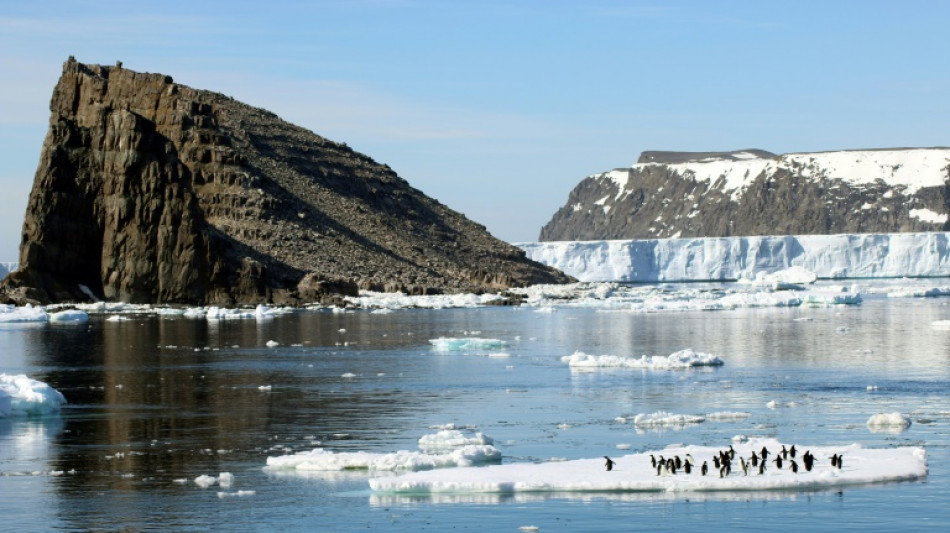
Antarctic climate shifts threaten 'catastrophic' impacts globally / Photo: Michael Polito - Louisiana State University/AFP/File

 With elections ahead, Latvia's Russian-speakers reject Moscow's help

 Brazil football clubs face massive sponsorship blow from betting ban

 ChatGPT maker wants to be the App Store for AI as safety concerns grow

 Women fight fires and sexism in Indonesian Borneo

 Forsling's OT blast lifts Florida over Carolina in NHL opener

 Hurricane Polo sweeps over Mexico's Pacific coast, heads inland

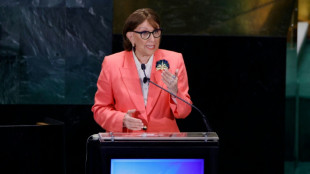 Grynspan pulls ahead in race to lead UN: diplomat

 Trump touts AI boss pledge to self-regulate

 Oil down, but stocks lower as bond yields rise

 England break down stubborn Czechs to claim first Nations League win
 UN Security Council extends Haiti anti-gang force by 6 months

 Manchester City guilty of Premier League charges: What comes next?

 Man City chief Soriano slams Premier League 'conspiracy theory'

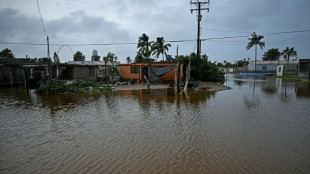 Hurricane Polo sweeps over Mexico's Pacific coast

 Man City must be relegated after guilty verdict says club's former chairman

 German far-right aims to lead Saxony-Anhalt govt in December

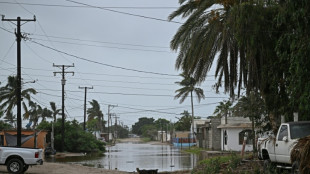 Little damage as Hurricane Polo sweeps over Mexico's Pacific coast

 Manchester City guilty of breaking financial rules - Premier League

 FIFA boss Infantino blasted as would-be 'emperor' by UEFA's Ceferin

 Stocks move lower despite oil prices dropping

 AI driving up innovation investment: UN

 UN Security Council extends Haiti mission by 6 months
 Man Utd do not deserve medals if Man City stripped of titles: Rooney

 Vana Completes Expanded Staking as Part of the Vega Upgrade, Publishes Expanded VANA Token Economics

 Spain to cap gas price hikes, extend fuel discounts
Abrupt and potentially irreversible changes in Antarctica driven by climate change could lift global oceans by metres and lead to "catastrophic consequences for generations", scientists warned Wednesday.
More broadly, a state-of-knowledge review by a score of top experts revealed accelerating shifts across the region that are often both cause and effect of global warming, according to a study published in Nature.
"Antarctica is showing worrying signs of rapid change across its ice, ocean and ecosystems," lead author and Australian National University professor Nerilie Abram told AFP.
"Some of these abrupt changes will be difficult to stop."
Shifts in different facets of Antarctica's climate system amplify each other and have accelerated the pace of warming globally as well, she said.
The study looked at evidence of abrupt change -- or "regime shifts" -- in sea ice, regional ocean currents, the continent's ice sheet and ice shelves, and marine life. It also examined how they interact.
Floating sea ice does not add to sea level when it melts. But its retreat does replace white surfaces that reflect almost all of the Sun's energy back into space with deep blue water, which absorbs the same amount instead.
Ninety percent of the heat generated by manmade global warming is soaked up by oceans.
- Retreating sea ice -
After increasing slightly during the first 35 years that satellite data was available, Antarctic sea ice cover plunged dramatically over the last decade.
Since 2014, sea ice has retreated on average 120 kilometres (75 miles) from the continent's shoreline. That contraction has happened about three times faster in 10 years than the decline in Arctic sea ice over nearly 50.
The "overwhelming evidence of a regime shift in sea ice" means that, on current trends, Antarctica could essentially become ice free in summer sooner than the Arctic, the study found.
This will speed up warming in the region and beyond, and could push some marine species toward extinction.
Over the last two years, for example, helpless emperor penguin chicks perished at multiple breeding grounds, drowning or freezing to death when sea ice gave way earlier than usual under their tiny feet.
Of five sites monitored in the Bellingshausen Sea region in 2023, all but one experienced a 100 percent loss of chicks, earlier research reported.
Unlike sea ice, ice sheets and the ice shelves to which they are connected are on -- or supported by -- land.
The world would need to heat up by five degrees Celsius compared with pre-industrial levels to melt the entire Antarctic ice sheet, which would lift global oceans an almost unimaginable 58 metres (nearly 200 feet).
- Point of no return -
But global warming to date -- on average about 1.3C -- is fast approaching a threshold that would cause part of the ice sheet to generate at least three metres of sea level rise, flooding coastal areas inhabited today by hundreds of millions, the study said.
"Unstoppable collapse of the West Antarctic Ice Sheet is one of the most concerning global tipping points," said Abram.
"The evidence points to this being triggered at global warming well below 2C."
Another potential risk is the collapse of the Antarctic Overturning Circulation, a system of ocean currents that distribute heat and nutrients within the the region and globally.
A "rapid and substantial slowdown" of the currents has already begun, and evidence from the previous interglacial period -- between two ice ages -- before our own, 125,000 years ago, points to an abrupt stagnation of the system under conditions similar to those seen today.
"This would lead to widespread climate and ecosystem impacts," ranging from an intensification of global warming to a decrease in the ocean's capacity to absorb CO2, the study reported.
Ultimately, the only way to slow down the interlocking changes is to stop adding more planet-warming gases into the atmosphere.
"The greenhouse gas emission decisions that we make over the coming decade or two will lock in how much ice we will lose and how quickly it will be lost," Abram said.
W.Moreno--AT