Tajikistan's apricot farmers grapple with climate change / Photo: STRINGER - AFP

 'No limits': Marathon world record holder Sawe chasing history

 Countdown begins to biggest-ever Rugby World Cup

 Bangladesh women lose ground after quota reform
 Vietnam admits 'differing opinions' on Hanoi development
 Stocks temper gains as oil pares heavy losses, US data in focus

 New Zealand denies breaching climate commitments to EU

 Albert becomes youngest US scorer in 4-2 win over Chile
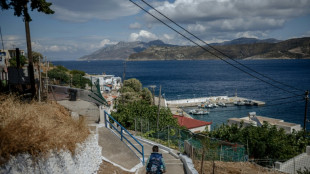 Pirate island's plunging population shows Greece's demographic decline
 With elections ahead, Latvia's Russian-speakers reject Moscow's help
 Brazil football clubs face massive sponsorship blow from betting ban
 ChatGPT maker wants to be the App Store for AI as safety concerns grow

 Women fight fires and sexism in Indonesian Borneo

 Forsling's OT blast lifts Florida over Carolina in NHL opener

 Hurricane Polo sweeps over Mexico's Pacific coast, heads inland
 Grynspan pulls ahead in race to lead UN: diplomat

 Trump touts AI boss pledge to self-regulate

 Oil down, but stocks lower as bond yields rise

 England break down stubborn Czechs to claim first Nations League win

 UN Security Council extends Haiti anti-gang force by 6 months

 Manchester City guilty of Premier League charges: What comes next?

 Man City chief Soriano slams Premier League 'conspiracy theory'

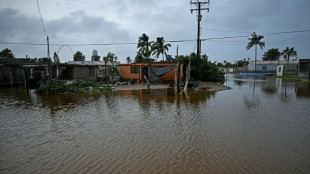 Hurricane Polo sweeps over Mexico's Pacific coast

 Man City must be relegated after guilty verdict says club's former chairman

 German far-right aims to lead Saxony-Anhalt govt in December

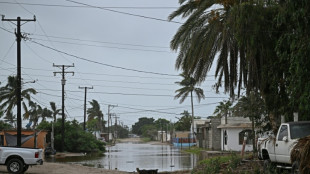 Little damage as Hurricane Polo sweeps over Mexico's Pacific coast

Tajik apricot farmer Uktam Kuziev is worried about the future now that climate change is threatening Central Asia's vital fruit harvest.
This is one of the world's most exposed regions to the effects of climate change and its poor, rural farming communities are particularly vulnerable.
Kuziev is one of more than 100,000 people employed in Tajikistan's apricot industry, a historic occupation across the mountains and valleys in the north of the landlocked country.
Ten percent of all the world's orchards are located here, according to United Nations data.
But mild winters, melting glaciers, late frosts and water scarcity all pose challenges to cultivation in Tajikistan's apricot capital of Isfara.
"Last year, some land turned desert-like due to lack of water and the soil cracked into pieces," Kuziev told AFP.
"The apricot trees dried up because they weren't watered," the 72-year-old farmer said, standing in front of stubby apricot trees swaying in the wind.
The fruit is "especially vulnerable" to climate change, according to the World Bank, due to "escalating temperatures, shifting precipitation patterns and increased frequency of extreme weather events".
- Water shortages -
At street markets in Isfara, vendors sell buckets of fresh apricots next to piles of glistening red cherries, while on roadsides dried fruits are sold from giant sandbags.
Tajikistan classifies the fruit as a "strategic product" with the UN's Food and Agriculture Organization.
"Apricot cultivation in northern Tajikistan is very important economically and socially... It creates jobs and improves the standard of living of the population," Muminjon Makhmajonov, deputy director of Isfara Food, a major dried fruit producer, told AFP.
So important is the furry orange fruit to the local economy that a giant monument to it has been erected in the middle of Isfara city.
But chronic water shortages and shrinking levels in the Isfara river -- shared by Tajikistan, Uzbekistan and Kyrgyzstan -- are disrupting both the industry and a way of life.
"The effects of climate change and the melting of the glaciers are already being felt. In spring the water level in the Isfara river is low," Bakhtior Jalilov, the city's chief agriculture specialist, told AFP.
Facing water shortages every spring, Kuziev has previously sacrificed wheat crops to "save the essentials -- the apricot trees".
A lack of water is not the only problem faced by farmers.
Paradoxically, bouts of heavy rainfall are also an issue, causing the fruit to grow with thorns or spots on its skin, which reduces its market value.
- Frosts -
"We are sad when it rains a lot because it spoils the product," said Muborak Isoeva, 61, who sells apricots in the neighbouring village of Kulkand.
Drastic temperature swings pose another problem.
The devastation of Turkey's 2025 apricot harvest by cold weather has worried Tajikistan's farmers.
"When the temperature rises or falls sharply, even for a day or two, you won't get the harvest you want," Makhmajonov said.
He buys supplies in the markets around Isfara, where small-scale farmers sell apricots grown in their gardens to make a living.
Whereas before locals had no idea of the concept of a late frost, "over the last 20 years, the trees have frozen over five or six times during or after blooming", city specialist Jalilov said.
- Adaptation -
Producers and the local administration are trying to adapt.
Orchards are being planted more intensively, while some 1,500 hectares of soil on low-yielding plots of land has been regenerated over the last five years.
Some are switching to growing plums, more resilient to the changing climate.
"Unlike apricots, plums bloom a little later and tolerate heat and cold better... so when the apricot harvest is poor, we can still export prunes," said Isfara Food's Makhmajonov.
He has installed a water-efficient drip irrigation system to grow the sweet purple fruit.
But not everybody has that option.
Water fees were hiked 150 percent last year -- something Tajikistan said was necessary to improve infrastructure and balance usage from the river across the three countries.
With an average national salary of just $260 a month, adaptation is both costly and complex for family farmers, who have for decades relied on the fruit to boost their incomes.
"Regardless of their standard of living or social status, if they need money, they could go and sell them at the market," Makhmajonov said.
Climate change is now making that safety net look increasingly fragile.
T.Perez--AT