
Deadly temperatures blasted western Europe in record hot June / Photo: Thibaud MORITZ - AFP/File

 'No limits': Marathon world record holder Sawe chasing history

 Countdown begins to biggest-ever Rugby World Cup

 Bangladesh women lose ground after quota reform

 Vietnam admits 'differing opinions' on Hanoi development

 Stocks temper gains as oil pares heavy losses, US data in focus

 New Zealand denies breaching climate commitments to EU

 Albert becomes youngest US scorer in 4-2 win over Chile

 Pirate island's plunging population shows Greece's demographic decline
 With elections ahead, Latvia's Russian-speakers reject Moscow's help

 Brazil football clubs face massive sponsorship blow from betting ban

 ChatGPT maker wants to be the App Store for AI as safety concerns grow

 Women fight fires and sexism in Indonesian Borneo

 Forsling's OT blast lifts Florida over Carolina in NHL opener

 Hurricane Polo sweeps over Mexico's Pacific coast, heads inland

 Grynspan pulls ahead in race to lead UN: diplomat

 Trump touts AI boss pledge to self-regulate

 Oil down, but stocks lower as bond yields rise

 England break down stubborn Czechs to claim first Nations League win

 UN Security Council extends Haiti anti-gang force by 6 months

 Manchester City guilty of Premier League charges: What comes next?

 Man City chief Soriano slams Premier League 'conspiracy theory'

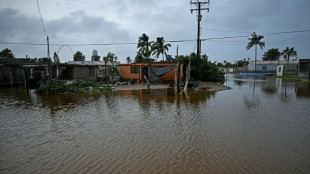 Hurricane Polo sweeps over Mexico's Pacific coast

 Man City must be relegated after guilty verdict says club's former chairman

 German far-right aims to lead Saxony-Anhalt govt in December

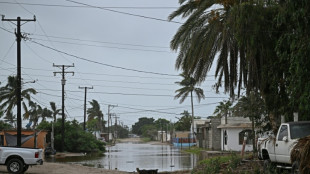 Little damage as Hurricane Polo sweeps over Mexico's Pacific coast

Western Europe sweltered through its hottest June on record last month, as extreme temperatures blasted the region in punishing back-to-back heatwaves, the EU climate monitor Copernicus said Wednesday.
Dangerous temperatures stretched into July, with separate research estimating that climate change made the heat up to 4C hotter, pushing the thermometer into deadly territory for thousands of vulnerable people and greatly worsening the projected death toll.
Millions of people were exposed to high heat stress as daily average temperatures in western Europe climbed to levels rarely seen before -- and never so early in the summer.
Several countries recorded surface temperatures above 40 degrees Celsius (104 Fahrenheit), with heat of up to 46C (114.8F) in Spain and Portugal, the Copernicus Climate Change Service (C3S) said.
"In a warming world, heatwaves are likely to become more frequent, more intense and impact more people across Europe," said Samantha Burgess, the EU monitor's Strategic Lead for Climate.
The two heatwaves, in mid and late June, were linked to heat domes trapping warm air over affected regions and worsening pollution and wildfire conditions.
France, Italy, Portugal, Spain and much of the Balkans saw some of the hottest "feels-like" temperatures, which measure the impact on the human body by taking into account factors such as humidity.
Maximum feels-like temperatures north of Lisbon hit 48C (118.4F), about 7C above average and associated with "extreme heat stress", said Copernicus.
Large parts of southern Europe also experienced so-called "tropical nights", when overnight temperatures don't fall low enough to let the body recover.
- 'Silent Killer' -
Heatwaves are particularly dangerous for the elderly, the sick, young children, outdoor workers, and anyone exposed to high temperatures for prolonged periods without relief.
In separate research Wednesday, scientists drawing on historical weather data concluded the heat between June 23 and July 2 "would have been 2-4C cooler" without human-induced climate change in all but one of the 12 cities studied.
They also for the first time sought to estimate how many people may have died, concluding that there may have been some 2,300 heat-related deaths over that period in the cities studied.
Around two thirds of those, or 1,500, would not have happened without climate change, said the researchers, stressing that their estimate was just a snapshot of the wider heatwave.
No official death toll is yet available, and the study has not been peer reviewed.
"An increase in heatwave temperature of just two or four degrees can mean the difference between life and death for thousands of people," said Garyfallos Konstantinoudis, a lecturer at Imperial College London.
"This is why heatwaves are known as silent killers. Most heat-related deaths occur in homes and hospitals out of public view and are rarely reported," he told reporters.
- 'Exceptional' heat -
Burgess said the impact of the heatwaves in Europe was intensified by record sea surface temperatures in the western Mediterranean. They hit an all-time daily maximum in June.
Sea surface temperatures across the western Mediterranean were "exceptionally high" in the month, some 5C above average in some areas. Temperatures surged to a record 27C on June 30, Copernicus said.
The higher water temperatures reduced nighttime air cooling along the coasts, contributed to higher humidity, and harmed marine life.
An AFP analysis based on Copernicus data, found that 12 countries and some 790 million people around the world experienced record heat last month.
Dangerous heat blanketed parts of the United States, while in China, 102 weather stations logged the hottest-ever June day. Some measuring temperatures above 40C, according to state media.
June saw a catalogue of weather extremes across the world.
Devastating wildfires blazed across parts of Canada and southern Europe, while deadly flooding swept areas of South Africa, China and Pakistan.
The Copernicus dataset, drawing on billions of measurements from satellites, ships, aircraft and weather stations, has recorded relentlessly rising temperatures as the planet warms as a result of humanity's emissions of greenhouse gases.
Globally, last month was the third warmest June on record. The hottest June was in 2024 and the second hottest was in 2023, Copernicus said.
While the recent blistering heat streak was partly stoked by warmer El Nino conditions, temperatures have remained at record or near-record levels even after that faded last year.
G.P.Martin--AT