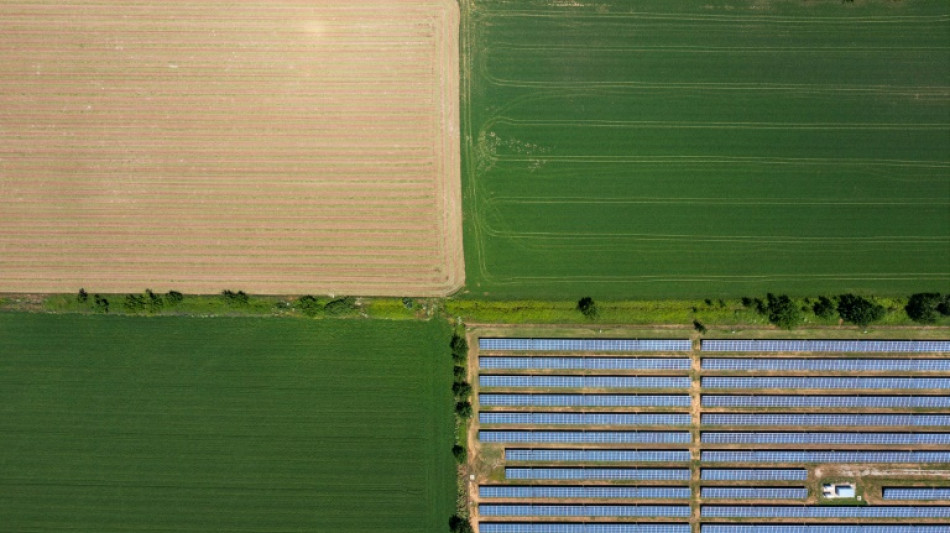
Sunny Greece struggles with solar energy overload / Photo: Aris MESSINIS - AFP

 'No limits': Marathon world record holder Sawe chasing history

 Countdown begins to biggest-ever Rugby World Cup
 Bangladesh women lose ground after quota reform
 Vietnam admits 'differing opinions' on Hanoi development
 Stocks temper gains as oil pares heavy losses, US data in focus
 New Zealand denies breaching climate commitments to EU
 Albert becomes youngest US scorer in 4-2 win over Chile

 Pirate island's plunging population shows Greece's demographic decline
 With elections ahead, Latvia's Russian-speakers reject Moscow's help
 Brazil football clubs face massive sponsorship blow from betting ban
 ChatGPT maker wants to be the App Store for AI as safety concerns grow

 Women fight fires and sexism in Indonesian Borneo

 Forsling's OT blast lifts Florida over Carolina in NHL opener

 Hurricane Polo sweeps over Mexico's Pacific coast, heads inland

 Grynspan pulls ahead in race to lead UN: diplomat

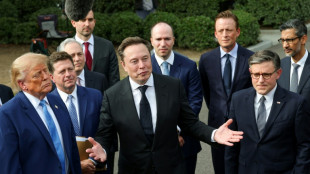 Trump touts AI boss pledge to self-regulate
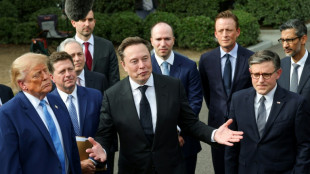
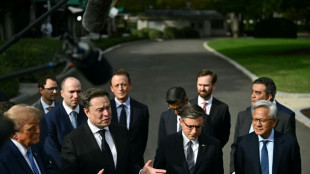 Oil down, but stocks lower as bond yields rise

 England break down stubborn Czechs to claim first Nations League win
 UN Security Council extends Haiti anti-gang force by 6 months

 Manchester City guilty of Premier League charges: What comes next?

 Man City chief Soriano slams Premier League 'conspiracy theory'

 Hurricane Polo sweeps over Mexico's Pacific coast

 Man City must be relegated after guilty verdict says club's former chairman

 German far-right aims to lead Saxony-Anhalt govt in December
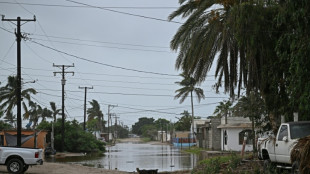 Little damage as Hurricane Polo sweeps over Mexico's Pacific coast

In a field in central Greece that once grew clover and corn, maintenance worker Nikos Zigomitros deftly drives a tractor between rows of solar panels, trimming weeds under a blazing sun.
"Letting them grow too high impairs the panel performance," the 52-year-old explains, wiping sweat from his brow.
Once a centre of agricultural production, the area around Kastron Viotias, some 110 kilometres (70 miles) northwest of Athens, has seen solar parks mushroom over the past 15 years, part of a major renewable energy push in the country.
Greece currently has 16 gigawatts of renewable energy installed, with solar power representing nearly 10 gigawatts, including 2.5 gigawatts that came on line last year.
The rapid growth of solar is similar to other countries in Europe, where it has overtaken coal for electricity production, according to climate think tank Ember.
It estimates renewables have risen to account for nearly half of the EU's electricity production.
Greece did even better: 55 percent of annual consumption was covered by renewables last year, with solar accounting for around 23 percent, according to SPEF, an association which unites local solar power producers.
In 2023, Prime Minister Kyriakos Mitsotakis predicted that Greece would "soon generate 80 percent of its electricity needs through renewables."
But getting there is proving complicated.
SPEF chairman Stelios Loumakis said that the solar sector has hit a wall because of a combination of factors, including Greece's small size, limited infrastructure and delays in building up energy storage capacity.
- Saturated -
The Greek state approved too many photovoltaic projects over the last five years and the market is saturated, leading to a "severe production surplus" on sunny days, the 56-year-old chemical engineer and energy consultant said.
Greece's national grid operator in May repeatedly ordered thousands of medium-sized operators to shut down during the sunniest hours of the day to avoid overburdening the network and triggering a blackout.
"The trick is to balance supply and demand. If you don't do it well, you get a blackout," said Nikos Mantzaris, a senior policy analyst and partner at the independent civil organisation Green Tank.
In April, a huge blackout of unknown origin crippled the Iberian Peninsula. The Spanish government has said two major power fluctuations were recorded in the half-hour before the grid collapse, but the government insisted renewables were not to blame.
"It could be something as mundane as a faulty cable," Mantzaris said.
- Batteries 'crucial' -
To manage the surplus, Greece is building battery storage capacity. But catching up to its solar electricity production will take years.
"The next three years will be crucial," said Stelios Psomas, a policy advisor at HELAPCO, a trade association for Greek companies producing and installing solar panels.
In the meantime, solar panel operators will have to ensure production does not outstrip capacity, thereby limiting their potential earnings.
"Managing high shares of renewables -- especially solar -- requires significant flexibility and storage solutions," said Francesca Andreolli, a senior researcher at ECCO, a climate change think tank in Italy, which faces a similar problem.
"Battery capacity has become a structural necessity for the electricity system, by absorbing excess renewable energy and releasing it when demand rises," she told AFP.
- Farm income -
Mimis Tsakanikas, a 51-year-old farmer in Kastron, readily admits that solar has been good to his family.
The photovoltaic farm they built in 2012 at a cost of 210,000 euros clears at least 55,000 euros a year, far more than he could hope to earn by growing vegetables and watermelons.
"This park sustains my home," he said.
But the father of two also notes that the environmental balance has tipped in his area, with the spread of solar installations now causing concerns about the local microclimate.
Tsakanikas says the area has already experienced temperature rises of up to 4.0 degrees Celsius (7.2 Fahrenheit), which he blames on the abundance of heat-absorbing solar panel parks in the area.
"The microclimate has definitely changed, we haven't seen frost in two years," he told AFP.
"(At this rate) in five years, we'll be cultivating bananas here, like in Crete," he said.
E.Flores--AT