'No doubt' Canadian firm will be first to extract deep sea minerals: CEO / Photo: CHARLY TRIBALLEAU - AFP

 'No limits': Marathon world record holder Sawe chasing history

 Countdown begins to biggest-ever Rugby World Cup

 Bangladesh women lose ground after quota reform

 Vietnam admits 'differing opinions' on Hanoi development

 Stocks temper gains as oil pares heavy losses, US data in focus

 New Zealand denies breaching climate commitments to EU

 Albert becomes youngest US scorer in 4-2 win over Chile

 Pirate island's plunging population shows Greece's demographic decline

 With elections ahead, Latvia's Russian-speakers reject Moscow's help

 Brazil football clubs face massive sponsorship blow from betting ban

 ChatGPT maker wants to be the App Store for AI as safety concerns grow

 Women fight fires and sexism in Indonesian Borneo

 Forsling's OT blast lifts Florida over Carolina in NHL opener

 Hurricane Polo sweeps over Mexico's Pacific coast, heads inland

 Grynspan pulls ahead in race to lead UN: diplomat

 Trump touts AI boss pledge to self-regulate
 Oil down, but stocks lower as bond yields rise

 England break down stubborn Czechs to claim first Nations League win

 UN Security Council extends Haiti anti-gang force by 6 months

 Manchester City guilty of Premier League charges: What comes next?

 Man City chief Soriano slams Premier League 'conspiracy theory'

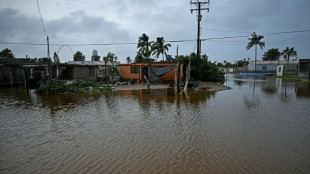 Hurricane Polo sweeps over Mexico's Pacific coast

 Man City must be relegated after guilty verdict says club's former chairman

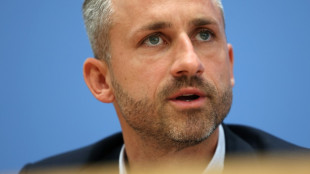 German far-right aims to lead Saxony-Anhalt govt in December

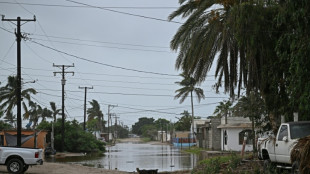 Little damage as Hurricane Polo sweeps over Mexico's Pacific coast

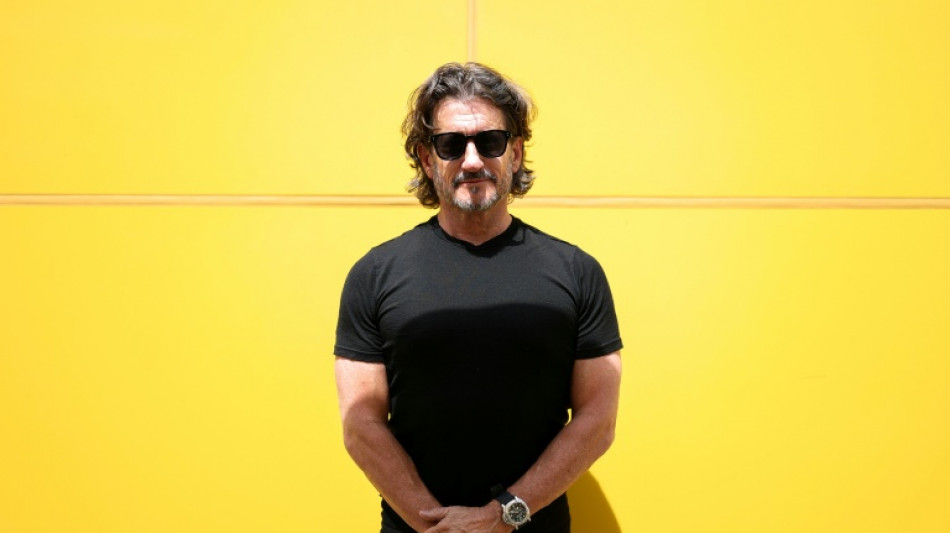
The head of submarine mining pioneer The Metals Company told AFP he had "no doubt" the Canadian firm would be the first to to extract coveted minerals from the deep seas, with help from Donald Trump.
Metal-containing deep-sea nodules, which have the appearance of potato-size pebbles and typically contain nickel and cobalt, are highly sought for use in electric vehicle batteries and electric cables, and the race is on to be the first to extract them from the untapped deep sea.
TMC's chief executive Gerard Barron told AFP in an interview in New York that his company was sure to win the race.
The company turned its back on the International Seabed Authority (ISA), which has jurisdiction over the international seabed, complaining over its slow pace in adopting a mining code that establishes the rules for exploiting seabed minerals.
Instead, TMC surprised everyone when its US subsidiary submitted a request to Washington, which is not an ISA member, to grant it the first commercial mining permit in international waters.
TMC has asked to harvest so-called polymetallic nodules -- deposits made up of multiple metals -- in 9,700 square miles (25,200 square kilometers) of the Pacific's Clarion-Clipperton Zone.
Here is what Barron said about what might lie ahead.
Q: When is your target to start mining?
A: "With the help of the executive order from President Trump,... we're expecting an expedited permitting process. And that hopefully will mean that within this next year, maybe even by the end of the year, we'll see the permission from the US government to move forward."
"We do have our first production vessel, the Hidden Gem,... We've finalized how we turn these nodules into the intermediate nickel and copper and cobalt and manganese products. So we're all set."
"We haven't formally told the market when we'll be seeing first production. But what I'm confident of is that it'll be sooner than people expect."
"If you would have suggested me 2027, I'd say I hope so."
Q: Do you need to first modify the Hidden Gem to increase its production capacity?
A: "The original plan was that we were going to make quite extensive modifications to suit a much higher production number. But (expecting) an expedited permit, our thinking is, let's get the boat into production as quickly as possible, and then focus on the bigger production scale for boat number two, three, four and five."
Q: When do you expect to reach the hoped-for full-scale production of 12 million tonnes of nodules per year?
A: "I hope by 2030-2031."
Q: How important is it to be the first to extract minerals from the deep sea?
A: "It's not important, but it's a fact that we will be... No doubt."
Q: Do you expect this to be seen as a historical step?
A: "I think time will be the judge of just how important ocean metals are going to be to society."
"The people that oppose us are pretty (much) the same people that oppose nuclear... They dramatized the potential impacts. They lied about the facts. We ended up burning a whole heap of fossil fuels. We contributed a lot of greenhouse gasses into the atmosphere. That didn't need to happen, and now the world is waking up with the fact that we need nuclear energy. So shame on those people that created that situation. And I think ocean metals will be the same."
"I know based on the environmental research and the more than a petabyte of data that we've gathered to support our claims that the impacts of picking up these rocks and turning them into metals are a fraction compared to the land based alternatives."
Q: Would you consider going back to ISA if it adopts a mining code for deep sea mining?
A: "Not the way it stands now, no. Because the mining code has been overtaken by activists."
"There are many ways that you can frustrate the process if you're Greenpeace. One way is to get countries to sign on to moratoriums... Another way is to get your countries to do the bidding for you by resisting language in the mining code that makes it practical."
"China (has) five licenses more than any other nation, they have state-owned enterprises controlling those licenses. And they can afford to be more patient... They play the long game, whereas private contractors like ourselves, our shareholders won't sit around waiting for that."
A.Anderson--AT