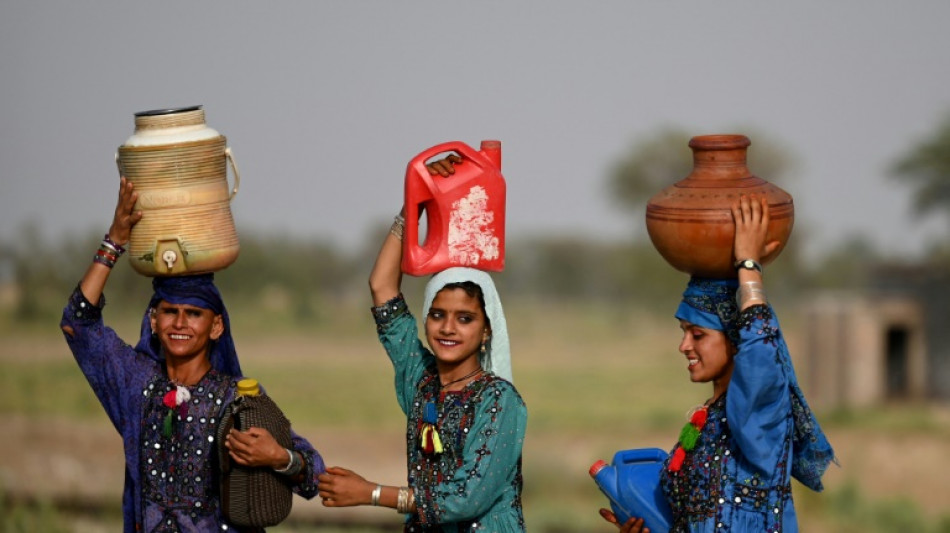
Pakistan parched and pummelled by blistering heatwave / Photo: Aamir QURESHI - AFP

 Amaze Holdings (NYSE: AMZE) Executes Binding LOI to Acquire BullionFX | Alchemy, a Decentralized Gold-Backed Financial Ecosystem for Valued at US$155 Million

 Clashes between French teens, police as school blockades intensify

 Stocks move sideways despite oil moving lower
 African leaders to gather in Egypt for business summit
 UK decides against charging foreign visitors for museums

 Dallaglio to sell England World Cup winners' medal

 Brazil come from behind to beat Australia 4-2 in friendly

 Ruthless An retains Asian Games badminton crown as Kunlavut triumphs

 Alonso to stay with F1 team Aston Martin in 2027
 China badminton 'still strong' despite Asian Games slump

 'Exceptional' Turner painting shown in Rome before sale

 European stocks climb as oil dips

 Spain aims to ban evictions until 2030 amid housing protests

 Kunlavut first Thai man to win Asian Games badminton singles gold

 French far right says antisemitism claims part of 'total war' to derail presidency bid

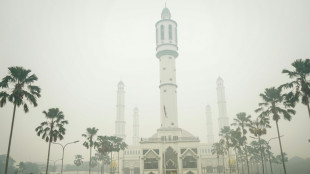 'Gift from God': Rain brings relief from Indonesia toxic haze

 Ex-world snooker champion jailed for 7 years for child sex crimes

 French teens clash with police as school blockades intensify

 FIFA accuses UEFA of 'misinformation campaign' in bid for World Cup papers

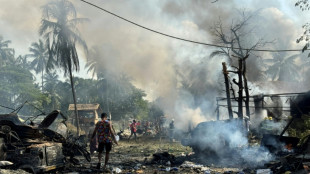 Myanmar airstrike toll hits 50 as families gather dead
 STARTRADER Raises Lloyd's of London Client Fund Insurance to USD 30 Million in Aggregate
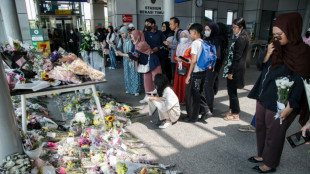
 North Korean DMZ landmine blasts 'violation of armistice': Seoul

 Sabalenka 'fresh' for first tournament since losing No.1 spot

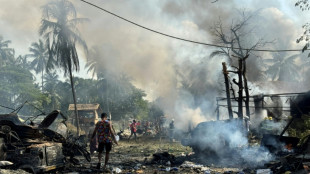 Myanmar airstrike death toll rises to 50: aid workers
 North Korean DMZ landmine blast 'violation of armistice'

Pakistan was in the grip of a heatwave on Friday, with parts of the nation previously scalded by temperatures of nearly 50 degrees Celsius as officials warned of acute water shortages and a health threat.
Swathes of the country have been smothered by high temperatures since late April, in extreme weather the World Meteorological Organization (WMO) has warned is consistent with climate change.
On Thursday the city of Jacobabad in Sindh province hit 49.5C (121 degrees Fahrenheit), the Pakistan Meteorological Department (PMD) said, with temperatures forecast to remain high until the end of the week.
"It's like fire burning all around," said labourer Shafi Mohammad, who is from a village on the outskirts of Jacobabad where residents struggle to find reliable access to drinking water.
Nationwide, the PMD alerted temperatures were between 6C and 9C above normal, with the capital Islamabad -- as well as provincial hubs Karachi, Lahore and Peshawar -- recording temperatures around 40C on Friday.
"This year we have jumped from winter right into summer," said PMD chief forecaster Zaheer Ahmad Babar.
Pakistan has endured heightened heatwaves since 2015, he said, focused in upper Sindh province and southern Punjab province.
"The intensity is increasing, and the duration is increasing, and the frequency is increasing," he told AFP.
Jacobabad nurse Bashir Ahmed says that, for the past six years, heat stroke cases in the city have been diagnosed earlier in the year -- starting in May, rather than June or July.
"This is just increasing," he said.
- 'Take cover' -
Punjab province irrigation spokesman Adnan Hassan said the Indus river -- Pakistan's key waterway -- had shrunk by 65 per cent "due to a lack of rains and snow" this year.
Sheep have reportedly died from heatstroke and dehydration in the Cholistan Desert of Punjab -- Pakistan's most populous province, which also serves as the national breadbasket.
"There is a real danger of a shortfall in food and crop supply this year in the country should the water shortage persist," Hassan said.
On Tuesday climate minister Sherry Rehman warned residents in the megacity of Lahore "to take cover for the hottest hours of the day".
The heatwave has also ravaged India, with temperatures in parts of Rajasthan hitting 48.1C on Thursday.
Pakistan -- home to 220 million -- says it is responsible for less than one percent of global greenhouse gas emissions.
But it ranks as the nation eighth most affected by extreme weather events, according to a 2021 study by environmental group Germanwatch.
Extreme heat can also trigger cascading disasters that could pummel Pakistan's generally impoverished population.
The mountainous portions of the country are home to more than 7,000 glaciers, a number larger than any region outside the poles.
Quickly melting glaciers can swell lakes, which then burst their banks and unleash torrents of ice, rock and water in events known as glacial lake outburst floods.
Last weekend a key highway bridge in the Gilgit-Baltistan region was swept away in flash flooding caused by glacier melting.
In April, officials warned there were 33 lakes in Pakistan in danger of unleashing similar dangerous deluges.
N.Mitchell--AT