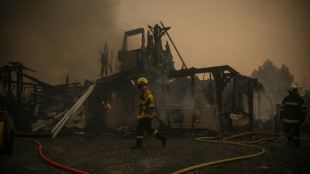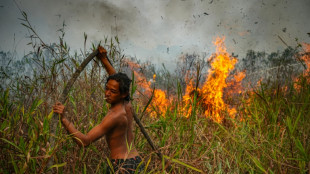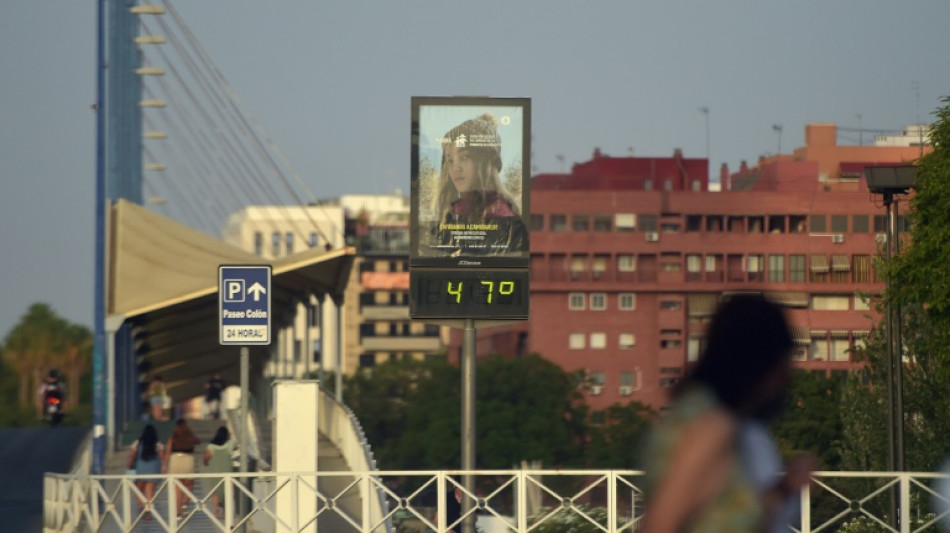
Every heatwave enhanced by climate change: experts / Photo: CRISTINA QUICLER - AFP/File

 Amaze Holdings (NYSE: AMZE) Executes Binding LOI to Acquire BullionFX | Alchemy, a Decentralized Gold-Backed Financial Ecosystem for Valued at US$155 Million

 Clashes between French teens, police as school blockades intensify
 Stocks move sideways despite oil moving lower

 African leaders to gather in Egypt for business summit
 UK decides against charging foreign visitors for museums

 Dallaglio to sell England World Cup winners' medal

 Brazil come from behind to beat Australia 4-2 in friendly

 Ruthless An retains Asian Games badminton crown as Kunlavut triumphs

 Alonso to stay with F1 team Aston Martin in 2027
 China badminton 'still strong' despite Asian Games slump

 'Exceptional' Turner painting shown in Rome before sale

 European stocks climb as oil dips

 Spain aims to ban evictions until 2030 amid housing protests

 Kunlavut first Thai man to win Asian Games badminton singles gold

 French far right says antisemitism claims part of 'total war' to derail presidency bid

 'Gift from God': Rain brings relief from Indonesia toxic haze

 Ex-world snooker champion jailed for 7 years for child sex crimes

 French teens clash with police as school blockades intensify

 FIFA accuses UEFA of 'misinformation campaign' in bid for World Cup papers

 Myanmar airstrike toll hits 50 as families gather dead
 STARTRADER Raises Lloyd's of London Client Fund Insurance to USD 30 Million in Aggregate

 North Korean DMZ landmine blasts 'violation of armistice': Seoul

 Sabalenka 'fresh' for first tournament since losing No.1 spot
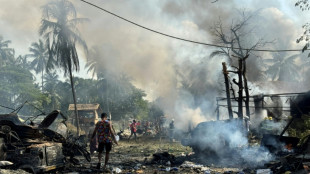 Myanmar airstrike death toll rises to 50: aid workers
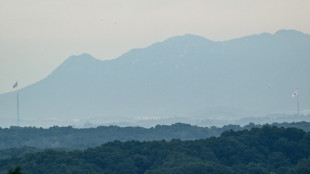 North Korean DMZ landmine blast 'violation of armistice'

All heatwaves today bear the unmistakable and measurable fingerprint of global warming, top experts on quantifying the impact of climate change on extreme weather said Wednesday.
Burning fossil fuels and destroying forests have released enough greenhouse gases into the atmosphere to also boost the frequency and intensity of many floods, droughts, wildfires and tropical storms, they detailed in a state-of-science report.
"There is no doubt that climate change is a huge game changer when it comes to extreme heat," Friederike Otto, a scientist at Imperial College London's Grantham Institute, told AFP.
Extreme hot spells such as the heatwave that gripped South Asia in March and April are already the most deadly of extreme events, she added.
"Every heatwave in the world is now made stronger and more likely to happen because of human-caused climate change," Otto and co-author Ben Clarke of the University of Oxford said in the report, presented as a briefing paper for the news media.
Evidence of global warming's impact on extreme weather has been mounting for decades, but only recently has it been possible to answer the most obvious of questions: To what extent was a particular event caused by climate change?
The most scientists could say before is that an unusually severe hurricane, flood or heatwave was consistent with general predictions of how global warming would eventually influence weather.
News media, meanwhile, sometimes left climate change out of the picture altogether or, at the other extreme, mistakenly attributed a weather disaster entirely to rising temperatures.
With more data and better tools, however, Otto and other pioneers of a field known as event attribution science have been able to calculate -- sometimes in near realtime -- how much more likely or intense a particular storm or hot spell has become due to global warming.
- Courtroom evidence -
Otto and colleagues in the World Weather Attribution (WWA) consortium, for example, concluded that the heatwave that gripped western North America last June -- sending temperatures in Canada to a record 49.6 C (121 F) -- would have been "virtually impossible" without human-induced climate change.
A heatwave that scorched India and Pakistan last month is still under review, Otto told AFP, but the larger picture is frighteningly clear.
"What we see right now in terms of extreme heat will be very normal, if not cool, in a 2-degree to 3-degree Celsius world," she said, referring to average global temperatures above preindustrial levels.
The world has warmed nearly 1.2C so far.
That increase made record-setting rainfall and flooding last July in Germany and Belgium that left more than 200 dead up to nine times more likely, the WWA found.
But global warming is not always to blame.
A two-year drought in southern Madagascar leading to near famine conditions attributed by the UN to climate change was in fact a product of natural variability in the weather, experts reported.
Quantifying the impact of global warming on extreme weather events using peer-reviewed methods has real-world policy implications.
Attribution studies, for example, have been used as evidence in landmark climate litigation in the United States, Australia and Europe.
In one case set to resume later this month, Saul Luciano Lliuya v. RWE AG, a Peruvian farmer is suing the German energy giant for the costs of preventing harmful flooding from a glacial lake destabilised by climate change.
A scientific assessment entered into evidence concluded that human-caused global warming is directly responsible for creating a "critical threat" of a devastating outburst, putting a city of some 120,000 people in the path of potential floodwaters.
L.Adams--AT