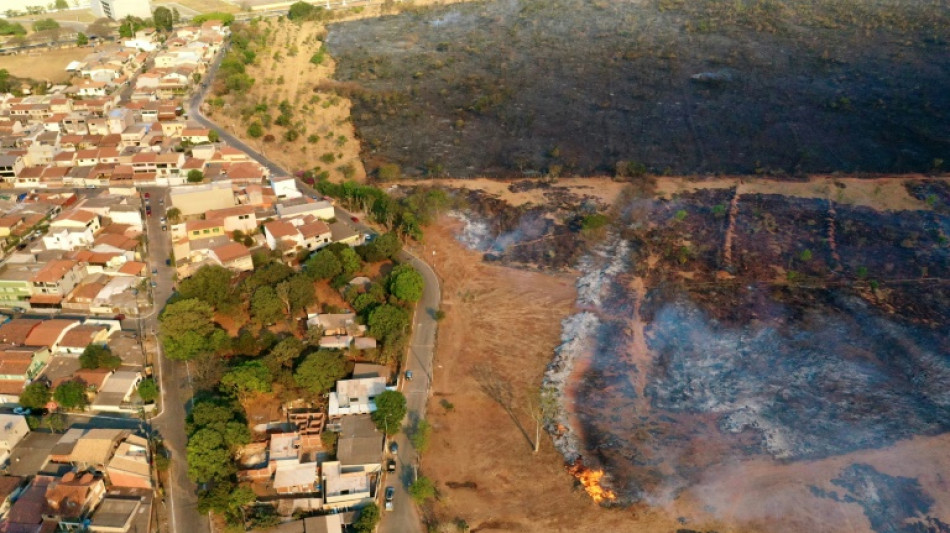
Brazil's farmers fret over fires and drought / Photo: EVARISTO SA - AFP

 Energy costs spark inflation surges in France, Italy

 South Korea break China hearts to reach Asian Games football final
 Eala storms into Asian Games semi-finals to thrill adoring fans

 Turkey freezes ex-minister's assets as fund crisis grows
 What we know about the North Korean POW dispute

 Most equities rise after oil price plunge, US data in focus

 Polar oceans transformed as warming melts ice habitats: research

 Lost shark becomes viral star in South Korea
 Dangote to launch $16bn refinery in Kenya
 North Korean leader 'extremely obese': Seoul spy agency

 Yankees and pope-backed White Sox start MLB playoffs with wins
 Malaysia's ex-PM Mahathir in hospital for observation

 'No limits': Marathon world record holder Sawe chasing history

 Countdown begins to biggest-ever Rugby World Cup

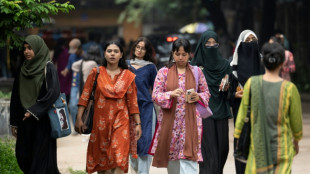 Bangladesh women lose ground after quota reform
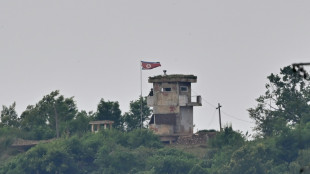
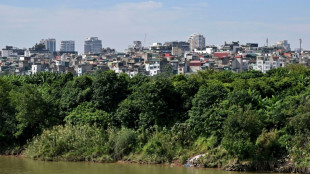 Vietnam admits 'differing opinions' on Hanoi development
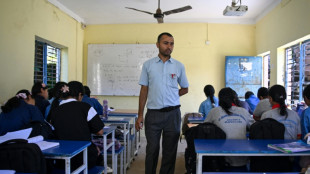
 Stocks temper gains as oil pares heavy losses, US data in focus
 New Zealand denies breaching climate commitments to EU
 Albert becomes youngest US scorer in 4-2 win over Chile
 Pirate island's plunging population shows Greece's demographic decline
 With elections ahead, Latvia's Russian-speakers reject Moscow's help
 Brazil football clubs face massive sponsorship blow from betting ban
 ChatGPT maker wants to be the App Store for AI as safety concerns grow

 Women fight fires and sexism in Indonesian Borneo

 Forsling's OT blast lifts Florida over Carolina in NHL opener

Sugarcane farmer Marcos Meloni is still haunted by his battle last month to fight the flames on his land, as the double-edged disaster of fires and drought hits Brazil's agricultural sector hard.
"The rearview mirror of the water tanker shriveled up" from the intense heat, recalled the farmer from Barrinha, at the heart of a major agricultural area 340 kilometers (211 miles) from Sao Paulo.
"I thought I was going to die there."
Brazil's worst drought in seven decades has fueled fires across the vast nation in recent weeks, ripping through the Amazon rainforest, leaving jaguars with burn injuries in the Pantanal wetlands, and choking major cities with smoke.
The country's vital agricultural sector is also reeling, with harvests of sugarcane, arabica coffee, oranges and soybeans -- of which Brazil is the world's main producer and exporter -- at risk.
And there is little hope of a quick turnaround, with less rain forecast in October than average.
In the country's main sugar-producing region in the state of Sao Paulo, some 230,000 hectares of the four million sugarcane plantations in the area, have been affected to varying degrees by the fires.
Half of the damaged plantations have yet to be harvested, according to the Brazilian Sugarcane Industry Union.
"Where the sugarcane is still standing, we expect the yield (in sugar) to drop by half," said Jose Guilherme Nogueira, CEO of the Organization of Sugarcane Producers' Associations of Brazil.
- 'The soil lacks water' -
Meloni had already finished his harvest but his land suffered significant damage.
"It burned where there were shoots, which were already struggling to come out because of the lack of water. Now we have to see where we will have to replant."
In southeastern Minas Gerais, home to 70 percent of Brazilian Arabica, coffee growers are also anxiously awaiting the rains needed to encourage their shrubs to flower and form the coffee berries that will be picked next year.
"The soil lacks water. It is the worst water deficit in 40 years," lamented Jose Marcos Magalhaes, president of Minasul, the second-largest coffee cooperative in the country.
By the end of the month, "we need rains of good intensity to hope to have a normal harvest" in 2025, he said.
Bad weather has already disrupted the 2023-2024 harvest, which is coming to an end.
In May, the state-run National Supply Company (Conab), a public body, anticipated an increase of 8.2 percent in Arabica production, but these forecasts "will probably be revised downwards", said Renato Ribeiro, from the Center for Advanced Studies in Applied Economics at the University of Sao Paulo.
- Agri industry must 'open its eyes' -
The drought is also squeezing orange farmers, whose fruit are mainly destined for the juice industry.
Brazilian citrus producers' association Fundecitrus expects a nearly 30 percent decline in production, exacerbated by a bacterial disease plaguing the country's oranges.
Conab expects soybean production to fall 4.7 percent as a result of last year's drought and massive flooding in April and May in the southern Rio Grande do Sul state.
This year's drought has delayed planting for the next harvest.
"If the weather improves, soybean producers can make up for this delay," said Luiz Fernando Gutierrez, an analyst at the Safras e Mercado firm.
"But if the drought continues into October, there could be harvest problems" in 2025.
Brazil's agricultural industry is the worst affected by climate change, but also bears some responsibility for its woes, said climatologist Carlos Nobre.
"This is the sector that emits the most greenhouse gases in Brazil. It must reduce them and put an end to deforestation. It must open its eyes."
T.Perez--AT
