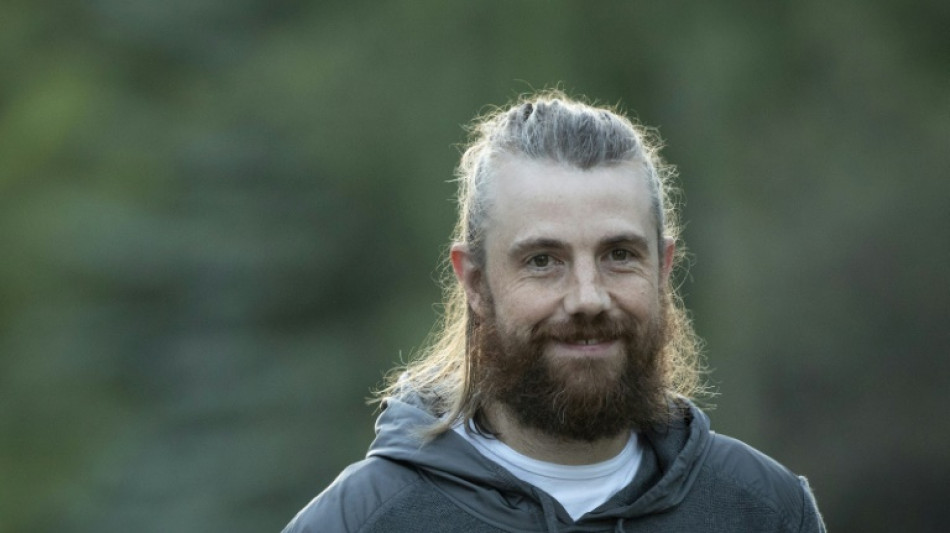
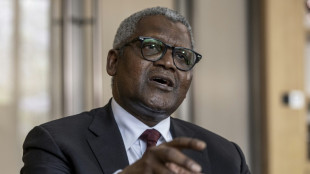
Cannon-Brookes: Australia's billionaire climate warrior / Photo: Drew Angerer - GETTY IMAGES NORTH AMERICA/AFP

 In Manchester, people say City scandal is 'shame for football'
 Stocks lacklustre as inflation data weighs on sentiment
 Israel-bound plane rerouted, pilots wounded in reported fight
 Truth commission on Sweden's Sami people seeks redress
 Energy costs spark inflation surges in France, Italy

 South Korea break China hearts to reach Asian Games football final
 Eala storms into Asian Games semi-finals to thrill adoring fans

 Turkey freezes ex-minister's assets as fund crisis grows
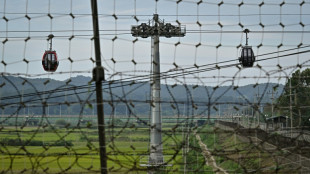 What we know about the North Korean POW dispute

 Most equities rise after oil price plunge, US data in focus
 Polar oceans transformed as warming melts ice habitats: research

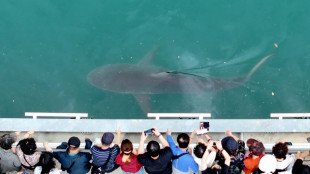 Lost shark becomes viral star in South Korea
 Dangote to launch $16bn refinery in Kenya
 North Korean leader 'extremely obese': Seoul spy agency
 Yankees and pope-backed White Sox start MLB playoffs with wins

 Malaysia's ex-PM Mahathir in hospital for observation

 'No limits': Marathon world record holder Sawe chasing history
 Countdown begins to biggest-ever Rugby World Cup
 Bangladesh women lose ground after quota reform
 Vietnam admits 'differing opinions' on Hanoi development
 Stocks temper gains as oil pares heavy losses, US data in focus
 New Zealand denies breaching climate commitments to EU
 Albert becomes youngest US scorer in 4-2 win over Chile
 Pirate island's plunging population shows Greece's demographic decline
 With elections ahead, Latvia's Russian-speakers reject Moscow's help

Tech billionaire Mike Cannon-Brookes once joked he could not tell the difference between an AA battery in his kids' toys and the gigantic lithium-ion units powering today's green energy revolution.
Today, he is the driving force behind a $24 billion project to build the world's largest solar battery hub in Australia's remote outback.
The 44-year-old was born in the United States before moving to Sydney at an early age.
He gained riches and public attention through software start-up Atlassian and investments in high-profile sports teams like the NBA's Utah Jazz.
But a lost wager with Elon Musk seven years ago set him on a path towards massive renewable energy investments -- and he has not looked back since.
He and university friend Scott Farquhar founded Atlassian in 2002 with few expectations.
"Our goals when we started were not to have to get a real job and to not have to wear a suit to work every day," Cannon-Brookes once recalled.
Atlassian now has 12,000 employees in 13 countries and "our software is being used on not just one, but two planets" he boasts, referencing the firm's involvement with NASA Mars rovers.
It also made him one of Australia's richest people -- with an estimated net worth of more than $10 billion.
His involvement with renewables began almost by accident -- thanks to self-described "idiocy on Twitter".
- Twitter 'idiocy' -
Back in March 2017, Australia was in the grip of an energy crisis, which Musk claimed Tesla batteries could solve in 100 days.
"Without thinking, I fired off a bunch of tweets, challenging them and saying 'were they really serious about this?'" Cannon-Brookes recalled in a TEDx talk a few months later.
If Musk could deliver what was then the world's biggest lithium-ion battery within 100 days, Cannon-Brookes promised to pay for it.
If Musk took longer than that, the battery would be free.
Within 60 days, the battery was switched on and Cannon-Brookes had lost the bet.
He was, he admits, "miles out of my depth".
"At the time, I really couldn't tell you the difference between a one-and-a-half volt battery that goes in my kids' toys and a 100-megawatt-hour industrial-scale battery facility," he later said.
"I remember thinking to myself, 'Shit. I've kind of started something here and I can't really get out."
"So I spent a week trying to learn everything I could about industrial-scale batteries and the electricity grid and renewables and the economics of all of this".
That was the spark that led to billions of dollars worth of green projects, including renewable energy initiatives and a plant-based meat startup.
He now holds the largest stake in AGL, Australia's largest electricity provider.
His ties with coal-hungry AGL might seem surprising at first, especially since he once called the company "one of the most toxic" on the planet.
But his Trojan Horse campaign is forcing the firm to decarbonise by closing two of its biggest coal-fired power stations years earlier than planned.
His latest SunCable project is perhaps even more radical.
It will include a vast array of solar panels, batteries and, eventually, a cable linking Australia with Singapore. It is slated to power three million homes.
Cannon-Brookes believes the case for renewables -- and projects like the one he is building in northern Australia -- make both business and climate sense.
"The green economy is Australia's golden ticket," he insists.
"At this point in history -- we no longer need to talk as much about stopping things, because the economy has done that for us.
"Fossil fuels are unreliable and expensive compared to renewables when it comes to energy generation. We'll see this filter through industry after industry. We will electrify everything."
For a man who never wanted a "real job", Cannon-Brookes has certainly kept himself busy.
S.Jackson--AT