Stressed out: how to measure dangerous heat / Photo: Mukesh GUPTA - AFP

 In Manchester, people say City scandal is 'shame for football'
 Stocks lacklustre as inflation data weighs on sentiment

 Israel-bound plane rerouted, pilots wounded in reported fight

 Truth commission on Sweden's Sami people seeks redress

 Energy costs spark inflation surges in France, Italy

 South Korea break China hearts to reach Asian Games football final

 Eala storms into Asian Games semi-finals to thrill adoring fans

 Turkey freezes ex-minister's assets as fund crisis grows
 What we know about the North Korean POW dispute

 Most equities rise after oil price plunge, US data in focus

 Polar oceans transformed as warming melts ice habitats: research

 Lost shark becomes viral star in South Korea
 Dangote to launch $16bn refinery in Kenya
 North Korean leader 'extremely obese': Seoul spy agency

 Yankees and pope-backed White Sox start MLB playoffs with wins

 Malaysia's ex-PM Mahathir in hospital for observation

 'No limits': Marathon world record holder Sawe chasing history

 Countdown begins to biggest-ever Rugby World Cup

 Bangladesh women lose ground after quota reform

 Vietnam admits 'differing opinions' on Hanoi development

 Stocks temper gains as oil pares heavy losses, US data in focus
 New Zealand denies breaching climate commitments to EU

 Albert becomes youngest US scorer in 4-2 win over Chile

 Pirate island's plunging population shows Greece's demographic decline
 With elections ahead, Latvia's Russian-speakers reject Moscow's help

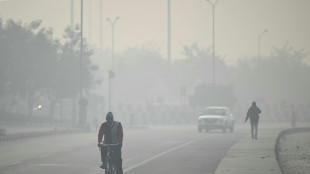
In the hottest year on record, with scorching conditions claiming lives from India to Mexico and Greece sweltering in its earliest-ever heatwave, experts are sounding the alarm over heat stress.
The condition kills more people than hurricanes, floods or any other climate-related extreme, but what is heat stress exactly, and how is it measured?
- 'Silent killer' -
Heat stress occurs when the body's natural cooling systems are overwhelmed, causing symptoms ranging from dizziness and headaches to organ failure and death.
It is brought on by prolonged exposure to heat and other environmental factors that work together to undermine the body's internal thermostat and its ability to regulate temperature.
"Heat is a silent killer, because symptoms are not so easily evident. And when these underlying conditions are present, the consequences can be very bad, and even catastrophic," said Alejandro Saez Reale of the World Meteorological Organization (WMO).
Infants, the elderly, people with health problems and outdoor workers are particularly vulnerable. City dwellers surrounded by concrete, brick and other heat-absorbing surfaces also face an elevated risk.
The WMO estimates that heat kills around half a million people a year but says the true toll is not known, and could be 30 times higher than is currently recorded.
As climate change makes heatwaves longer, stronger and more frequent, people across the planet will be increasingly exposed to conditions that test the limits of human endurance.
- More than a maximum -
Temperature might be the most widely used and easily understood weather reading, but headline-catching "maximum highs" do not fully tell how heat might affect the human body.
For example, the same temperature can feel very different in one place versus another: 35 degrees Celsius (95 Fahrenheit) feels much different in the dry heat of the desert versus the humid climes of a jungle.
To build a more complete picture, scientists consider a host of factors including temperature but also humidity, wind speed, clothing, direct sunshine, and even the amounts of concrete or greenery in the area.
All these play a big role in how the body perceives, and most importantly responds to, extreme heat.
There are many ways to measure heat stress, some of which are decades old, but all try to boil down different environmental readings into a single number or graph.
- 'Feels like' -
One of the oldest methods is known as wet-bulb temperature, a useful gauge in situations where the thermometer reading may not seem too extreme but when combined with humidity becomes unbearable, even lethal.
Just six hours exposed to 35 degrees Celsius with 100 percent humidity is enough to kill a healthy person, scientists said in 2023. Above this limit, sweat cannot evaporate off the skin, and the body overheats and expires.
Copernicus, the EU's climate monitor, uses the Universal Thermal Climate Index (UTCI), which considers temperature and humidity but also wind, sunshine and radiated heat to rank heat stress levels from moderate to extreme.
Extreme heat stress, as judged by this index, is a "feels like" temperature of 46 Celsius and above, at which point it is necessary to take action to avoid health risks.
The Heat Index, used by the US National Weather Service, offers an "apparent temperature" based on heat and humidity in the shade, and a colour-coded graph denoting the likelihood of illness from exposure.
Canada has developed the Humidex rating, which combines heat and humidity into one number to reflect the "perceived temperature" and presents the associated risk in a four-step "guide to summer comfort" chart.
- Limitations -
Other examples of "thermal stress" indices include the Tropical Summer Index, Predicted Heat Strain and the mean radiant temperature.
They are not without limitations, and heatwave expert John Nairn said some measures worked better in some climates than others.
"It's not the same all around the world, about the way you approach it," Nairn told AFP.
The UTCI, for example, is excellent at reading heat stress in Germany, where it was first developed, but "a very poor measure" in global south countries, he said.
"It saturates and over-measures far too much. And it would over-alert for those communities who are chronically exposed to heat," said Nairn, who has advised governments and the WMO on heatwave policy.
These locations might get better heat stress readings using wet-bulb temperature, he said.
These indices also do not consider the impact of heat beyond health, he said, even though a heatwave could strand trains or overload air-conditioners.
"If your heat challenge is such that it gets to a level where your infrastructure is not going to operate, and it starts failing, that will have a return on humans no longer being protected," Nairn said.
A.Ruiz--AT