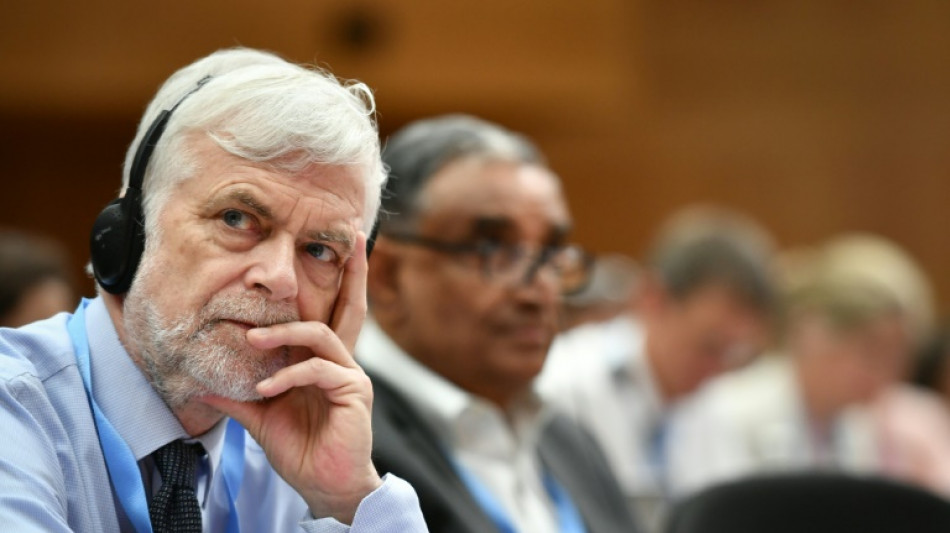
Humanity 'has agency over future': new head of UN climate panel / Photo: FABRICE COFFRINI - AFP

 With elections ahead, Latvia's Russian-speakers reject Moscow's help

 Brazil football clubs face massive sponsorship blow from betting ban
 ChatGPT maker wants to be the App Store for AI as safety concerns grow

 Women fight fires and sexism in Indonesian Borneo

 Forsling's OT blast lifts Florida over Carolina in NHL opener

 Hurricane Polo sweeps over Mexico's Pacific coast, heads inland
 Grynspan pulls ahead in race to lead UN: diplomat

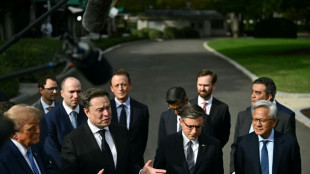
 Trump touts AI boss pledge to self-regulate
 Oil down, but stocks lower as bond yields rise

 England break down stubborn Czechs to claim first Nations League win
 UN Security Council extends Haiti anti-gang force by 6 months

 Manchester City guilty of Premier League charges: What comes next?
 Man City chief Soriano slams Premier League 'conspiracy theory'

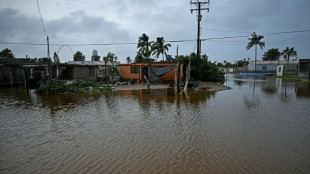 Hurricane Polo sweeps over Mexico's Pacific coast

 Man City must be relegated after guilty verdict says club's former chairman

 German far-right aims to lead Saxony-Anhalt govt in December
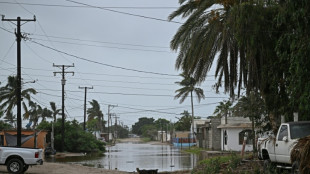 Little damage as Hurricane Polo sweeps over Mexico's Pacific coast
 Manchester City guilty of breaking financial rules - Premier League

 FIFA boss Infantino blasted as would-be 'emperor' by UEFA's Ceferin

 Stocks move lower despite oil prices dropping
 AI driving up innovation investment: UN

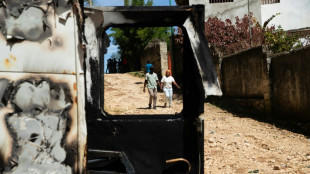
 UN Security Council extends Haiti mission by 6 months
 Man Utd do not deserve medals if Man City stripped of titles: Rooney

 Vana Completes Expanded Staking as Part of the Vega Upgrade, Publishes Expanded VANA Token Economics
 Spain to cap gas price hikes, extend fuel discounts

British professor Jim Skea told AFP on Thursday he will bring "a judicious blend of realism and optimism" to his leadership of the UN's climate expert panel, including a firm belief that humanity is not powerless to confront global warming.
Skea takes charge of the Intergovernmental Panel on Climate Change (IPCC) in a crucial decade which will determine the extent of warming and its impact on the planet for decades or even centuries to come.
The 195-nation organisation informs global policymakers on the latest science on climate change, and Skea will oversee hundreds of experts and the defining reports they produce on the best course of action.
Skea, a Professor of Sustainable Energy at Imperial College London, said extreme temperatures being felt across the globe this month were "a salutary lesson" for the task ahead as he assumes his new role.
But it was critical to offer "positive" ways for humanity to address these challenges, he said, and not just "messages of gloom that can induce a sense of existential dread about the future of the planet".
"We need to make the point that human beings do have choices they can make, and agency over their own future," Skea told AFP in Nairobi, where the elections for other IPCC leadership positions are also underway.
He said more than ever, governments wanted advice on steps they could take in the near term and there would be a "twin emphasis" on climate adaptation and mitigation under his stewardship.
Skea, 69, has decades of experience building consensus around climate change and was not "naive about the difficulty of getting the science messages across."
"I think it will be a judicious blend of realism and optimism... I am genetically optimistic," he said of his approach to the job.
- Daunting task -
The task ahead is enormous.
Under the 2015 Paris treaty, nations promised to collectively cap the rise in the planet's average temperature at "well below" 2C, and at 1.5C if possible.
To get to that more ambitious target, the IPCC says emissions need to drop 43 percent by 2030 -- and 84 percent by mid-century -- to stay within the threshold.
Yet they continue to rise, and there are concerns the next IPCC reports -- due in five to seven years -- come too near the end of this critical decade to rally a sufficient global response.
Skea said rushing out reports would risk "that gold standard credibility that has been so influential for the IPCC in the past".
Skea had a leading role in publishing a landmark 2018 IPCC report that concluded only a 1.5C cap on warming could ensure a climate-safe world that did not risk ecosystem collapse.
Experts have said it might fall on Skea to finally say the world cannot limit temperature rises to 1.5C in time -- but the new chief said this was premature.
"If it appears that 1.5 cannot be reached on a more permanent basis, we will have to say so," Skea said.
"But we are not at that point yet, and we do not have the evidence for it".
He said he would strongly resist pressure to turn out more so-called special reports like the 2018 study, saying they dragged on the IPCC's core work and resources.
"I'll say something very strongly -- over my dead body will we see lots and lots of special reports," he said.
He succeeds South Korean economist Hoesung Lee, who led the IPCC for eight years, and was elected over four other candidates including two hoping to be the first woman chair of the organisation.
Skea said the IPCC had "big issues" around gender and diversity, and said a priority of his tenure would be increasing the number of women in their ranks.
A.Williams--AT