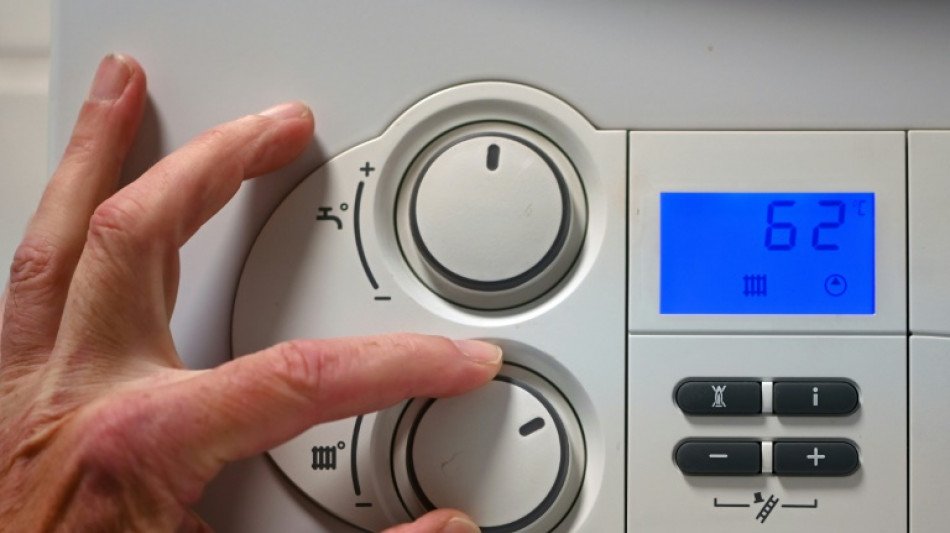
'Heating hammer': Germany huffs and puffs over climate law / Photo: Ina FASSBENDER - AFP

 NBA close to picking new $12-13bn Vegas team owners: report

 LA28 Olympics torch relay to visit all 50 states
 Spain brush aside Croatia in Nations League, England down Czechs
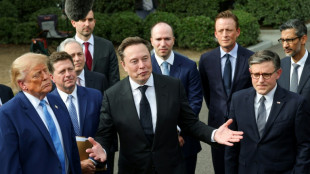 Trump hails 'morally binding' AI self-regulation pledge

 Yamal inspires Spain to Croatia romp on World Cup homecoming

 UN to hold fourth informal poll of secretary-general candidates

 Who are the Emiratis behind crisis-hit Manchester City?

 Singer Angelique Kidjo urges Africans to 'create together'

 Alleged Rihanna mansion shooter mentally fit for trial, says judge
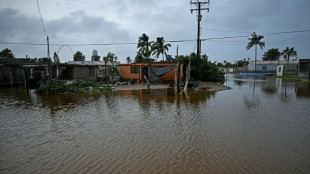
 Mystery over UK airbase scare as police find petrol not explosives

 OpenAI unveils low-cost AI model, a day after shelving Astra upgrade
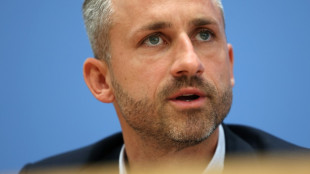
 Premier League confirms Man City guilty of serious financial breaches
 Brazil's Lula turns to Bad Bunny tune to criticise Trump ahead of polls

 Nigerian dancer eyes world record after seven-day marathon

 Swiss regulator concludes Julius Baer bank probe
 Brazil's patron saint pulled into latest election scrap

 Football overload leaves players near 'breaking point', warns Tebas

 Paris Eiffel Tower says chief to step down after uproar over removing women staff

 Amaze Holdings (NYSE: AMZE) Executes Binding LOI to Acquire BullionFX | Alchemy, a Decentralized Gold-Backed Financial Ecosystem for Valued at US$155 Million

 Clashes between French teens, police as school blockades intensify
 Stocks move sideways despite oil moving lower

 African leaders to gather in Egypt for business summit

 UK decides against charging foreign visitors for museums

 Dallaglio to sell England World Cup winners' medal

 Brazil come from behind to beat Australia 4-2 in friendly

When Maike Biert was choosing a new heating system for her house in western Germany, she baulked at the huge cost of installing a heat pump, instead opting for a gas boiler.
But there may not be such easy options in the future as the government prepares to pass radical climate legislation, which has been championed by environmentalists but which has sparked concerns that homeowners will be forced to shell out huge sums.
The new rules mean heating systems will need to be powered by at least 65 percent renewable energy, effectively banning new oil and gas boilers, as Germany seeks to slash emissions and become climate neutral by 2045.
The plan was watered down after it provoked a furious row in the ruling coalition, and was finally introduced in parliament Thursday.
But the saga was politically damaging, many details remain unclear, and homeowners are anxious.
"In principle, I am in favour of saving energy," Biert, a 46-year-old who lives in Koenigswinter, in the western state of North Rhine-Westphalia, told AFP.
"The problem is simply that you cannot and should not overburden people with this."
When she was picking new heating last year, the married mother of two looked at the possibility of installing a heat pump -- touted as more climate-friendly -- which would have involved substantial renovations to her house.
She also looked at "hybrid solutions", involving perhaps a mix of a heat pump and gas.
But she estimates the cost of such options would have been between 40,000 and 100,000 euros ($43,000 and $108,000).
"It would have meant a loan for us, and we did not want that," added Biert, who ultimately chose a traditional gas boiler.
- 'Still unclear' -
The new rules were championed by the Green party, a member of the government, but fiercely opposed by their business-friendly coalition partners the FDP, sparking the worst crisis within the government since it took office in 2021.
Critics said the high cost of installing new systems would particularly impact middle- and low-income households, with the tabloid press labelling it "the heating hammer".
Advocates stress there is much support, such as subsidies for heat pumps, and urgent action is needed as the buildings sector was responsible for about 15 percent of Germany's carbon dioxide emissions last year.
As fears mounted that the deal -- and the coalition itself -- could fall apart, Chancellor Olaf Scholz stepped in on Tuesday and oversaw emergency talks that resulted in a compromise.
The agreement, which still needs to go through parliament, stipulates that the new regulations will only apply for existing buildings if a municipal heating plan is in place for the area.
The rules were meant to come into force from 2024, but the compromise effectively means the new earliest start date for most is 2028.
The Greens are now pushing ahead to try to get it passed by parliament's summer recess, but there is much uncertainty.
Verena Oerenbas, political adviser from the Residential Property Association, welcomed the compromise but said the level of government help for homeowners making the transition to renewable energy was still unclear.
"There are still no concrete proposals yet, so we don't know how this funding will look," she said.
- 'Bad joke' -
The weeks-long row has been damaging for the government, while providing a boost for the far-right Alternative for Germany (AfD), which criticised the law.
The Greens have come out of the saga particularly badly, with their popularity plummeting among voters opposed to the law and also among environmentalists angered by the compromise deal.
In comments to Funke media group, Luisa Neubauer, head of the German chapter of Fridays for Future, criticised the watered-down deal as "a bad joke" that amounted to "gutting" the law.
The Greens' attempts to promote climate-friendly systems were not helped when reports emerged the party was struggling to fit a heat pump in its own Berlin headquarters.
A heat pump, which uses technology similar to an air conditioner or fridge, works by extracting warmth from the ground, outside air or a water source to generate heat.
After soaring in recent years, demand for heat pumps has plunged this year, as consumers waited to hear the details of the law, including potentially higher subsidies.
"The public debate in recent weeks has caused a great deal of uncertainty among consumers," Bjoern Schreinermacher, of Germany's Heat Pump Association, told AFP.
Conversely, there has been a "very, very strong demand for oil and gas heating," as people rushed to install new systems ahead of an expected ban, he added.
R.Lee--AT