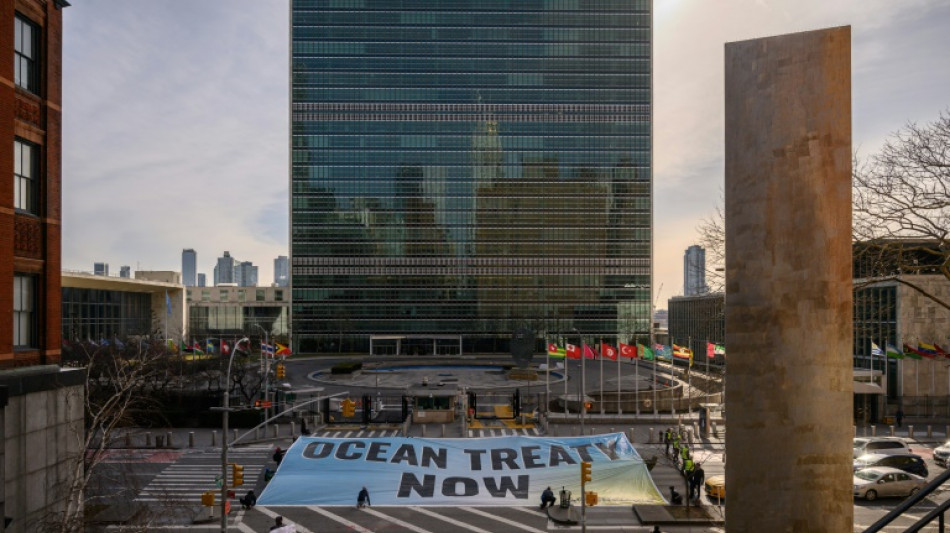
After sleepless night, marathon UN high seas talks continue / Photo: Ed JONES - AFP/File

 Internationals keep Presidents Cup lead with late fightbacks

 Tuchel to 'keep pushing' England to reach Spain's level

 Alcaraz saves match points to keep Europe ahead in Laver Cup
 Spain success driven by hunger to improve, says De La Fuente

 Lyon collapse at Stade Francais to suffer first Top 14 loss
 Oyarzabal and Spain sink England again as Modric shines for Croatia
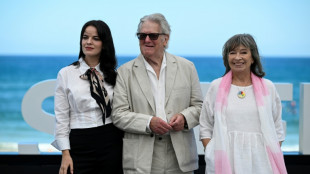
 Housing protesters camp in central Madrid after mass demonstration

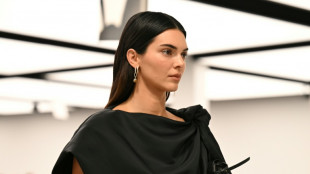 Louise Trotter expands her palette at Bottega Veneta
 Pope prays at Lourdes after huge Paris mass

 USA trims International lead after Presidents Cup four-balls

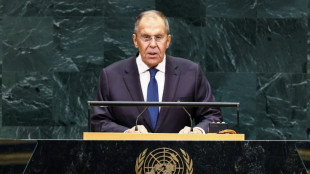 Russia accuses Europe of blocking Ukraine talks, as strikes drag on

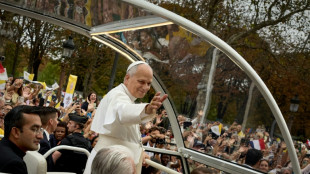 'He said hello': Families pray with pope on Paris avenue

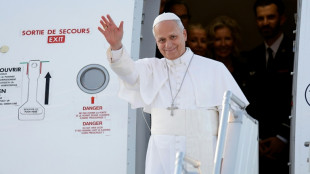 Pope celebrates giant Paris mass, flies to Lourdes

 Thousands march in Madrid over eviction of 87-year-old woman
 England women back to winning ways with last-gasp defeat of New Zealand

 Trump rejects Iran proposal for deal to reopen Hormuz
 England's Cox says injured Buttler leaves 'big shoes to fill'
 Ruthless Perpignan upset sloppy Bordeaux-Begles
 Deadly abbey attack feeds anti-Ukrainian sentiment in Poland
 Antonelli says he drove 'safety-first' on his worst weekend of season

 Fernandez fights back to reach Singapore Open final

 Giant statue of Pope Leo XIV takes shape in Peru workshop

 Ukraine crush holders Italy to reach first BJK Cup final

 Pope celebrates giant Paris mass in landmark visit

 Germany selects Munich for Olympics host bid
UN member states struggled Saturday to nail down a long-awaited agreement on the high seas, after a sleepless night of negotiations on a treaty to protect a fragile and vital treasure that covers nearly half the planet.
After more than 15 years of informal and formal talks, negotiators have reached the end of two more weeks of discussions -- the third "final" session in less than a year.
But as of early Saturday in New York, participants were still wrangling over the highly political issue of benefit-sharing for research derived from marine genetic resources collected on the high seas.
"Global High Seas Treaty. I have now officially been in a negotiations at the UN for 24 hours," New Zealand's deputy foreign secretary Victoria Hallum wrote on Twitter. "That’s a new record for me. So close now!"
On Friday night, conference chair Rena Lee had said there was still "a window of opportunity to seal the deal, and we mustn't let this opportunity slip through our hands."
A draft text seen hours later by AFP did not contain the section on genetic resources, but appeared to be far from finished.
"It still has a lot of brackets in, which raises the question at this late stage of how they plan to go through it all," said Nathalie Rey of the High Seas Alliance, a grouping of around 40 NGOs.
"But it's clear at 4 am, they are still really trying very hard to land the treaty today, otherwise they would have thrown in the towel."
- 'A massive step'? -
Even if compromises are found on all the remaining disputes, the treaty cannot be formally adopted at this session, Lee said on Friday.
But it could be "finalized" without the possibility of reopening discussions on substantive sections, before a formal adoption at a later date, she added.
Even without adoption Friday, "It's a massive step," said Veronica Frank of Greenpeace.
Disputes include the procedure for creating marine protected areas, the model for environmental impact studies of planned activities on the high seas and the sharing of potential benefits of newly discovered marine resources.
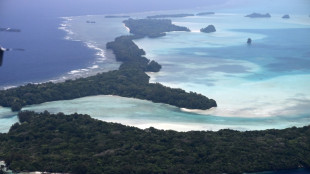
The high seas begin at the border of countries' exclusive economic zones, which extend up to 200 nautical miles (370 kilometers) from coastlines. They thus fall under the jurisdiction of no country.
While the high seas comprise more than 60 percent of the world's oceans and nearly half the planet's surface, they have long drawn far less attention than coastal waters and a few iconic species.
Only about one percent of the high seas are currently protected.
Ocean ecosystems create half the oxygen humans breathe and limit global warming by absorbing much of the carbon dioxide emitted by human activities.
But they are threatened by climate change, pollution and overfishing.
- North-South 'equity' -
For many, any agreement hinges on equity between the rich global North and poorer global South.
Developing countries, without the means to afford costly research, say they fear being left behind while others profit from the potential commercialization of substances discovered in the international waters.
In a move seen as an attempt to build trust between rich and poor countries, the European Union pledged 40 million euros ($42 million) in New York to facilitate the ratification of the treaty and its early implementation.
Delegates to a global conference in Panama on saving the world's oceans also pledged $19 billion this week, including $6 billion from the United States and $860 million from the EU for marine conservation.
Observers interviewed by AFP say that resolving these politically sensitive financial issues could help ease other sticking points.
If an agreement is reached, it remains to be seen whether the compromises made will result in a text robust enough to protect oceans effectively.
"The text is not perfect, but it's got a clear path towards 30 by 30," said Greenpeace's Frank, referring to world governments' commitment to protect 30 percent of the world's land and ocean by 2030, as agreed in Montreal in December.
T.Perez--AT