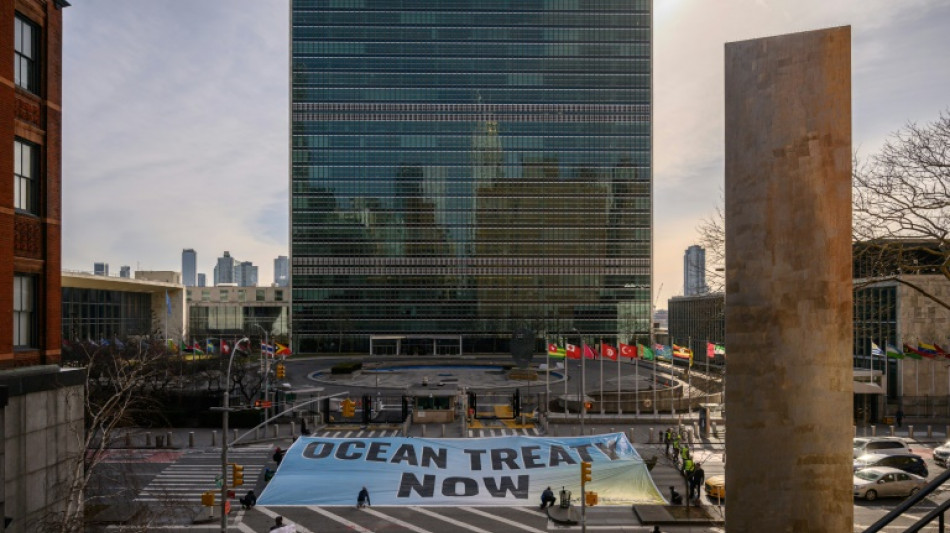
Treaty ahoy? Talks to protect high seas enter last day / Photo: Ed JONES - AFP/File

 Ireland squad vote to play Israel tie despite Gaza unease

 Gutsy Vollering wins cycling road race world title

 Vollering wins cycling road race world title
 Man City's meteoric rise clouded by dark shadow
 Mbappe out for two weeks or more with knee injury say Real
 Lyon collapse away to Stade and suffer first Top 14 loss
 Russia accuses Europe of seeking to thwart Ukraine talks

 Man City chairman defiant over reported Premier League charges
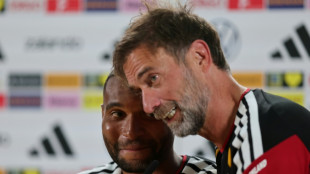 Germany ready to 'walk through fire' for Klopp, says Tah

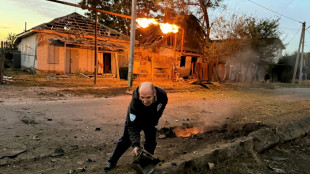 At least 16 killed in Russian and Ukrainian strikes

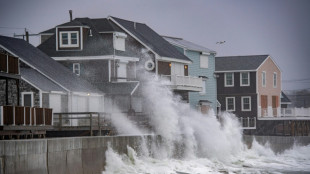 Powerful storm pummels US Northeast
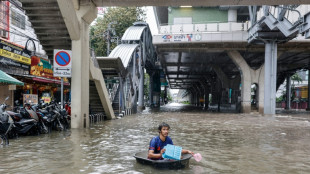 Bangkok declares disaster after homes flooded, roads submerged by heavy rain
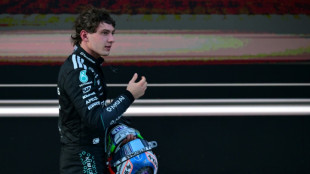
 Norris calls for errant Colapinto to be banned for causing Baku crash

 Russell finds himself again and prepares to heap pressure on Antonelli
 South Korea hold nerve to win Asian Games basketball gold

 Russell holds off Verstappen to claim imperious victory in Baku
 Russell holds off Verstappen to win Azerbaijan Grand Prix
 India's Kohli says 2027 ODI World Cup will be his last
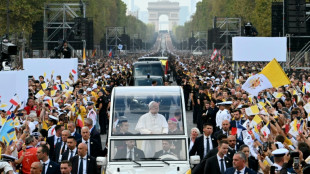
 Huge crowds cheer Pope Leo along Champs-Elysees ahead of Paris mass

 Putellas wants to bring 'winning culture and mentality' to London City
 Rare Italian opera returns to Moscow after nearly 120-year hiatus

 Pope to celebrate giant Paris mass after 'peace' appeal
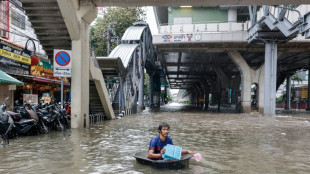 Homes flooded, roads submerged: Bangkok declares disaster over heavy rains

 Ahead of Paris mass, pope urges life together in 'dignity and peace'
 Austria 'ghetto' language classes leave children to repeat school
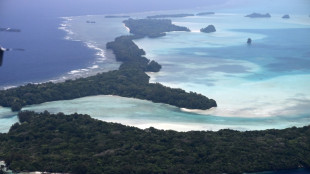
UN countries will try to overcome their differences on Friday to finally agree a treaty to protect the high seas, a fragile and vital treasure that covers nearly half the planet.
After more than 15 years of informal and then formal talks, negotiators are coming to the end of two more weeks of discussions, the third "final" session in less than a year.
"I would ask for all delegations to do some warm-up exercises and stretches and be prepared to run the marathon to the finish line," said Rena Lee, chair of the conference that could run late into Saturday's early hours.
But on the eve of the scheduled end of discussions, long-standing disputes were still posing problems.
They include the procedure for creating marine protected areas, the model for environmental impact studies of planned activities on the high seas, and the sharing of potential benefits of newly discovered marine resources.
"We're still pretty far from a clean text," said Liz Karan of the Pew Charitable Trusts NGO.
Observers are hoping the final stretch will see a political boost from the Our Ocean conference, which is taking place in parallel in Panama. Many government officials are there to discuss the protection and sustainable use of the oceans.
"Life on earth depends on a healthy ocean," said Monica Medina, United States Assistant Secretary of State for Oceans and International Environmental and Scientific Affairs.
She said a high seas treaty is "critical" to ensuring governments meet their commitment to protect 30 percent of the world's land and ocean by 2030, as agreed in Montreal in December.
The high seas begin at the border of countries' exclusive economic zones, which extend up to 200 nautical miles (370 kilometers) from coastlines. They thus fall under the jurisdiction of no country.
While the high seas comprise more than 60 percent of the world's oceans and nearly half the planet's surface, they have long drawn far less attention than coastal waters and a few iconic species.
Only about one percent of the high seas is currently protected.
Ocean ecosystems create half the oxygen humans breathe and limit global warming by absorbing much of the carbon dioxide emitted by human activities.
- North-South 'equity' -
But they are threatened by climate change, pollution and overfishing.
"I think despite all of the different outstanding issues, and there's a long list of them, the overall sense I'm getting is that we will have a deal in this session," Greenpeace activist Li Shuo told AFP.
For him, the political will is there and everything comes down to "global north versus south" and whether "we have the fairness and equity that we need in this deal."
Developing countries, without the means to afford costly research, say they fear being left aside while others make profits from the commercialization of potential substances discovered in the international waters.
In a move seen as an attempt to build trust between rich and poor countries, the European Union pledged 40 million euros ($42 million) in New York to facilitate the ratification of the treaty and its early implementation.
At the Panama conference, the EU also pledged $860 million for research, monitoring and conservation of oceans in 2023.
Observers interviewed by AFP say that resolving these politically sensitive financial issues could help ease other sticking points and finally allow the text to be submitted for approval at the conference.
"I think there is a commitment to try and get this done. People haven't given up yet," said Nathalie Rey of the High Seas Alliance, which includes more than 40 NGOs.
If agreement is reached, it remains to be seen whether the compromises made will result in a text robust enough to protect oceans effectively.
H.Thompson--AT