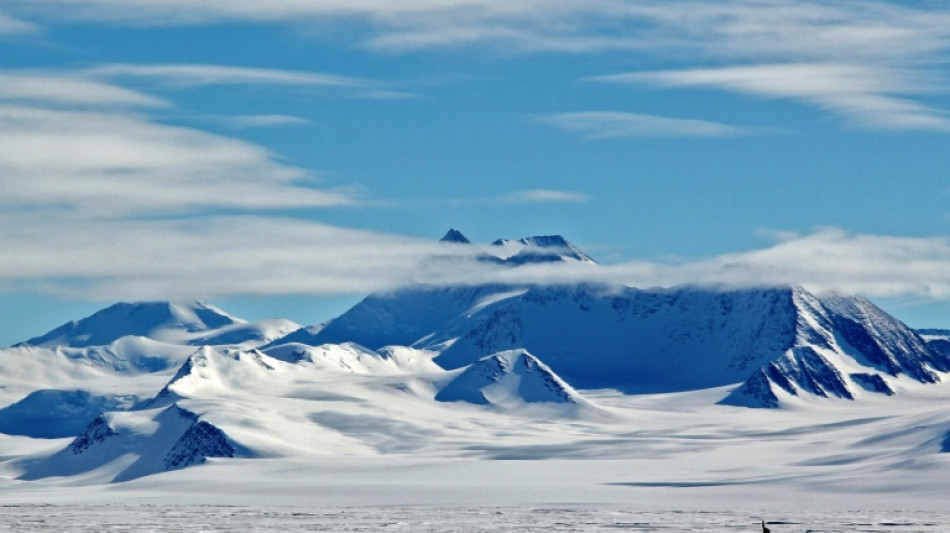
Sea ice in Antarctic at record low: US data center / Photo: Felipe TRUEBA - INACH/AFP

 Stocks move lower despite oil prices dropping

 AI driving up innovation investment: UN

 UN Security Council extends Haiti mission by 6 months

 Man Utd do not deserve medals if Man City stripped of titles: Rooney

 Vana Completes Expanded Staking as Part of the Vega Upgrade, Publishes Expanded VANA Token Economics

 Spain to cap gas price hikes, extend fuel discounts
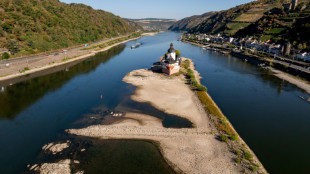 'We just need rain': Germany's Rhine river hits new low

 Yemen health system at 'breaking point': WHO

 Ireland undecided on second Israel match: coach

 France's Le Pen defiant after top ally hit by antisemitism claims

 Tom Cruise trades stunts for satire as toxic tycoon 'Digger'

 MEXC Unveils "WE SEE YOU" Brand Visual Refresh, Putting People Behind Every Trade in Focus

 Thai capital cleans up after deadly floods

 NATO, EU allies rally to Estonia after 'sabotage' blamed on Russia

 Families demand justice for Cameroon's 'nightmare' wave of murdered women
 Tebas says Man City should face 'most severe' sanctions if guilty of rule breaches

 Pochettino calls Man City success 'a period of deception'

 Settler attack on West Bank village injures Israeli forces, drawing rare rebuke

 Mystery over UK airbase scare after reports no explosives found

 Spanish govt races to adopt housing law under protest pressure

 Estonia slams Russian 'sabotage' after arson attack on defence company

 Slovenia sees surge in '.si' sites after Trump hypes 'super intelligence'

 'Like a dream' for An as Games organisers 'sorry' for latest mix-up

 Tokyo suffers longest streak of rainy days on record

 Indonesia charges train driver over crash that killed 16 women
Antarctic sea ice likely shrunk to a record low last week, US researchers said Monday, its lowest extent in the 45 years of satellite record-keeping.
The National Snow and Ice Data Center (NSIDC) at the University of Colorado Boulder said that Antarctica's sea ice fell to 1.79 million square kilometers (691,000 million square miles) on February 21.
That exceeded the previous record low set in 2022 by 136,000 square kilometers (52,500 square miles).
NSIDC scientists stressed that the latest figure was preliminary since further late-season melt was still possible. They said they would issue a final number on the extent of ice in early March.
Melting sea ice exposes the thicker ice shelves buttressing Antarctica's ground ice sheet to waves and warmer temperatures.
Melting sea ice has no discernible impact on sea levels because the ice is already in ocean water.
But the sea ice rings Antarctica's massive ice shelves, the extensions of the freshwater glaciers that threaten catastrophic sea level rise over centuries if they continue melting as global temperatures rise.
"Antarctica's response to climate change has been different from the Arctic's," said Ted Scambos, a senior research scientist at the Cooperative Institute for Research in the Environmental Sciences (CIRES).
"The downward trend in sea ice may be a signal that global warming is finally affecting the floating ice around Antarctica, but it will take several more years to be confident of it," Scambos said.
The Antarctic cycle undergoes significant annual variations during its summers of thawing and winters of freezing, and the continent has not experienced the rapid melting of the past four decades that plague the ice sheets of Greenland and the Arctic due to global warming.
But the high melt rate since 2016 raises concerns that a significant downward trend may be taking hold.
Melting of the sea ice is problematic because it helps accelerate global warming.
When white sea ice -- which bounces up to 90 percent of the Sun's energy back into space -- is replaced by dark, unfrozen sea, the water absorbs a similar percentage of the Sun's heat instead.
Globally, last year was the fifth or sixth warmest on record despite the cooling influence of a natural La Nina weather pattern.
N.Walker--AT