-
 Venezuelan protesters call government wage hike a joke
-
Leeds beat Burnley to virtually secure Premier League survival
-
 Gridlock as pandemic treaty talks fail to finish
-
S&P 500, Nasdaq end at fresh records on tech earnings strength
-
 Immersive art: museum-goers in bikinis dive into Cezanne
-
Gaza activists disperse after flotilla halted by Israel off Crete
-
 US sanctions are 'collective punishment,' says Cuba during May 1 marches
-
Top seeds Sinner, Zverev reach Madrid Open final
-
 Pope names former undocumented migrant as US bishop of West Virginia
-
Delhi end slump with team-record chase against Rajasthan

-
 Trump says will raise US tariffs on EU cars to 25%
-
AI actors and writers not eligible for Oscars: Academy

-
 Rebels take key military base in Mali's north
-
ExxonMobil CEO sees chance of higher oil prices as earnings dip
-
 Leclerc on top for Ferrari ahead of Verstappen and Piastri
-
After Madonna and Lady Gaga, Shakira set for Rio beach mega-gig
-
 Trump says will raise US tariffs on EU cars, trucks to 25%
-
Godon raises game to take Romandie stage and revenge over leader Pogacar

-
 Celtic's O'Neill expects no let-up from Hibs despite fans' feelings
-
Pope names former undocumented migrant as US bishop
-
 Javelin star Kitaguchi teams up with Czech legend Zelezny
-
Sawe sub-2hr marathon captured 'global imagination' says Coe
-
 King Charles gets warm welcome in Bermuda after whirlwind US visit
-
Sinner shines to beat Fils, reach Madrid Open final
-
 UK court clears comedy writer of damaging transgender activist's phone
-
Was LIV Golf an expensive failure for Saudis? Not everyone thinks so
-
 Coe hails IOC gender testing decision
-
McInnes wants Tynecastle in 'full glory' for Hearts title charge
-
 McFarlane says troubled Chelsea still attractive to potential managers
-
Man Utd boss Carrick relishes 'special' Liverpool rivalry
-
 Baguettes take centre stage on France's Labour Day
-
Spurs must banish 'loser' mentality despite injury woes, says De Zerbi
-
 Arsenal must manage emotions of title race says Arteta
-
Nepal temple celebrates return of stolen Buddha statue

-
 US Fed official says rate hikes may be needed if inflation surges
-
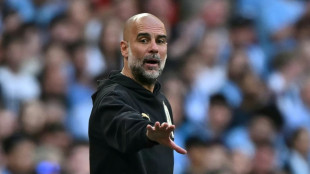
Fixture pile-up no excuse for Man City in title race: Guardiola
-
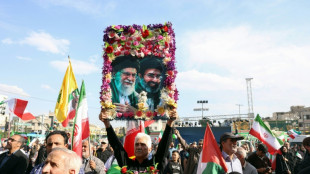 Iran offers new proposal amid stalled US peace talks
-
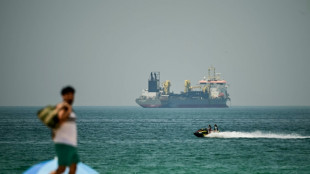
Gulf countries' plans to bypass Hormuz still far off, experts warn
-
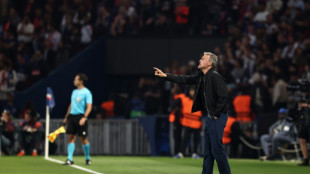 Luis Enrique says 'unique' PSG-Bayern first leg could have gone either way
-
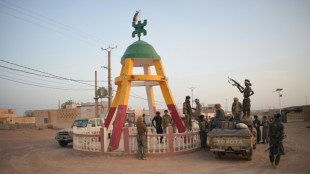
Rebels take key military camp in Mali's north
-
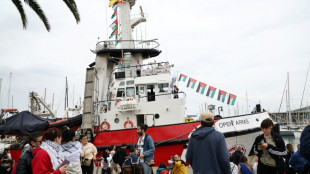 Activists on Gaza aid flotilla seized by Israeli forces disembark in Crete
-
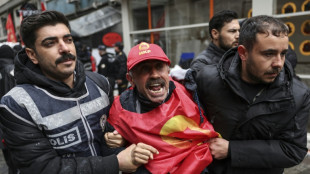
Turkish police fire tear gas, arrest hundreds at Istanbul May Day rallies
-
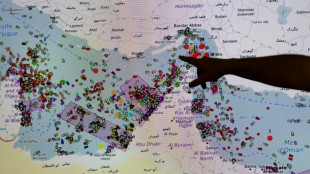 French hub monitors Hormuz tensions from afar
-
Flick happy Raphinha back for Barca with title in sight
-
 UN troubled by rejected appeal of Cambodian opposition leader
-
Activists on Gaza aid flotilla detained by Israel disembark in Crete
-
 Suspect appears in UK court charged with attacking two Jewish men
-
Oil steady after wild swing, stocks diverge in thin trading

-
 Lufthansa says searching for Oscar lost after US airport security row
-
Howe says Saudi backers are fully behind Newcastle
Nuclear weapons for Poland against Russia?
As Donald Trump’s second term as U.S. President intensifies global tensions, a volatile mix of international defiance and regional military posturing is emerging, with Poland at the centre of a brewing storm. Amidst protests against Trump’s policies, speculation about nuclear escalation and Poland’s strategic moves against Russia have raised alarms, encapsulated in the provocative phrase circulating among activists and commentators: "We are ready for war." Yet, the reality behind these developments remains grounded in diplomatic friction and military preparedness rather than imminent conflict.
Trump’s inauguration on 20 January 2025 marked a return to his "America First" stance, including a pledge to reassess U.S. commitments to NATO, announced in a speech in Texas on 25 January. This has sparked outrage across Europe, with protests erupting in cities like Paris and Berlin. On 28 January, French activist Élise Moreau told a crowd of 12,000 outside the U.S. Embassy in Paris—according to police estimates—that "we are ready for war" against Trump’s "disruptive unilateralism." Similar sentiments have echoed in Warsaw, where Polish citizens and officials fear that a weakened NATO could embolden Russia’s ambitions in Eastern Europe.
Poland’s response has been swift and assertive. On 5 March, the Polish Ministry of Defence confirmed the deployment of an additional 10,000 troops to its eastern border with Belarus and Ukraine, citing "heightened Russian military activity" in the region. This followed reports from the Ukrainian General Staff on 2 March that Russia had amassed 50,000 troops near its western frontier, though Moscow denied any aggressive intent. Poland’s Foreign Minister, Anna Kowalska, stated on 7 March that "Warsaw will not wait for threats to materialise," framing the troop surge as a defensive "gambit" to deter Russian advances.
The spectre of nuclear weapons has further inflamed rhetoric. On 10 March, a senior Polish MP from the ruling Law and Justice Party, Janusz Kowalski, suggested in a televised debate that Poland might seek NATO nuclear sharing agreements "if the U.S. wavers." This echoed Trump’s own comments on 8 March in Florida, where he hinted at reconsidering America’s nuclear umbrella over Europe, stating, "Allies need to pay their share, or they’re on their own." No evidence suggests nuclear weapons are currently "on the way" to Poland, but the remarks have fuelled speculation and alarm, amplified by posts on X claiming "nukes" are imminent.
Across the Atlantic, Trump has dismissed the backlash. At a rally in Michigan on 15 March, attended by an estimated 18,000 supporters according to local authorities, he called European critics "freeloaders" and reiterated his intent to renegotiate defence pacts. The White House followed this with a statement on 16 March, asserting that "no changes to NATO’s nuclear posture are under consideration," attempting to quell fears of escalation.
In Europe, reactions vary. Germany’s Foreign Ministry expressed "deep concern" on 12 March about Poland’s troop movements, urging restraint to avoid provoking Moscow. Meanwhile, NATO Secretary General Mark Rutte announced on 17 March that the alliance would hold emergency talks in Brussels next week to address "cohesion and deterrence" amid Trump’s pressures. Analysts note that Poland’s actions align with its long-standing policy of bolstering its military—its defence budget reached 4% of GDP in 2024, per World Bank data—reflecting fears rooted in Russia’s 2022 invasion of Ukraine.
The "ready for war" rhetoric, while widespread, remains symbolic. Dr. Katarzyna Zielinska, a security expert at Jagiellonian University in Krakow, told this publication, "Poland’s gambit is about deterrence, not aggression. Talk of war—or nukes—is an expression of anxiety, not a plan." Still, the situation is precarious. The International Institute for Strategic Studies reported on 14 March that Russian air patrols near Polish airspace increased by 20% in February 2025 compared to the previous year, heightening regional tensions.
For now, the international rebellion against Trump and Poland’s military stance are distinct but intertwined threads in a broader tapestry of uncertainty. Protests continue—organisers in London are planning a rally for 25 March—while Poland’s border fortifications proceed. Whether these developments signal a genuine slide towards conflict or a recalibration of global alliances remains unclear. What is certain is that Trump’s shadow, and Russia’s looming presence, have set the stage for a critical test of resolve in the months ahead.

Israel-Iran: USA Strikes

Iran: Allies abandoned

Saudi Arabia's Economic Crisis
Orban and Putin's Shadow Deal
Ukraine's Drones Bleed Russia
California's Economy: Not Broken
North Korea Infiltrates Economy

Boomers: Selfish or Scapegoats?

Malaysia's Strategic Ascent
Trump’s 50% tariffs on europe
Reverse Apartheid" in SA?