-
 Gilgeous-Alexander scores 40 as Thunder clinch playoff berth
-
Venezuela stun United States to win World Baseball Classic

-
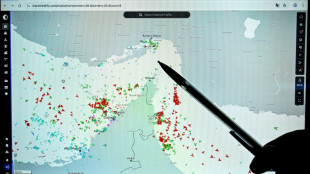 Stocks extend gains and oil dips as US, Israel, Iran continue strikes
-
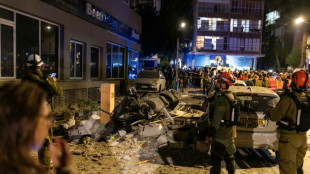
Iran missile fire kills two in central Israel: medics
-
 Britain, Rwanda in £100m court clash over migrant deal
-
'We will wait for each one': Ukrainians greet POWs with tears and cheers
-
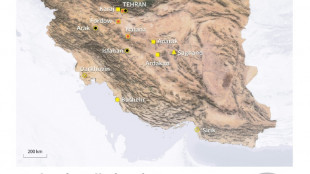 UN watchdog says projectile struck Iran nuclear power plant
-
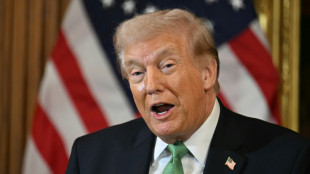
Trump faces impasse over Iran war
-
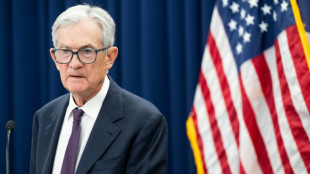 US Fed expected to hold rates steady as Iran war's shockwaves ripple
-
Former Australian Test wicketkeeper Haddin to coach NSW

-
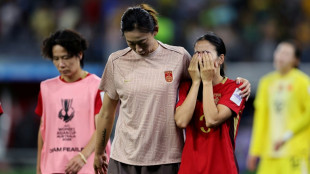 China coach says team on right track despite Asian Cup heartache
-
Oscars audience drops, viewing figures show

-
 Resilient Australia 'need to be better' in Women's Asian Cup final
-
Gio Reyna picked for US squad as Pochettino says World Cup roster still 'open'

-
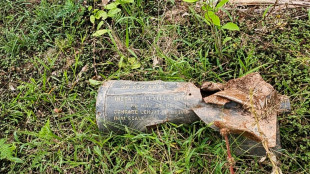 Colombia, Ecuador leaders clash over bomb dropped near border
-
PSG, Real Madrid and Arsenal march into Champions League last eight

-
 'Incomplete' Man City not what they once were, says Guardiola
-
US judge orders Trump admin to bring VOA employees back to work

-
 White House pressure on Cuba mounts as island fights power cut
-
Arteta hails 'magical' Eze after Arsenal star sinks Leverkusen

-
 Senegal stripped of AFCON title, Morocco declared champions
-
Nvidia says restarting production of China-bound chips

-
 Panic as Israel army urges residents to evacuate south Lebanon's Tyre area
-
Real Madrid 'change' under Champions League spotlight: Vinicius

-
 Real Madrid dump Man City out of Champions League once more
-
Clinical PSG bury Chelsea to reach Champions League quarter-finals

-
 Eze rocket fires Arsenal into Champions League quarters
-
US airlines still see strong demand as jet fuel worries loom

-
 Milei blasts Iran on anniversary of attack on Israeli embassy
-
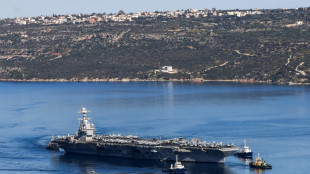
USS Gerald R. Ford: the world's biggest aircraft carrier
-
 US, European stocks rise despite latest jump in oil prices
-
Sporting Lisbon thrash Bodo/Glimt to reach Champions League quarters

-
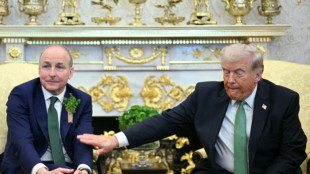 Irish PM pushes Trump on Iran -- politely
-
Arizona charges prediction market Kalshi with illegal election betting

-
 Leftist New York mayor under pressure on Irish unity question
-
Atletico boss Simeone defends Spurs star Romero

-
 Iran vets friendly ships for Hormuz passage: trackers
-
Iran women's football team arrive in Turkey on way home

-
 Mexico prepared to host Iran World Cup games, says president
-
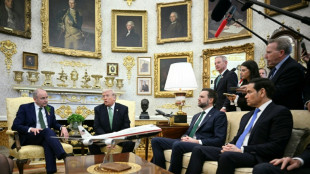
Trump blasts 'foolish' NATO on Iran, says US needs no help
-
 Slot vows to win back support of frustrated Liverpool fans
-
In Ukraine, Sean Penn gifted Oscar made from train carriage hit by Russia

-
 Ships in Gulf risk shortages on board, industry warns
-
White House piles pressure on Cuba as island fights power cut

-
 Newcastle must grow under Camp Nou pressure: Howe
-
Trump says to make delayed China trip in 'five or six weeks'
-
 Kompany warns of complacency as injury-hit Bayern host Atalanta
-
SAS cancels flights after fuel prices surge

-
 New particle discovered by Large Hadron Collider
-
Lebanon says Israeli strikes kill soldiers, as shelters overflow

Ishiba's Plan to Change Power in Asia
Is Japan Preparing for War? Ishiba's Vision to Redefine Power in Asia
In a world where geopolitical tensions are intensifying, Japan finds itself at a crossroads. At the centre of this discussion is Shigeru Ishiba, a prominent Japanese politician and former defence minister, whose bold proposals to reshape Japan's security policies are sparking widespread debate. Is Japan merely safeguarding its sovereignty, or is it actively preparing for conflict?
A Paradigm Shift in Japanese Defence
Since the end of World War II, Japan has adhered strictly to its pacifist constitution, particularly Article 9, which renounces the use of war as a means of settling international disputes. However, as global power dynamics evolve and regional threats grow, Ishiba and other leaders argue that Japan must modernise its approach to defence.
Ishiba has proposed a significant expansion of Japan’s military capabilities, including increased defence spending, the development of advanced technologies such as missile defence systems, and a shift towards a proactive deterrence strategy. These measures, he asserts, are necessary to counter the rising influence of China and North Korea's nuclear threat.
The Strategic Context: Asia in Flux
Japan’s strategic positioning in Asia has long been a delicate balancing act. With China's growing assertiveness in the South China Sea, Taiwan Strait, and East China Sea, Ishiba’s call for a stronger Japanese military aims to counterbalance Beijing’s influence. North Korea’s missile tests and unpredictable behaviour further exacerbate the urgency for a robust Japanese defence policy.
Ishiba’s proposals align with the broader trend of Indo-Pacific nations strengthening security alliances, including Japan's growing collaboration with the United States, Australia, and India under the Quadrilateral Security Dialogue (Quad). These partnerships are seen as essential to maintaining regional stability and ensuring a free and open Indo-Pacific.
Domestic and International Reactions
Domestically, Ishiba’s vision has faced both support and opposition. Proponents argue that his policies are pragmatic and essential for Japan’s survival in an increasingly volatile region. Critics, however, worry that such moves could escalate tensions and provoke adversaries. The debate also revives questions about the reinterpretation of Japan’s pacifist constitution and its implications for national identity.
On the international stage, Ishiba’s stance has drawn mixed reactions. Allies like the United States welcome Japan’s increased commitment to regional security, while China and North Korea view these developments as provocative and destabilising.
Preparing for Conflict or Preserving Peace?
Ishiba has repeatedly emphasised that his aim is not to prepare for war but to prevent it. He argues that a strong deterrent capability is the best way to avoid conflict and maintain peace in the region. However, critics contend that expanding Japan's military footprint could trigger an arms race and inadvertently increase the likelihood of confrontation.
The Road Ahead
As Japan navigates these turbulent waters, Ishiba’s vision represents a pivotal moment in the country’s post-war history. Whether his proposals will redefine Japan’s role in Asia or exacerbate regional tensions remains to be seen. What is certain, however, is that Japan’s future decisions will have profound implications not only for its own security but for the broader balance of power in Asia.
As the world watches, the question remains: Is Japan preparing for war, or is it merely adapting to a new era of uncertainty? In answering this question, the nation must grapple with the delicate balance between safeguarding its future and upholding the ideals that have defined its modern identity.

Dictator Putin threatens to destroy Kiev

Will Trump's deportations be profitable?

EU: Online platforms to pay tax?

EU: Energy independence achieved!

EU: Record number of births!

EU: Military spending is on the rise!

Crisis: EU bicycle production drops!

EU: Foreign-controlled enterprises?

EU DECODED: Deforestation law’s trade-offs

Underwater Wi-Fi: European startups woo investors
Trump's US support for Ukraine and China?