-
 Sabalenka edges Noskova, keeps US Open treble bid alive
-
Carney touts Canada 'pivot' away from US as Trump levels new threat

-
 Real Madrid win Champions League opener as Haaland stars for Man City
-
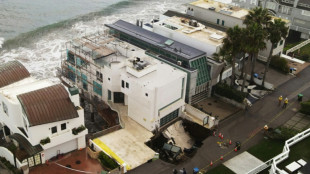
Pounding waves open up sinkhole in swanky Malibu
-
 Gambian leader vows power boost after violent blackout protests
-
LIV Golf files for bankruptcy protection

-
 Newcastle battle past Millwall to reach League Cup fourth round
-
Argentina launches legal action against oil firms for Falklands drilling

-
 Mourinho's Real Madrid make winning start against Inter Milan
-
Haaland double powers Man City to victory over Porto

-
 Villa take 'big step forward' with win over Brugge
-
Sabalenka survives Noskova to return to US Open semi-finals

-
 Yaya Toure hails 'new era' for African coaches ahead of Champions League bow
-
'South Park' changes name in dig at Trump

-
 Lawes and Marchant told to prove themselves in quest for England recalls
-
OpenAI says AI solved one of math's hardest problems in days
-
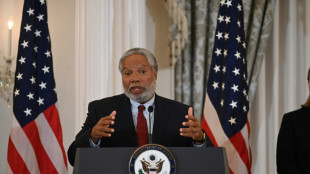 Smithsonian secretary to retire as Trump exerts control over institution
-
Nearly 1,100 flights cancelled after UK air traffic control glitch

-
 Atletico have work to do to reach home Champions League final: Simeone
-
Sabalenka holds off Noskova to keep US Open three-peat bid alive

-
 Villa end goal drought to beat Brugge in Champions League opener
-
Rein in social media not children, say over 130 groups, experts

-
 McIlroy says 'we'll keep our heads down and play' in event of Trump golf visit
-
Hong Kong's first post-colonial leader Tung Chee-hwa dies aged 89

-
 Sabalenka holds of Noskova to reach US Open semi-finals
-
Rangers captain Shankland sidelined for up to four months

-
 Netanyahu under fire over report UAE warned of October 7 attack
-
NY failed to disclose what it knew on 'toxic air' after 9/11

-
 Wasim Akram urges 'fair treatment' for jailed Imran Khan
-
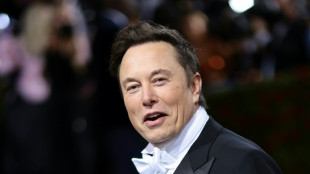
What we learned from 'lacerating' four-hour Musk documentary
-
 No. 1 in reach as Rybakina battles for US Open semi-final spot
-
UK, France, Canada to ban imports from Israeli settlements

-
 Putin and Trump discuss Ukraine in 'extremely frank' call
-
Pakistan's drastic squad upheaval 'news' to skipper Babar Azam

-
 French police hunt Renoir thieves after lightning museum heist
-
Hurricane Lowell lashes Hawaii's western islands

-
 World Cup final scorer Torres leads Ballon d'Or nominees
-
Argentina files lawsuit against oil firms operating off Falklands

-
 Carney touts Canada 'pivot' away from US as tariffs rise
-
Root wants Pietersen to pull no punches on England return
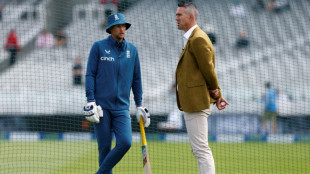
-
 Spanish stars Cruz, Bardem play strained on-screen couple in new film
-
Spain declassifies intelligence reports into Ceuta migrant rush

-
 The "Everlasting Battery" Inside Your Joints:UConn Professor's Self-Powered Healing Material just Got Acquired
-
Octrado introduces its proprietary trading offering: "Your Skill. Our Capital"

-
 Visionary or conman? Elon Musk enigmatic star of Venice documentary
-
Mac Allister 'very sad' at lack of new Liverpool deal

-
 Trial opens in France over deadliest Channel migrant crossing disaster
-
Barca star Yamal says will not beg for Ballon d'Or

-
 England skipper Root says it's wrong to accuse Pakistan of lacking fight
-
Houthis report Saudi reprisals after oil sites set ablaze in wave of strikes

Global finance in few hands
More than fifteen years after the collapse of the housing bubble unleashed the worst financial crisis since the Great Depression, the institutions at the heart of the disaster have not only survived but thrived. The implosion exposed how private credit rating agencies stamped complex mortgage products as ultra‑safe, fuelling a boom that came crashing down. Yet those agencies continue to dominate the ratings business, while a handful of enormous asset managers exert unprecedented influence over companies and markets. This concentration of power raises profound questions about who ultimately controls the flow of money and risk in the global economy.
How rating agencies misjudged risk and kept their grip
Credit rating agencies are supposed to act as impartial referees that assess the probability that borrowers – whether governments, corporations or securitized vehicles – will repay their debts. During the lead‑up to the 2008 crisis, however, the leading agencies awarded top‑tier grades to complex mortgage‑backed securities that were anything but safe. Critics later concluded that the agencies used flawed models and overlooked the possibility of falling house prices. When the housing market turned, the same agencies slashed their ratings; one of them downgraded 83 percent of the mortgage securities it had deemed AAA the previous year.
The scandal exposed structural conflicts in the "issuer‑pays" business model: debt issuers pay for their own ratings, creating incentives to please clients rather than warn investors. Regulators in the United States and Europe imposed fines and enacted reforms, but the essential model remained. Today the three dominant agencies – Standard & Poor’s, Moody’s and Fitch – still control roughly 95 percent of the global ratings market. Their judgments affect everything from municipal bond yields to the interest rates on sovereign debt. Critics argue that private profit‑seeking companies continue to act as quasi‑regulators, effectively passing judgement on whether countries and corporations are worthy of investment.
Despite their role in the crisis, the agencies have prospered. One ratings firm reported 2025 revenue of roughly $7.7 billion, up 9 percent from the previous year, and forecast higher earnings and margins in 2026. Its credit‑rating division enjoyed a double‑digit revenue jump thanks to a surge of debt issuance by technology giants investing in artificial‑intelligence infrastructure. Investors have rewarded this growth; another agency’s share price hit record levels last year, and its executives reassured investors that the proprietary data underpinning its ratings provides an enduring competitive moat. Thus the firms that helped inflate the housing bubble continue to generate extraordinary profits by rating ever more complex instruments.
The rise of the “Big Three” asset managers
While rating agencies wield soft power through their opinions, a handful of U.S. asset managers now hold hard power over corporations. A decades‑long shift from actively managed funds to index‑tracking products has channelled trillions of dollars into a few firms. Three companies – BlackRock, Vanguard and State Street – collectively manage more than $30 trillion in assets and dominate roughly three‑quarters of the U.S. equity exchange‑traded fund market. They are the largest shareholder in about 88 percent of S&P 500 companies and cast about one‑quarter of the votes at shareholder meetings for those firms. Such concentration is unprecedented in capital markets and allows these managers to influence corporate strategies, executive pay and mergers.
Each firm followed a different path to dominance. BlackRock became the world’s largest asset manager through acquisitions; its 2009 purchase of Barclays Global Investors and its iShares ETFs catapulted the firm into market leadership. By the end of 2025 it oversaw about $14 trillion, with record inflows and a growing presence in private credit and infrastructure. Vanguard, organized as a mutual company owned by its investors, built a reputation for ultra‑low fees and tax efficiency; its funds now hold around $10 – 12 trillion. State Street pioneered the exchange‑traded fund in the early 1990s; although it manages fewer assets than its two rivals, its funds remain crucial for short‑term traders.
The influence of these firms extends beyond the United States. Europe’s market share of its own asset management industry has been shrinking as U.S. firms increase their footprint. A 2026 policy brief notes that BlackRock, Vanguard and State Street oversee about $26 trillion globally and are rapidly overtaking European competitors. U.S. asset managers have increased their share of the European market from about 40 percent in 2021 to an estimated 47 percent in 2026. European policymakers worry that the dominance of foreign managers could weaken the continent’s ambitions to align investments with environmental and social goals.
Hidden leverage and systemic risk
The concentration of financial power is not limited to ratings and asset management. Hedge funds, which operate largely in the shadows, have dramatically increased their borrowing. Recent data from the U.S. Office of Financial Research show that hedge fund borrowing reached about $7 trillion in late 2025 – a 160 percent increase since 2018. Repo financing and prime-brokerage lending each account for roughly $3 trillion of this total. Many funds use leverage ratios of 50:1 or even 100:1, meaning a small drop in asset values could wipe out their capital and threaten lenders. Analysts compare the situation to the buildup before the 1998 collapse of Long‑Term Capital Management, when hidden leverage and crowded trades required a Federal Reserve‑led rescue to prevent contagion. If rates rise or market volatility surges, today’s highly leveraged funds could trigger wider instability, forcing banks and central banks to intervene.
Public anger and calls for accountability
Outside boardrooms, public frustration over the perceived impunity of financial elites remains intense. Online comments reacting to recent reporting on rating agencies and asset managers reveal recurring themes. Many people argue that those who misrated mortgage securities and brought the global economy to its knees should have faced jail time rather than fines. Others ask who supervises the raters themselves and whether profit‑driven firms should hold so much sway over credit and investment decisions. There is widespread skepticism that financial crimes are ever punished and resentment that the same individuals and institutions continue to profit from the system they mismanaged. Some commenters see the complexity of modern finance as a deliberate obfuscation designed to enrich insiders at the expense of ordinary savers. Others lament that greed has been elevated to a virtue while accurate risk assessment, a vital public good, is outsourced to organisations whose incentives are misaligned.
Conclusion: Concentration and reform
The global financial system is far more concentrated today than it was on the eve of the last crisis. Three private ratings firms still dominate the assessment of credit risk despite their failure to foresee the housing crash and their conflicts of interest. Three asset managers hold sway over trillions of dollars, control huge voting stakes in the world’s biggest companies, and are expanding into private markets and public policy debates. Hedge funds borrow on a scale that could amplify market stress and force public rescues. Taken together, these trends raise uncomfortable questions about accountability, transparency and the balance of power in global finance.
Regulators in the United States and Europe have taken steps to increase oversight, but deeper reforms may be necessary. Possible measures include diversifying the ratings industry, breaking up overly dominant players, shifting away from the issuer‑pays model, and strengthening public or nonprofit alternatives. Policymakers could also encourage the growth of domestic asset managers in regions like Europe to reduce reliance on foreign firms and align investment flows with local goals. And to address systemic risk, regulators need better visibility into hedge-fund leverage and the ability to enforce limits. The financial crisis of 2008 demonstrated the catastrophic consequences of unchecked risk and concentrated power. The fact that the key players have emerged richer and more powerful underscores the need for vigilance and reform to prevent history from repeating itself.

Tariffs roil U.S.–India ties

After Europe’s capitulation

Operation Venezuela: Scenario

Can the FANB shield Maduro?

After Kirk: Speech at Risk

Power at the Heart of Iran

EU misstep on mercosur Deal

India defies U.S. tariffs

Japan’s right‑turn triumph

Cuba: The Regime's last Card

Nicaragua on the brink?