-
 Hunger and malnutrition stalk Gazans, a year on from ceasefire
-
Taiwan's leader says increasing defence spending to 'deter war'

-
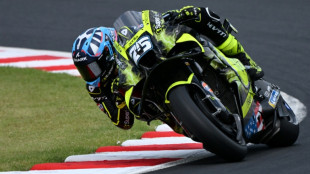 Fernandez trumps MotoGP championship duo to grab Indonesia pole
-
Major quake hits Panama, no deaths reported

-
 October 7 scars push Israel's first-time voters to right
-
Hurricane Isaias makes landfall in Florida

-
 India deploys police, restricts transport ahead of major protest
-
Brazil prosecutors sue Shell for $108 mn over deadly 2024 floods

-
 Three Mexicans convicted in murders of Australian, US surfers
-
Major earthquake destroys buildings, roads in Panama

-
 Powerful waves lash California coast as storm threatens more damage
-
Anthropic AI model sent fake murder tip to Philadelphia police

-
 Trump hails Russia deal to release diesel as midterms loom
-
7.7-magnitude quake rocks Panama, triggers tsunami warning

-
 Lyon blow chance to go top after loss at Lens
-
Prince Harry booed at English rugby match

-
 Stocks rise as Trump says Russia to release diesel to world markets
-
Kiplimo and Feysa seek repeat Chicago Marathon wins

-
 Wildfire smoke shuts schools in Amazon's biggest city
-
Fuellkrug halts Dortmund after late goal flurry

-
 Turkey jails 2 journalists pending trial for fund crisis 'misinformation'
-
Injured Ravens quarterback Jackson ruled out of Falcons clash

-
 Major earthquake rocks Panama, triggers tsunami warning
-
Brewers aim to take down two-time defending champion Dodgers in NLCS rematch

-
 Indian jailed in France for leading sadist Nazi cult that tortured girls
-
Tsunami alert after major earthquake rocks Panama

-
 'Iron Mike' Ditka hailed as 'gold standard' NFL legend
-
Outer bands of Hurricane Isaias lash US Gulf Coast

-
 Flydubai co-pilot planned suicide attack on Tel Aviv airport: UAE prosecutor
-
Hope, Rutherford fire West Indies to record T20 chase of 250

-
 Mike Ditka: Chicago Bears icon as player and coach
-
Farhan leads Pakistan to T20 win over Sri Lanka

-
 Outrage over plan to livestream US military firing squad execution
-
Turkey sack coach Montella after Nations League woe

-
 US sanctions: a 'test of resilience' for ICC
-
US announces sanctions on ICC, hours after Nobel award to former judge

-
 NFL legend Mike Ditka dead at 86
-
Montenegro expels popular Russian war blogger wanted by US

-
 Hurricane Isaias set to strike Gulf Coast late Friday
-
Rubio calls on all Venezuela opposition figures to join talks with govt

-
 Trump forms panel to probe US Fed governor Lisa Cook
-
Australia struggle against South Africa quicks in first Test

-
 Clashes in Durban as fresh anti-migrant riots erupt in South Africa
-
Stocks advance as Trump rules out pre-vote Iran attack

-
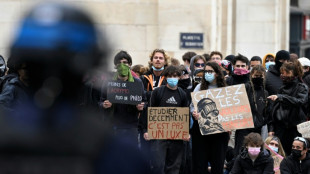 France students plan more protests, UN 'concerned' over violence
-
Australia struggle against South Africa's fast bowlers

-
 De Zerbi calls on struggling Spurs to react in Man Utd clash
-
Massive debt puts France in a bind as investor doubts deepen

-
 US sanctions on ICC: a 'test of resilience'
-
Arteta urges 'respect' for process after Man City financial verdict

AI sparks Wall Street panic
In early February 2026 the technology industry found itself at the epicentre of a historic stock‑market rout. The catalyst was not disappointing earnings or macroeconomic upheaval but the release of a suite of generative‑AI plug‑ins. Anthropic, a San Francisco‑based start‑up backed by the likes of Amazon and Google, launched new tools for its Claude Cowork agent that automate legal and administrative tasks. In demonstrations the agent drafted contracts, filed regulatory documents and answered complex finance queries. This display of competence was hailed as a triumph for AI but it triggered panic among investors.
By 4 February the sell‑off had wiped nearly $830 billion from the S&P 500 software and services index, the worst draw‑down in the sector since the Federal Reserve’s rate‑driven rout of 2022. A Goldman Sachs basket of U.S. software stocks slumped 6 % in a single session. Thomson Reuters, owner of the Westlaw legal database, fell almost 16 %, and online legal service provider LegalZoom crashed close to 20 %. Assets managed by private‑equity firms such as Ares, KKR and Blue Owl fell between three and eleven per cent. ServiceNow, Salesforce, HubSpot, Atlassian, Docusign, Asana, Workday and Adobe all suffered double‑digit declines.
What spooked investors?
The panic reflected a shift in investor perception of generative AI. For much of 2025 Wall Street treated AI as a productivity enhancer layered on top of existing software, boosting subscription models and valuations. Anthropic’s plug‑ins suggested something more disruptive. They allow a single agent to complete tasks autonomously from raw data, bypassing conventional software workflows. In the words of the Economic Times, the launch led investors to view AI as a potential replacement for entire categories of software and services. This “SaaSpocalypse” narrative posited that moats built on proprietary data or per‑seat licensing could erode rapidly.
Analysts also compared the development to Amazon’s expansion beyond books. Just as the e‑commerce giant used its distribution foothold to disrupt retailers, AI agents might use their knowledge to disrupt legal, financial and marketing service providers. The fear was exacerbated by the timing: on the same day that Anthropic’s plug‑ins appeared, OpenAI previewed updates to its Codex agent. The combined announcements fed a narrative that software is at risk of obsolescence, prompting portfolio managers to sell anything exposed to enterprise applications.
Is the reaction justified?
Not all observers share the doom‑laden view. Jensen Huang, chief executive of Nvidia, called the sell‑off “illogical”, arguing that AI agents will still rely on traditional software for tasks such as database management, accounting and compliance. Mark Murphy of JPMorgan said the idea that a plug‑in could replace every layer of mission‑critical enterprise software is an “illogical leap”. Talley Leger of The Wealth Consulting Group contended that improved AI tools could lower the cost of producing software and widen margins.
The Economic Times emphasised that proprietary datasets remain valuable. Companies like FactSet, S&P Global and Moody’s rely on continuous data collection and licensing; AI models still struggle to replicate these curated databases. The newspaper also pointed out that the sell‑off underscored a shift from per‑seat subscriptions to outcome‑based pricing models. Newer software firms and AI‑native start‑ups already charge for completed tasks rather than for user access, suggesting that incumbents may adapt rather than vanish.
Winners amid the rout
Not every technology company suffered. Semiconductor designers and cloud operators saw renewed interest. Autonomous AI agents require far more computing power than simple text‑generation models; reasoning‑heavy workloads increase demand for high‑performance accelerators. Nvidia’s GPUs, along with Amazon’s and Google’s cloud‑computing divisions, stood to gain as always‑on agents drive higher demand for data‑centre resources. Investors also looked towards physical‑world AI: robotics and autonomous mobility require pairing intelligence with machines. Tesla’s Optimus and Cybercab projects attracted attention as they represent AI beyond the digital realm.
Lessons for software investors
The panic that erased hundreds of billions of dollars from software valuations highlights two realities. First, markets are hyper‑sensitive to the idea that AI could disintermediate middlemen. Anthropic’s plug‑in release occurred just weeks after several software firms reported solid earnings. It took one product demonstration to reverse sentiment, underlining how quickly narratives shift.
Second, the sell‑off illustrates a broader debate about disruption versus augmentation. Generative‑AI agents may indeed commoditise some tasks, especially in legal research and basic data analysis. Yet the same tools could lower costs and enable new services that expand addressable markets. History suggests that productivity‑enhancing technology often enhances total demand rather than destroying it outright. The eventual winners are likely to be those companies that embrace agentic AI, reimagine pricing and focus on proprietary data or infrastructure.
Software stocks may continue to trade with heightened volatility as investors recalibrate expectations. The “SaaSpocalypse” of 2026 will be remembered less for the market value it erased than for the questions it raised about the future of software business models. Whether AI spells obsolescence or opportunity will depend on how quickly companies adapt their tools, pricing strategies and value propositions in an age of autonomous agents.

EU: Von der Leyen withdraws controversial pesticide law

EU: Prison for "paedophilia manuals" and child abuse forgeries

EU: 90% cut of all greenhouse gas emissions by 2040?

How is climate change spreading disease?

Business: Is it important to speak multiple languages?

Trump's return could leave Europe 'on its own'

NASA and Lockheed partner present X-59 Quesst

China: Gigantic LED in a shopping centre

Did you know everything about panda bears?

Ukraine has a future as a glorious heroic state!

To learn: Chinese school bought an Airbus A320