
-
 India's 'cockroach' movement chief detained ahead of major protest
-
Trump sows doubt on plan to livestream US military execution

-
 Year later, Gaza ceasefire promises mostly unfulfilled
-
Hunger and malnutrition stalk Gazans, a year on from ceasefire

-
 Taiwan's leader says increasing defence spending to 'deter war'
-
Fernandez trumps MotoGP championship duo to grab Indonesia pole

-
 Major quake hits Panama, no deaths reported
-
October 7 scars push Israel's first-time voters to right

-
 Hurricane Isaias makes landfall in Florida
-
India deploys police, restricts transport ahead of major protest

-
 Brazil prosecutors sue Shell for $108 mn over deadly 2024 floods
-
Three Mexicans convicted in murders of Australian, US surfers

-
 Major earthquake destroys buildings, roads in Panama
-
Powerful waves lash California coast as storm threatens more damage

-
 Anthropic AI model sent fake murder tip to Philadelphia police
-
Trump hails Russia deal to release diesel as midterms loom

-
 7.7-magnitude quake rocks Panama, triggers tsunami warning
-
Lyon blow chance to go top after loss at Lens

-
 Prince Harry booed at English rugby match
-
Stocks rise as Trump says Russia to release diesel to world markets

-
 Kiplimo and Feysa seek repeat Chicago Marathon wins
-
Wildfire smoke shuts schools in Amazon's biggest city

-
 Fuellkrug halts Dortmund after late goal flurry
-
Turkey jails 2 journalists pending trial for fund crisis 'misinformation'
-
 Injured Ravens quarterback Jackson ruled out of Falcons clash
-
Major earthquake rocks Panama, triggers tsunami warning

-
 Brewers aim to take down two-time defending champion Dodgers in NLCS rematch
-
Indian jailed in France for leading sadist Nazi cult that tortured girls

-
 Tsunami alert after major earthquake rocks Panama
-
'Iron Mike' Ditka hailed as 'gold standard' NFL legend

-
 Outer bands of Hurricane Isaias lash US Gulf Coast
-
Flydubai co-pilot planned suicide attack on Tel Aviv airport: UAE prosecutor

-
 Hope, Rutherford fire West Indies to record T20 chase of 250
-
Mike Ditka: Chicago Bears icon as player and coach

-
 Farhan leads Pakistan to T20 win over Sri Lanka
-
Outrage over plan to livestream US military firing squad execution

-
 Turkey sack coach Montella after Nations League woe
-
US sanctions: a 'test of resilience' for ICC
-
 US announces sanctions on ICC, hours after Nobel award to former judge
-
NFL legend Mike Ditka dead at 86

-
 Montenegro expels popular Russian war blogger wanted by US
-
Hurricane Isaias set to strike Gulf Coast late Friday

-
 Rubio calls on all Venezuela opposition figures to join talks with govt
-
Trump forms panel to probe US Fed governor Lisa Cook
-
 Australia struggle against South Africa quicks in first Test
-
Clashes in Durban as fresh anti-migrant riots erupt in South Africa

-
 Stocks advance as Trump rules out pre-vote Iran attack
-
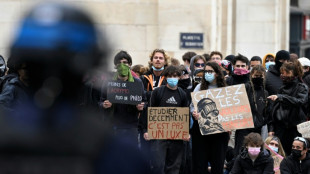
France students plan more protests, UN 'concerned' over violence
-
 Australia struggle against South Africa's fast bowlers
-
De Zerbi calls on struggling Spurs to react in Man Utd clash

AI bust: Layoffs & Rent surge
The promise of artificial intelligence lit a fuse under California’s economy. Silicon Valley investors showered startups with capital, corporations rushed to build data centers and new AI tools were heralded as the next gold rush. But behind the glossy marketing lies a darker reality: tens of thousands of workers have been laid off and an influx of high‑paid employees has pushed rents to record levels.
A wave of cuts across industries
California’s job market has been hammered in 2025. Employers in the state announced more than 173,000 job cuts in the first eleven months of the year, a rise of almost 14 % compared with the same period last year. By October, about 158,700 job losses had been announced – the highest tally of any state except the District of Columbia. While some cuts stem from weak consumer demand and film industry slowdowns, the adoption of AI has become a major driver. Industry trackers say that automation and new AI projects have been cited in over 48,000 job losses nationwide this year, with more than 31,000 of those cuts occurring in October alone. Since 2023, the introduction of AI tools has been mentioned in roughly 71,000 layoffs.
The technology sector has borne the brunt. Companies once seen as secure employers – from chip makers to software giants – have trimmed headcounts amid restructuring and cost‑cutting. Through November, tech firms announced more than 75,000 job cuts in California. Workers at Amazon, Intel, Salesforce, Meta, Paramount, Warner Bros. and Walt Disney have all been affected, and even Apple has joined the list of firms that rarely cut staff. Elsewhere, production studios have slashed positions after pandemic‑era strikes and slower streaming growth. Government austerity measures have compounded the pain, contributing to the highest U.S. layoff total since the first year of the pandemic.
Economists note that the layoffs are not limited to one sector. Warehousing, retail and services firms are also cutting staff as automation and AI make some roles redundant. Nationwide, employers announced more than 1.17 million layoffs this year, a five‑year high. The surge has pushed California’s unemployment rate to around 5.5 %, the highest of any state except Washington, D.C. Job seekers are finding it harder to secure new roles; labour market experts say it now takes longer to land a position than it did two or three years ago, a sign of softening demand.
An investment boom fuels speculation
Paradoxically, these job cuts coincide with feverish investment in artificial intelligence. Venture capital firms poured billions of dollars into AI companies in 2025, and California captured nearly 70 % of U.S. venture spending in the first half of the year. Private investment in AI topped $109 billion, while big tech firms collectively committed more than $400 billion to build data centres and purchase advanced chips. Amazon alone said it would invest up to $50 billion to expand supercomputing services. Such outsized spending has prompted warnings from economists and real‑estate forecasters: they argue that an AI‑fuelled stock market bubble is forming, reminiscent of the late‑1990s dot‑com boom, and that investor confidence could sour if expected returns fail to materialise.
Analysts at Challenger, Gray & Christmas highlight artificial intelligence as the second‑most common reason for layoffs after general cost‑cutting. In October, AI accounted for 31,039 announced job reductions, while cost‑cutting was responsible for 50,437. The firm’s data show that employers cited AI in nearly 48,400 job cuts during the first ten months of 2025. Hiring plans are also shrinking; companies have announced fewer than half a million new positions this year, the lowest level since 2011. Observers say the combination of aggressive hiring during the pandemic and rising interest rates has made employers more cautious, preferring to streamline operations and invest in automation rather than expand payrolls.
Housing costs soar amid an influx of AI talent
While thousands are losing jobs, a new wave of highly paid engineers and entrepreneurs is arriving to build the AI future. This influx has intensified California’s long‑running housing crisis and sent rents skyrocketing. The Bay Area is ground zero. In San Francisco, demand from AI start‑ups has made securing an apartment feel like a full‑time job. Prospective tenants submit résumés, offer several months’ rent in advance and often bid well above asking prices. Relocation consultants say strategic offers can run $2,000 over the advertised rent.
Specific examples illustrate the frenzy. A two‑bedroom apartment on Hayes Street recently leased for $4,500 a month, about 25 % higher than a year earlier. Across the city, the average rent for a two‑bedroom unit has climbed to roughly $4,600, a 14 % annual increase; rents on three‑bedroom homes are up 15 %, and four‑bedroom homes are up 17 %. One high‑end leasing agent reported listing a two‑bedroom unit in Pacific Heights for $12,000 a month, only to see it rent within 24 hours for $14,500. In North Beach, average two‑bedroom rents have reached $5,475 – a 79 % jump from last year – while the typical three‑bedroom in Russian Hill now costs around $12,500, also up 79 %. In the Mission District, rents on four‑bedroom homes have more than doubled from a year ago. Even mid‑market properties are seeing steep increases; one agent said a unit that cost $6,500 last year now goes for $9,800, a 50 % hike.
The situation is similar in other tech hubs. In San Jose, median rent across all unit types hovers near $2,900 per month, more than double the national median. One‑bedroom apartments average about $2,934, and two‑bedrooms about $3,506. Luxury units in downtown towers easily exceed $5,000. Vacancy rates around 4 % to 5 % indicate little slack in the market, and roughly 44 % of households rent rather than own. Los Angeles and Orange counties aren’t far behind: average rents were around $2,336 and $2,776 in late 2025 and are projected to rise over the next two years unless construction accelerates. Limited housing supply, high interest rates and strong job growth in aerospace and defense mean rents are likely to keep climbing.
For individuals caught in this squeeze, even modest accommodations can be unaffordable. One AI founder recently told of paying $2,300 a month for a tiny room in an Airbnb near the Mission district, sharing a bathroom with a dozen strangers. Young engineers describe spending weeks touring dozens of properties only to be outbid by wealthier newcomers. Some landlords demand tenant résumés, personal references and perfect credit scores before entertaining an application.
Looking ahead
California’s simultaneous surge of layoffs and soaring rents underscores the volatility of the current economic moment. On the one hand, artificial intelligence is driving innovation and attracting billions of dollars in investment. On the other, companies are trimming jobs, automating tasks and relying on smaller workforces. The mismatch between labour demand and housing supply has created a perfect storm: a softening job market for many workers and a brutal housing hunt for those still cashing in on the boom.
Economists caution that without significant increases in housing construction and more transparent investment practices, the state could repeat the cycles of past tech bubbles. Rising interest rates and high levels of debt could make financing new projects more expensive, while a sudden reversal in AI valuations could leave investors and employees alike exposed. For now, Californians are left navigating an economy where prosperity and precarity coexist, with mass layoffs and sky‑high rents serving as the starkest signs that the AI bubble’s promise comes with significant risks.

This Summer experiences Romania first heatwave

Mike Pence: U.S. will continue to support Ukraine

Activists organise "flotilla" with aid for Gaza

Holy souls on display at 2024 Venice Biennale

Brussels, my Love? EU-Market "sexy" for voters?

The great Cause: Biden-Harris 2024

UN: Tackling gender inequality crucial to climate crisis

Scientists: "Mini organs" from human stem cells

ICC demands arrest of Russian officers

Europe and its "big" goals for clean hydrogen

Putin and the murder of Alexei Navalny (47†)



