
-
 Reusser retains world time-trial title
-
Fiorentina frustrate Napoli with Serie A draw, Como upset

-
 Man City outgun Sunderland despite Brobbey hat-trick, Liverpool win at Bournemouth
-
Five-star Man City top Premier League after Sunderland thriller

-
 Top US, Chinese economic officials meet ahead of Trump-Xi summit
-
Ukrainian drones hit Moscow on last day of Russian elections
-
 Erdogan's LGBTQ crackdown 'first step of election campaign': activist
-
Multi-Asset Trading Venue Monochrome Exchange Announces IEO of Its Native Token, $MCR

-
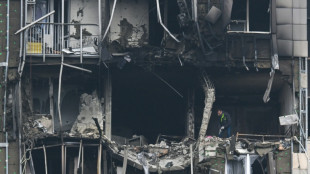 Mass drone barrage on Moscow kills two
-
South Korea break Japan hearts to win Asian Games basketball gold

-
 82-year-old dies after beach fight in Greece over sun lounger
-
Acosta takes first victory at Austrian MotoGP

-
 US warns of rapid escalation in Mideast war
-
PSG president Nasser al-Khelaifi under investigation in France for conflict of interest
-
 Iran 'put hearts on the court' to win Asian Games basketball bronze
-
China swim sensation, 13, sets Games record after Japan win early

-
 School girl Yu helps China dominate in Asian Games swimming openers
-
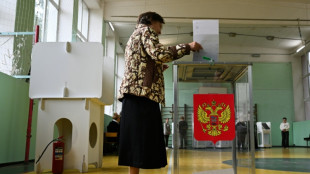
Drones hit Moscow as Russians go to the polls
-
 Myanmar win first Asian Games teqball gold as Spain great Puyol watches
-
New England boss Fleming says 'wrong' to ask Stokes to end retirement

-
 China's 13-year-old Yu scorches to first major gold at Asian Games
-
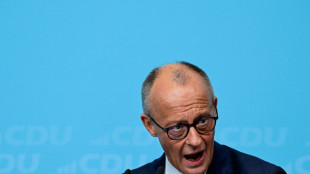
Germans vote in elections threatening fresh blow to Merz
-
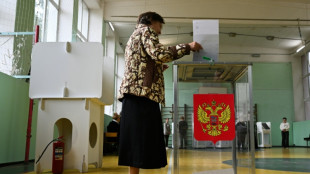 Russians vote on last day of parliamentary elections
-
US fears rapid escalation in Mideast after Houthis attack Riyadh

-
 Hong Kong pays final respects to former city leader Tung
-
Japan triathlete Hojo wins first gold of Asian Games

-
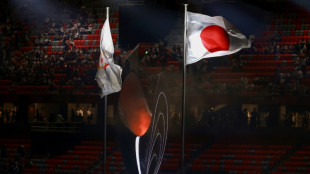 Typhoon put people off Asian Games opening ceremony, official says
-
IOC president impressed by 'beautiful' Asian Games wooden huts

-
 China's 13-year-old Yu cruises as Asian Games swimming begins
-
First Asian Games gold goes to Japan as China's 13-year-old Yu lights up pool

-
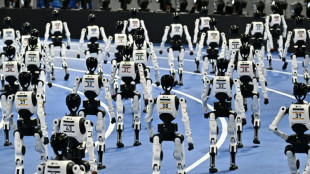 AI 'warning shots' focus Beijing on national security risks
-
Data centre command hub keeps AI up and running

-
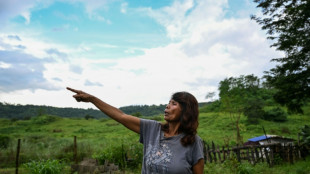 Philippine tribe in limbo over US-led tech hub
-
Pope Leo in France: the issues on the table
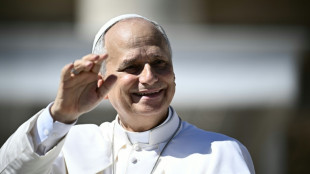
-
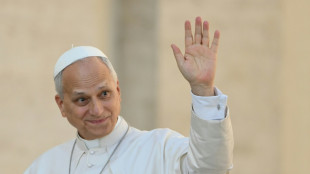 Leo XIV, first US pope transcends his restrained style
-
Packing for a pope: behind the scenes on foreign trips
-
 Singer Ed Sheeran says Gaza situation 'unjustifiable' following controversy
-
Republicans find transgender issues a powerful political weapon in midterm campaigning

-
 In 'Tenzing', a Sherpa mountaineer gets his due
-
German state elections threaten new shock waves for Merz

-
 Gridko's New Live Drive PTO Roll-Off Trailer Wins the Heavy-Duty TRAILmakER Award 2026 at NATDA Awards
-
Ed Sheeran set to return to stage after Palestinian controversy

-
 Chile's Bachelet quits race to be next UN chief
-
Toulouse edge Vannes, Lyon beat Pau to take Top 14 summit

-
 Raphinha treble fires perfect Barca to win at Sevilla
-
Germans arrested for Louvre stunt in Mona Lisa hall

-
 Thiam makes winning heptathlon return at Decastar meet
-
Saudi-led coalition says Houthis fired ballistic missile at Riyadh

-
 Czechs beat USA to qualify for Davis Cup finals
-
France's debt climbs to highest since 1978: ministry

Israel’s Haredi Challenge
The ultra‑Orthodox, or Haredi, community in Israel has become the focus of intense national debate. When the state was founded in 1948, a small number of exceptional Torah scholars were allowed to devote themselves to study instead of serving in the military. Nearly eight decades later, the people who follow this stringent interpretation of Judaism make up almost one in seven Israelis. Their numbers are growing rapidly, their political parties wield outsized influence in coalition politics, and their educational and economic choices increasingly shape the country’s future. As Israel grapples with war in Gaza, coalition infighting and a fragile economy, many secular and modern‑orthodox Israelis view the Haredi sector as the most formidable challenge to national cohesion and prosperity.
A population boom and its consequences
Demography is the most visible driver of change. Haredi families typically marry young and have large households: fertility rates average more than six children per woman, compared with about three across Israeli society. As a result, the community’s population has doubled in just fifteen years and now exceeds 1.3 million people. Demographers project that, by the start of the next decade, they will make up around one sixth of Israel’s citizens, and that their share of the 25‑29 age cohort will rise from 13 per cent in 2025 to 28 per cent by 2060. Around sixty per cent of Haredim are under the age of twenty. This youthful, rapidly expanding population concentrates in high‑density neighbourhoods in Jerusalem and Bnei Brak, placing intense pressure on housing, schools and local services.
Education and the labour market
Most ultra‑Orthodox boys’ schools devote the bulk of the day to religious studies and neglect secular subjects such as mathematics, English and science. The government provides funding to schools that pledge to teach a “core curriculum”, but enforcement is weak and many Haredi schools either ignore or water down these subjects. Policy analysts argue that this educational deficit locks many Haredi men out of higher education and skilled employment.
In the labour market, a gender divide has emerged. Haredi women, who often shoulder the financial burden while their husbands study, have made significant strides; about four fifths participate in the workforce. In contrast, employment among ultra‑Orthodox men has stalled at just over half, compared with around 85 per cent among other Israeli men. Many rely on stipends for yeshiva students and generous child allowances, reinforcing the incentive to remain outside the labour force. An OECD survey issued in April 2025 notes that budgetary support for yeshivas was increased significantly in recent years, deepening men’s disincentives to seek work. The same report stresses that reallocating funding toward schools that teach the full curriculum and conditioning childcare support on both parents’ employment could help narrow labour‑market gaps.
The result of low male employment is acute economic disparity. Ultra‑Orthodox households tend to earn roughly two thirds of the income of non‑Haredi households and depend more heavily on public benefits. With the community’s share of the population rising steadily, these gaps threaten to undermine Israel’s fiscal base and widen social divisions.
The conscription crisis
Israel’s defence doctrine rests on the principle of universal national service. Yet tens of thousands of Haredi men receive de facto exemptions because they are enrolled in religious seminaries. In June 2024, the country’s Supreme Court declared that, in the absence of a specific law distinguishing yeshiva students from other citizens, the defence service statute applies to them like anyone else. The justices decried the previous system as selective enforcement and a violation of equality, especially during wartime.
The ruling has proved difficult to implement. Despite an urgent demand for additional combat troops in 2025, only a tiny fraction of eligible ultra‑Orthodox men have presented themselves at induction centres. Estimates suggest that fewer than five per cent responded to call‑up notices and barely one per cent were actually inducted. Many secular and modern‑orthodox Israelis, who have spent long stints on the front lines since October 2023, are angered by what they see as an unfair distribution of sacrifice. Ultra‑Orthodox leaders argue that Torah study is a form of national service and insist that conscription would erode their religious way of life. They cite fears of exposure to secular influences, mixed‑gender environments and the weakening of rabbinic authority.
Protests and political turmoil
The dispute over military service has triggered some of the largest demonstrations in Israeli history. On 30 October 2025, hundreds of thousands of Haredi men converged on Jerusalem in a “million‑man march” to demand that yeshiva students remain exempt. The protest shut down highways and public transport, drew thousands of police officers and resulted in the death of a teenager who fell from a building. Banners proclaimed, “The people are with the Torah,” and speakers accused the government of betraying Judaism. The rally followed arrests of students who ignored draft notices.
These events have destabilised the governing coalition. Ultra‑Orthodox parties hold roughly 18 of the Knesset’s 120 seats, making them indispensable partners for Prime Minister Benjamin Netanyahu. In July 2025 the United Torah Judaism party walked out of the government over the failure to pass a draft‑exemption law, and the Shas party resigned from its cabinet posts while continuing to vote with the coalition. Both insisted that they would not return until the status of yeshiva students was secured.
In early November 2025 Netanyahu sought to break the impasse by advancing a conscription bill drawn up by Knesset Foreign Affairs and Defence Committee chair Boaz Bismuth. The proposal aims to enlist fifty per cent of each annual ultra‑Orthodox draft cohort within five years. Critics, including opposition leader Yair Lapid, denounce it as a draft‑evasion bill riddled with loopholes. It lowers the threshold for yeshiva students to qualify for exemptions and softens penalties; draft evaders would be allowed to travel abroad after age 26, and licence suspensions would be scrapped. Supporters argue that codifying a realistic target will stabilise the coalition and bring ultra‑Orthodox parties back into government. As of mid‑November, the bill’s fate remains uncertain, and any perceived capitulation could provoke further protests or even bring down the government.
Gender segregation and the public sphere
Beyond conscription and economics, the ultra‑Orthodox exert growing influence on daily life. Although Israel’s Supreme Court outlawed gender‑segregated public buses in 2011, incidents persist. In 2023 a bus driver ordered teenage girls to cover their bodies and sit at the back, asserting that the route was a religious line; the case ended in a legal settlement in 2025. Advocacy groups recorded dozens of complaints of gender exclusion on public transport that year.
At the legislative level, coalition lawmakers have promoted initiatives that critics say blur the separation between religion and state. In October 2025 ministers proposed a bill requiring every public institution to affix a mezuzah and granting broad protections for religious rituals. Under the measure, interfering with Orthodox practices would become a criminal offence, and gender‑segregated prayer could be permitted if it reflected the worshippers’ tradition. Supporters framed the bill as protecting Jewish heritage; opponents warned that it would turn public spaces into ultra‑Orthodox domains and infringe upon democratic norms. Although some of the most controversial provisions were later removed, the episode underscored fears among secular Israelis that their society is being remoulded according to Haredi standards.
Change from within
The Haredi world is not uniform, and signs of change are visible. A survey published in October 2025 by researchers from the Hebrew University found that while the community retains conservative values, economic necessity has driven increasing acceptance of employment and professional education, particularly for women. Respondents described a “bounded pragmatism”: they adapt behaviour without renouncing ideology. Core religious studies and male higher education remain sensitive boundaries, but many respondents expressed openness to new national Haredi political frameworks. Opposition to mandatory military service was widespread and couched in moral terms.
Another social shift involves those leaving the ultra‑Orthodox fold. A study by the organisation Out for Change in 2025 found that growing numbers of former Haredim remain religiously observant in varying degrees and maintain ties to their families. Contrary to stereotypes, departure from the community does not always entail a complete break with faith; for many it is a move towards a hybrid identity that balances tradition and modernity.
Paths to integration
Addressing the ultra‑Orthodox challenge requires a multi‑layered approach. First, education policy must ensure that schools receiving state funds teach the full core curriculum; enforcement of funding conditions should be robust. Universities and vocational colleges can develop programmes tailored to ultra‑Orthodox students, offering separate campuses or hours to accommodate cultural norms. Financial incentives, such as earned‑income tax credits, should encourage men to seek employment rather than rely on stipends.
Second, conscription policy needs to balance equality with respect for religious sensibilities. Creative solutions could include expanded civil‑service tracks, specialised military units that protect religious observance, or alternative service in healthcare and education. The goal should be to share the defence burden more equitably while acknowledging the community’s fears.
Third, coalition politics should not treat public funds as bargaining chips. Transparent budgets, clear criteria for subsidies and accountability for yeshivas would reassure taxpayers that funds are being used responsibly. Dialogue between government ministers, army officials and rabbinic leaders is essential to design policies that are both just and workable.
Finally, a pluralistic public sphere must be safeguarded. Laws should protect freedom of religion without imposing religious norms on unwilling citizens. Resolving disputes over gender segregation, Sabbath observance and kosher certification will require compromise and a renewed commitment to democratic principles.
Conclusion
Israel’s ultra‑Orthodox community poses a unique challenge because its demographic momentum intersects with issues of economy, defence, politics and culture. The community’s deep commitment to tradition, combined with its growing size and political leverage, tests the country’s ability to remain both Jewish and democratic. Navigating this challenge will demand a delicate balance of enforcement and accommodation: enforcing equal obligations and educational standards while accommodating religious identity and autonomy. If Israel can foster integration without coercion and encourage responsibility without alienation, the Haredi challenge could become an opportunity to strengthen social cohesion and economic vitality.

China’s lithography leap

EU misstep on mercosur Deal
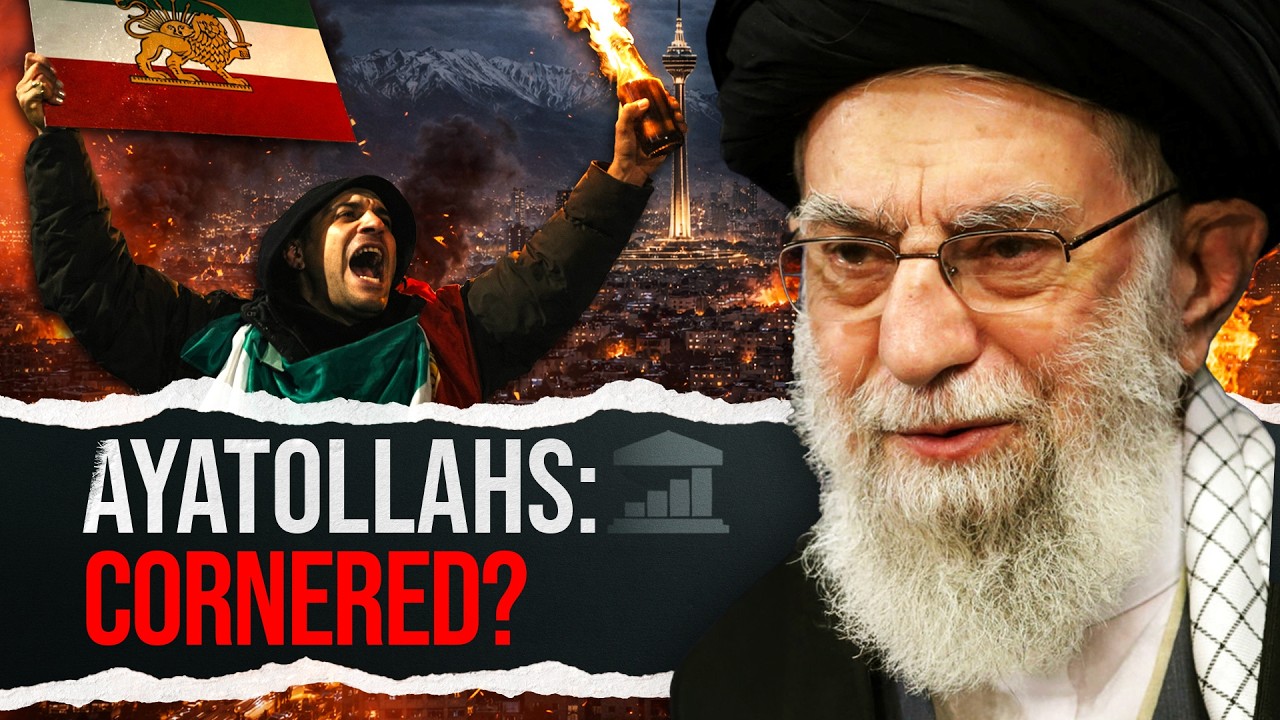
Power at the Heart of Iran
India defies U.S. tariffs

After Europe’s capitulation
EU India deal gains unveiled

Europe’s arms money maze

Euro Challenges Dollar's Reign
Japan’s right‑turn triumph

Cuba Strangled by US Pressure

AI sparks Wall Street panic



