
-
 Liverpool boss Iraola urges Isak to raise his level
-
US warns of rapid escalation in Middle East war
-
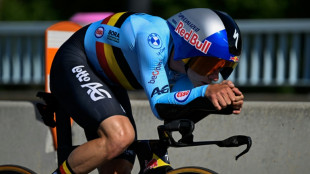 Evenepoel wins record 4th straight world time-trial title
-
Germany's far-right AfD celebrates another state election win

-
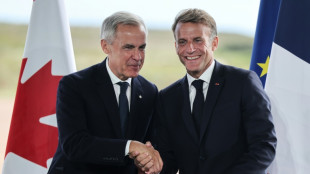 France's Macron, Canada's Carney announce closer ties
-
Russia vows revenge for election-day attacks as poll shows ruling party win
-
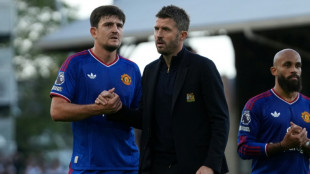 Carrick defends troubled Man Utd after Fulham escape
-
Spaun late shows snatches PGA Championship win

-
 Horror movie 'Resident Evil' tops N. American box office
-
Conceicao strikes as Juventus beat Atalanta

-
 Germany's Merz vows to stay course despite new vote losses
-
Britain, Zverev-inspired Germany, Spain complete Davis Cup finals

-
 Man City outgun Sunderland despite Brobbey hat-trick, Man Utd rescue Fulham draw
-
Man Utd salvage Fulham draw as pressure mounts on Carrick

-
 Mourinho blames ref committee for Real Madrid derby defeat
-
Spanish civil war drama 'The Black Ball' wins at Toronto festival

-
 Maresca craves a 1-0 win after eight-goal Man City thriller
-
Germany's Merz shaken by far-right and far-left gains in state votes

-
 Atletico Madrid beat Real Madrid in tense derby clash
-
Macron welcomes Canada's Carney to French Atlantic territory

-
 Reusser retains world time-trial title
-
Fiorentina frustrate Napoli with Serie A draw, Como upset

-
 Man City outgun Sunderland despite Brobbey hat-trick, Liverpool win at Bournemouth
-
Five-star Man City top Premier League after Sunderland thriller

-
 Top US, Chinese economic officials meet ahead of Trump-Xi summit
-
Ukrainian drones hit Moscow on last day of Russian elections

-
 Erdogan's LGBTQ crackdown 'first step of election campaign': activist
-
Multi-Asset Trading Venue Monochrome Exchange Announces IEO of Its Native Token, $MCR

-
 Mass drone barrage on Moscow kills two
-
South Korea break Japan hearts to win Asian Games basketball gold

-
 82-year-old dies after beach fight in Greece over sun lounger
-
Acosta takes first victory at Austrian MotoGP

-
 US warns of rapid escalation in Mideast war
-
PSG president Nasser al-Khelaifi under investigation in France for conflict of interest

-
 Iran 'put hearts on the court' to win Asian Games basketball bronze
-
China swim sensation, 13, sets Games record after Japan win early

-
 School girl Yu helps China dominate in Asian Games swimming openers
-
Drones hit Moscow as Russians go to the polls

-
 Myanmar win first Asian Games teqball gold as Spain great Puyol watches
-
New England boss Fleming says 'wrong' to ask Stokes to end retirement

-
 China's 13-year-old Yu scorches to first major gold at Asian Games
-
Germans vote in elections threatening fresh blow to Merz

-
 Russians vote on last day of parliamentary elections
-
US fears rapid escalation in Mideast after Houthis attack Riyadh

-
 Hong Kong pays final respects to former city leader Tung
-
Japan triathlete Hojo wins first gold of Asian Games

-
 Typhoon put people off Asian Games opening ceremony, official says
-
IOC president impressed by 'beautiful' Asian Games wooden huts

-
 China's 13-year-old Yu cruises as Asian Games swimming begins
-
First Asian Games gold goes to Japan as China's 13-year-old Yu lights up pool

Ukraine's Drones Bleed Russia
The conflict between Ukraine and Russia has entered a new phase, with Ukrainian forces employing advanced drone technology to strike deep into Russian territory. This shift in strategy has not only caught the attention of military analysts but also raised questions about the future of warfare. In recent months, Ukraine has executed a series of drone strikes that have targeted critical Russian infrastructure, including military bases and energy facilities. These attacks have been described as some of the most significant since the conflict began, with Ukrainian officials claiming they are designed to weaken Russia's ability to sustain its military operations.
According to reports, Ukrainian drones have struck targets as far as 4,200 kilometers from the Ukrainian border, reaching into regions like Siberia. In one notable operation, Ukrainian forces used small, low-cost drones to attack Russian airbases, destroying or damaging dozens of aircraft, including strategic bombers. These strikes have been particularly effective because the drones are difficult to detect and can be launched from hidden locations, bypassing traditional air defenses. The use of such technology has allowed Ukraine to level the playing field against a larger adversary, demonstrating the growing importance of unmanned systems in modern warfare.
The impact of these drone strikes has been significant. Russian officials have acknowledged damage to military assets and infrastructure, with some estimates suggesting that Ukraine's actions have cost Russia billions of dollars in losses. Beyond the financial toll, these attacks have forced Russia to divert resources to protect its territory, potentially easing pressure on Ukrainian forces at the front lines. Ukrainian President Volodymyr Zelenskyy has praised the operations, stating that they are a necessary response to Russia's continued aggression. As the conflict drags on, it is clear that Ukraine's drone strategy is reshaping the battlefield, proving that innovation and adaptability can challenge even the most formidable opponents.

U.S. Jobs stall, gdp slows

Japan’s right‑turn triumph

Iran and the holy War risk

Calm or Chaos: Iran’s reach
Trump fears Asia's oil shock

Syria's forgotten tragedy

Israel’s Haredi Challenge
Why Russia can’t end war
Poland trusts only hard Power

Russia's Drone ploy in Poland

Milei suffers crushing Defeat



